In the dynamic landscape of electronic component manufacturing, low voltage MOSFETs (Metal – Oxide – Semiconductor Field – Effect Transistors) have emerged as pivotal elements across numerous circuits. As a dedicated supplier of low voltage MOSFETs, I am often confronted with the query about the thermal resistance of these devices. This seemingly simple question opens the door to a complex yet fascinating realm of semiconductor physics and engineering, and understanding it can significantly enhance the performance and reliability of electronic systems. Low Voltage Mosfet
Defining Thermal Resistance
Thermal resistance is a measure of a material’s or device’s opposition to the flow of heat. In the context of a low voltage MOSFET, it quantifies the temperature difference between the MOSFET’s junction (where heat is generated) and its ambient environment (the surrounding air or the heat – sink) per unit of power dissipation. It is usually denoted by the symbol $\theta_{JA}$ (junction – to – ambient) or $\theta_{JC}$ (junction – to – case) and is expressed in units of degrees Celsius per watt ($^{\circ}C/W$).
A lower value of thermal resistance indicates that the MOSFET can transfer heat more efficiently, meaning that for a given amount of power dissipation, the temperature rise at the junction will be less. This is of utmost importance since excessive temperature can degrade the performance of a MOSFET, lead to premature device failure, or even cause safety hazards in some applications.
Factors Affecting the Thermal Resistance of Low Voltage MOSFETs
Package Design
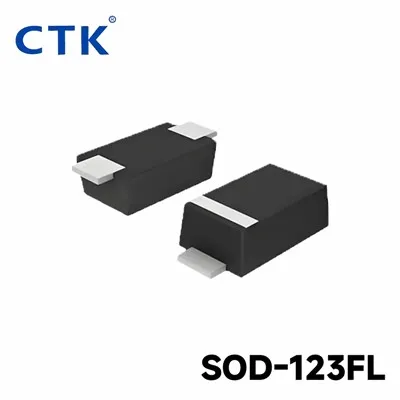
The package of a low voltage MOSFET plays a crucial role in determining its thermal resistance. Different package types have varying abilities to dissipate heat. For example, surface – mount packages like the SOT – 23 and DFN (Dual Flat No – lead) are popular in low – voltage applications due to their compact size. However, their small form factors can sometimes limit heat dissipation. In contrast, through – hole packages, such as the TO – 220, have larger surface areas and better heat – sinking capabilities. Advanced package designs often incorporate features like thicker copper leads, exposed pads, and thermal vias to improve heat transfer from the junction to the outside environment.
Die Size
The size of the MOSFET die also impacts thermal resistance. A larger die has more area for heat conduction, which generally results in a lower thermal resistance. When a MOSFET is designed with a larger die, the power dissipation is spread over a greater area, reducing the local heat density at the junction. This is why power – handling capabilities are often correlated with die size in low voltage MOSFETs.
Thermal Interface Materials
When a low voltage MOSFET is mounted on a printed circuit board (PCB) or a heat – sink, the quality of the thermal interface between the device and the heat – dissipating medium can affect thermal resistance. Thermal interface materials (TIMs), such as thermal greases or thermal pads, are used to fill the microscopic gaps between the MOSFET and the heat – sink, improving heat transfer. A poor – quality TIM or improper application can increase thermal resistance and limit the effectiveness of the heat – sinking strategy.
PCB Design
The PCB design can significantly influence the thermal resistance of a low voltage MOSFET. The copper traces on the PCB act as thermal conductors, helping to spread the heat away from the MOSFET. A well – designed PCB with thick copper layers, large ground planes, and proper routing can enhance heat dissipation and lower the overall thermal resistance. Additionally, the placement of other components on the PCB can either impede or facilitate the airflow around the MOSFET, affecting its ability to cool.
Measuring and Specifying Thermal Resistance
Manufacturers typically measure the thermal resistance of low voltage MOSFETs using standardized test methods. These tests involve applying a known amount of power to the device and measuring the resulting temperature rise at the junction. The thermal resistance is then calculated as the ratio of the temperature difference to the power dissipation.
It is important to note that the specified thermal resistance values in datasheets are often obtained under ideal conditions. In real – world applications, factors such as airflow, ambient temperature, and the presence of other heat – generating components can cause the actual thermal resistance to deviate from the datasheet values. Therefore, engineers need to consider these real – world factors when designing circuits with low voltage MOSFETs.
Importance of Thermal Resistance in Low Voltage MOSFET Applications
Power Efficiency
In low voltage applications, power efficiency is a critical concern. A MOSFET with a high thermal resistance will experience a larger temperature rise for a given power dissipation. This increased temperature can cause the on – resistance ($R_{DS(on)}$) of the MOSFET to increase, leading to higher power losses in the device. By using low voltage MOSFETs with low thermal resistance, the temperature rise can be minimized, which helps to maintain a lower $R_{DS(on)}$ and improve overall power efficiency.
Device Reliability
Excessive temperature is one of the leading causes of semiconductor device failure. High temperatures can accelerate the degradation of the MOSFET’s dielectric layer, cause metal migration, and lead to thermal stress within the device. By managing the thermal resistance and ensuring that the MOSFET operates within a reasonable temperature range, the device’s reliability and lifespan can be significantly extended.
Compact Design
In many modern electronic devices, there is a constant push towards smaller and more compact designs. Low voltage MOSFETs are often a key component in these designs. However, the limited space in compact devices can make it challenging to dissipate heat effectively. By using MOSFETs with low thermal resistance, designers can achieve the same performance in a smaller form factor, as less space needs to be dedicated to heat – sinking solutions.
Our Offerings as a Low Voltage MOSFET Supplier
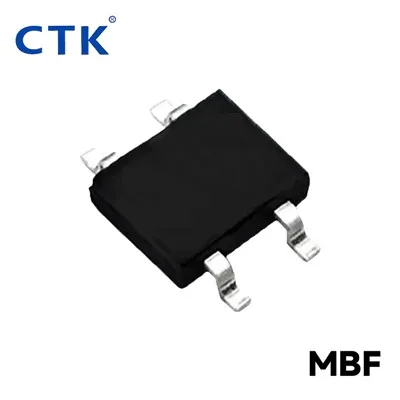
As a supplier of low voltage MOSFETs, we understand the critical role of thermal resistance in our customers’ applications. We offer a wide range of low voltage MOSFETs with carefully engineered thermal characteristics. Our products are designed with advanced package technologies to ensure efficient heat dissipation. Whether you need a surface – mount device for a compact PCB design or a through – hole package for high – power applications, we have a solution that meets your thermal requirements.
We also provide comprehensive technical support to help our customers select the most suitable low voltage MOSFETs for their specific needs. Our team of experts can assist with thermal analysis and design, taking into account factors such as PCB layout, heat – sinking strategies, and real – world operating conditions. By working closely with our customers, we aim to ensure that their electronic systems operate reliably and efficiently.
In addition to our standard product offerings, we are committed to continuous innovation. We invest in research and development to improve the thermal performance of our low voltage MOSFETs. This includes exploring new materials, package designs, and manufacturing processes to further reduce thermal resistance and enhance the overall performance of our devices.
Contact Us for Your Low Voltage MOSFET Needs
Switching Diode If you are in search of high – quality low voltage MOSFETs with excellent thermal characteristics, we invite you to contact us for a detailed discussion. Our team is ready to understand your specific requirements and provide you with the best solutions. Whether you are working on a small – scale project or a large – scale production, we can offer the right products and support to ensure the success of your application. Reach out to us to start a productive partnership and take your electronic designs to the next level.
References
- Baliga, B. J. (2008). Fundamentals of Power Semiconductor Devices. Springer Science & Business Media.
- Mohan, N., Undeland, T. M., & Robbins, W. P. (2012). Power Electronics: Converters, Applications, and Design. John Wiley & Sons.
- International Electrotechnical Commission. (2019). IEC 60747 – 8: Semiconductor devices – Discrete devices – Metal – oxide – semiconductor field – effect transistors.
Tongke Electronic Co., Ltd
Tongke Electronic Co., Ltd. is one of the most experienced low-mosfets manufacturers and suppliers in China, featured by quality products and low price. Please rest assured to wholesale advanced low-mosfets made in China here from our factory. Contact us for pricelist.
Address: No.3,Chayuan Rd, Street 3, AilingKan, Dalingshan, Dongguan, Guangdong, China.
E-mail: jack@ctk-elec.com
WebSite: https://www.ctkchip.com/
