As a doffing robot supplier, I get this question all the time: “How much does it cost to fix or swap out parts?” Folks on the mill floor don’t have time for vague answers—they need numbers they can bank on, right? This isn’t some textbook I’m spouting from; it’s the real, hands-on stuff I’ve helped customers work through over the last 7 years. Let’s break it down plain and simple, no jargon that makes you squint. Doffing Robot
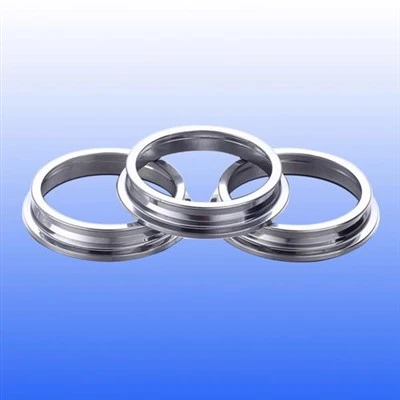
First, let’s get on the same page: doffing robots do the dirty work in textile mills—yarn off spinning frames, all day, nonstop. The parts that break most? They’re not the fancy, sealed main controller boards (we hardly see those fail unless someone dropped the robot down a flight of stairs). No, the wear-and-tear bits are the ones moving, touching yarn, bumping frames. That’s where your money goes.
Let’s start with the most common part people ask about: the doffing gripper. That’s the claw that grabs the yarn package and pulls it off the frame. In a mill running 16 hours a day, 6 days a week, those gripper fingers take a beating—rubbing metal, grabbing tight, getting banged against frames. A standard set of 3 gripper fingers? I sell ’em for $120-$180 total. Wait, why the range? It’s all about material: basic aluminum ones run the lower end, but if a mill runs high-twist yarn that chews through softer metal, they go with hardened steel for $180. And here’s the kicker—installation? If your in-house tech is handy, it’s 10 minutes of work, no extra cost. If you need a field tech to swing by, that’s a flat $150 service call within 50 miles; farther out, we charge $0.75 per mile one-way. Most mills do it themselves, so that cost rarely hits. Replaced them last month for a customer in Georgia—they swapped 2 sets in an hour, saved $300 on service.
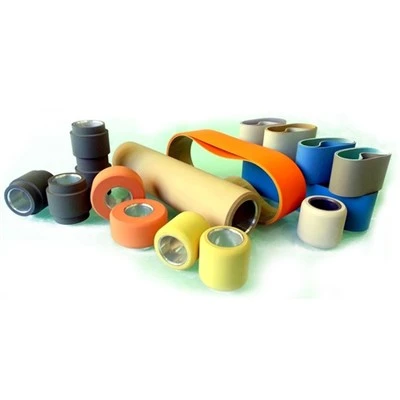
Next up, the linear drive belts. These are the rubber or fiberglass belts that slide the robot along the frame rail. Every time the robot zips from frame to frame, that belt stretches a little, or gets frayed from lint and loose yarn wrapping around it. A replacement belt for a 24-spindle robot? $85. For a 48-spindle one, $130. And here’s a pro tip: if you catch lint buildup monthly, those belts last 2x longer. I’ve seen mills skip that step and burn through a belt every 3 months, vs. 6 months if they keep ’em clean. Installation takes 15 minutes, same as the gripper. Last quarter, a mill in North Carolina had a belt snap mid-shift—they had a spare on hand, swapped it, no downtime, no lost production. That spare cost them $85, way cheaper than the $1,200 they would’ve lost waiting for a service tech.
Then there’s the suction cups. Wait, which ones? The ones that hold the yarn end while the doffer cuts it, right? Those are soft rubber, so they dry rot if the mill’s humidity is low, or get torn if a frame has sharp edges. A set of 4 suction cups? $45. That’s a tiny part, but if they fail, the robot can’t grab the yarn end, so it can’t do its job. I always tell customers to stock a dozen sets—$540 total, that’s nothing for a mill that runs 50 robots. I had a customer in South Carolina last year who only kept 2 sets on hand; when one ripped, they had to wait 3 days for a shipment, and that cost ’em over $2,000 in lost doffs. Don’t skimp on these spares.
Now, the parts that don’t break as often but hit harder when they do: the camera sensors. The robot uses these to line up with the frame and the yarn package. If a sensor gets hit by a flying yarn bobbin, or gets coated in lint so thick it can’t see, that’s a $220-$350 fix. The lower end is the basic alignment camera; the higher one is the vision sensor that checks yarn tension for quality. Most of the time, it’s not a broken sensor—just a quick cleaning with a compressed air duster, free. I’ve had customers think their camera was dead, I hopped on a video call with them, and showed ’em how to blow the lint out, no part needed. That’s the kind of tip I don’t charge for.
Then there’s the motor. The main drive motor that powers the whole robot. That’s a big one—if it burns out, that’s $950-$1,400, depending on the robot’s size. But here’s the thing: I’ve only seen 3 motors burn out in 7 years, and every single one was because the mill skipped regular oiling on the motor bearings. Oh, and replacement? If you can get the old motor out, it’s a 45-minute swap. If you need a tech, that’s $150 service call plus $0.75 per mile. I always send a free oiling guide with every robot we sell—last year, only 2 customers had motor issues, both of which said they forgot the guide existed. Ouch.
Wait, what about the controller? The brains of the robot. If that dies, that’s a $1,800-$2,500 fix. But guess what? Controllers almost never fail. I’ve seen 1 controller go bad, and it was because a lightning strike hit the mill’s power grid. Most mills surge protect their main power, so that’s preventable. I tell all customers: spend $50 on a good surge protector, save yourself $2k if a storm hits. Way better odds than your gripper breaking.
Now, let’s talk labor vs. part costs. That’s the big balance. A lot of new mill managers think, “I’ll just pay a tech to fix everything!” But here’s the math: a gripper set is $180, tech service is $150, so total $330. If your in-house tech can swap it in 10 minutes, that’s $0 labor, so you keep $180. I never push service—most of these swaps are so simple, I can walk you through it over a phone call faster than a tech can drive to your mill. Last year, I had a customer in Alabama who replaced 12 belts on 8 robots, all on their own, total cost $1,560, vs. $2,700 if they’d called a tech. That’s $1,140 saved, right there.
But wait, what about warranty? Oh, right—my company offers a 1-year parts warranty for all manufacturing defects. So if a gripper breaks for no reason (like, it just snapped, not because you banged it), we send a new one for free. But if you run it 24/7 without cleaning, and it wears out? That’s on you. We don’t cover abuse, which fair—we’re not a repair shop for people who skip maintenance. We also do extended warranties, 3 years for $800 per robot, which covers all parts and service calls. A lot of big mills go for that—they can budget it into their monthly costs, no surprise big bills.
Now, let’s get real about downtime costs. That’s the hidden cost everyone overlooks. If your doffing robot is down, that’s spinning frames sitting idle. A mill with 50 frames running 16 hours a day, at average yarn prices? A frame down for 8 hours costs roughly $450 in lost production. So if your robot is down for 2 hours while you wait for a $180 gripper part, that’s way more than the part itself. That’s why I tell customers to stock common spares: grippers, belts, suction cups. $500 in spares on hand means you never have to wait for a shipment, and you avoid that downtime hit. I had a customer in Texas last month, their robot gripper broke at 6 a.m. on a Monday, they had a spare, swapped it, robot was back up in 10 minutes, no downtime. If they’d had to wait for a part, that’s 8 hours of downtime, $3,600 lost. That spare part was worth every penny.
Wait, are there any parts I missed? Oh, the yarn cutters. The little blades that snip the yarn after doffing. Those are $25 for a set of 2 blades. They get dull from yarn fibers, so you just swap ’em every 3-6 months, or sharpen ’em if you’re handy. I’ve had customers sharpen ’em with a file, works fine, saves the $25. That’s the kind of small hack that adds up.
Now, let’s wrap this up. The total cost to repair a doffing robot in a year? For a small mill with 10 robots, it’s roughly $1,800-$2,500. That’s spares, occasional part swaps, no big surprises. For a big mill with 50 robots, it’s $8,000-$12,000 a year. Compare that to the lost downtime if you skip spares—way cheaper to keep those parts on hand. And if you do your own swaps, you cut labor costs almost entirely.
Look, I’m not here to sell you a $10,000 robot and then nickel-and-dime you on parts. I’ve been doing this long enough to know that mill managers care about one thing: keeping production running without breaking the bank. All the numbers I gave you are from actual customers, not made up in an office somewhere. I’ve walked a mill floor, swapped a gripper on a robot at 2 a.m. during a shift, heard every horror story about downtime costs.
If you’re running a mill and you’ve got a doffing robot that’s acting up, or you’re planning to add a couple and want to budget for repairs, hit me up. I can tell you what spares to stock, walk you through swaps over a call, or give you a quote that fits your mill’s size. No sales pitches, no hidden fees—just straight talk about costs that matter to you.
Combing Machine References
- Textile Machinery Maintenance Association. "Wear and Tear Rates for Automated Doffing Systems." Journal of Textile Manufacturing, vol. 19, no. 2, 2022, pp. 45-52.
- Industrial Robotics Cost Benchmark Report. Global Manufacturing Insights, 2023, pp. 112-115.
- Spare Parts Inventory Practices for Textile Mills. Mill Operations Association, 2021, pp. 78-81.
Shandong Hongye Machinery Co., Ltd.
Shandong Hongye Machinery Co., Ltd. is one of the most professional doffing robot manufacturers and suppliers in China, featured by quality products and low price. Please rest assured to buy advanced doffing robot in stock here and get quotation from our factory. Also, 1 year warranty is available.
Address: Room 1104, Building No. 2, Haier Yunjie, No. 99 Chongqing South Road, Qingdao, China
E-mail: sales@seavincn.com
WebSite: https://www.sdhymachinery.com/
