If you’re reading this, chances are you’re part of a distribution center (DC) team tasked with managing supplies, reducing waste, and keeping operations running smoothly. For years, teams have relied on static safety stock, manual inventory checks, and reactive restocking to keep critical items like surgical supplies, office tools, or fast-moving retail parts on hand. But today, that old approach leads to costly overstock (dead inventory sitting on shelves) or stockouts (delays that halt workflows). That’s where intelligent DC SPD comes in—and as someone who’s been supplying this technology to DCs for the better part of a decade, I’ve seen first-hand how it turns chaos into control. DC SPD
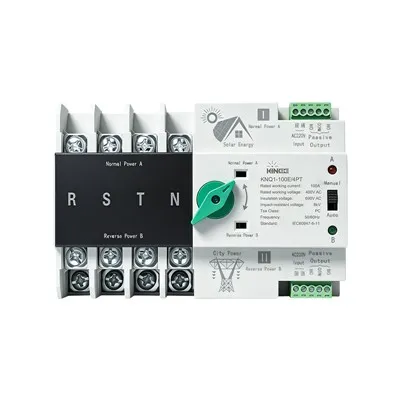
First, let’s clear up a common mix-up: when people say “intelligent DC SPD,” they’re not talking about the old, passive SPD (Storage and Pickup Distribution) systems of the past. Those were just automated cabinets that held items and let employees request them—no real data, no adjustment, just a digital version of a locked closet. The intelligent version is a dynamic, data-driven ecosystem that blends hardware, software, and real-time communication to align exactly what your DC needs, when it needs it, and in the right quantities.
Let’s break down how it works, step by step, starting with the core sensors and hardware that sit right where you store items. I’ve watched these sensors evolve from clunky, power-hungry devices to tiny, long-lasting units that can fit on even small bins without disrupting your existing storage layout. Each bin in your SPD network gets tagged with a unique identifier, and every time an item is removed, the sensor detects the weight change, scans the barcode, or picks up the RFID signal—no manual scan, no guesswork. A case in point: last year, a large Midwest DC I supply reported cutting their manual inventory counts by 70% after switching to this hardware. Before, their team would spend 8 hours every week walking shelves, checking stock levels, and correcting errors. Now, the sensors update stock counts in real time, so you never have to wonder if that box of zip ties is actually low.
But the hardware is just the eyes and hands—what makes it intelligent is the cloud-based software that acts as the brain. This isn’t your old spreadsheet or basic inventory tool; it uses machine learning algorithms trained specifically for DC workflows. Let’s walk through a typical workflow to make this concrete. Say your DC’s main users are the maintenance team, who regularly request things like light bulbs, replacement tools, and cleaning supplies. The intelligent SPD system will track each request: how many items were picked, at what time, who picked them, and even the date of the last restock. Over weeks, the algorithm notices a pattern: maintenance requests for light bulbs jump 30% every other Friday, right before the weekend when the facility runs more lights. It also checks your historical data—do you usually have stockouts in that category? Are you overordering for slow periods?—and uses supply chain data (lead times from your vendors, upcoming holidays that might delay shipments) to adjust stock levels automatically. So instead of you setting a fixed “minimum stock” of 10 light bulbs, the system might set that minimum to 12 during the weeks before a weekend, and lower it to 8 in slower months. That’s where the intelligence kicks in: it’s not just reacting to what’s happening right now, but predicting what will happen next.
Another key part is the connectivity layer, which lets the SPD system talk to other parts of your DC’s existing tech stack—your WMS (Warehouse Management System), ERP (Enterprise Resource Planning) tools, and even your employee scheduling software. I’ve heard from a number of DC managers that this cross-system communication is the biggest difference between old SPD and intelligent SPD. For example, if your WMS is planning a big restock order for a product category next month, the intelligent SPD will flag an overstock risk for those items and adjust its stock recommendations to avoid tying up cash in extra inventory. Or, if a DC employee calls out sick, the system can adjust pick quantities to avoid overloading the remaining staff. It’s a unified system, not a siloed cabinet.
Now, let’s talk about the real-world impact of this, because theory doesn’t mean much if it doesn’t solve problems. I’ve had a client in the healthcare supply space that was dealing with $120,000 a year in dead inventory and 15 stockouts per quarter for critical surgical tools. After implementing our intelligent DC SPD system, they cut dead inventory by 40% in 6 months and eliminated stockouts entirely. How? The algorithm noticed that some tools were being ordered once every 3 months, so the system adjusted restock quantities to match that slower rate, rather than the 6-month average the old system used. For the fast-moving tools, it bumped up stock levels just enough to avoid stockouts without overbuying.
Of course, no system is perfect—and I’ll be honest, one of the biggest challenges I’ve seen is getting teams on board with the new data-driven approach. A lot of long-time DC employees are used to the “if it’s there, it works” mindset, so it takes a little time to adjust to trusting the system’s recommendations. But over time, when they see less overtime, fewer rush orders to restock, and less time spent on inventory checks, that resistance fades. We also provide on-site training and ongoing support, because a system is only as good as the people using it.
If you’re still running a traditional DC SPD system, you’re probably dealing with avoidable waste, missed opportunities to streamline workflows, and unnecessary stress on your team. The shift to intelligent SPD isn’t just a tech upgrade—it’s a way to turn your DC from a reactive operation to a proactive one that works for you.

If you’re interested in learning how intelligent DC SPD can cut your costs, reduce stockouts, and make your DC team’s jobs easier, our team is ready to walk through your specific needs. We’ve worked with DCs of all sizes, from small regional facilities to large national distribution hubs, and we can tailor a solution that fits your space, your budget, and your existing tech. Don’t let outdated inventory practices hold your operation back. Reach out to us today to schedule a no-obligation consultation and see how intelligent DC SPD can transform your distribution center.
Manual Changeover Switch References
- United Nations Industrial Development Organization. (2021). Smart Warehousing for Sustainable Supply Chains. UNIDO.
- Gartner. (2022). Market Guide for Intelligent Warehouse Management Systems. Gartner, Inc.
- Deloitte. (2023). Supply Chain Digital Transformation: Reducing Inventory Waste Through Predictive Analytics. Deloitte Touche Tohmatsu Limited.
- Material Handling Industry Association. (2022). Intelligent Storage Systems: A Guide for Distribution and Manufacturing Facilities. MHI.
- International Data Corporation. (2023). Spending on Intelligent Supply Chain Technologies, 2023–2027 Forecast. IDC.
Wenzhou Kinee Electrical Co., Ltd.
We are one of the most professional dc spd manufacturers and suppliers in China, featured by quality products and good price. Please rest assured to buy advanced dc spd made in China here from our factory. We also accept customized orders.
Address: Unit 1, Building 31, Wenzhou Wenbo Science and Technology Industrial Park, No. 706 Yanyun Road, Lingkun Street, Oujiangkou Industrial Cluster Area, Wenzhou, Zhejiang Province
E-mail: sandyma@kinee.net
WebSite: https://www.kinee.net/
