If you’re a building owner, facilities manager, or architect, you know an air handling unit (AHU) isn’t just a box that blows air. It’s the quiet workhorse keeping offices comfortable, hospitals safe, schools focused, and retail spaces breathable. Pick the wrong one, and you’ll end up with sky-high utility bills, uneven temps, or worse—indoor air quality (IAQ) issues that make people sick. As someone who’s been supplying AHUs for over a decade, I’ve seen way too many folks skip the deep dive and regret it later. This post’s gonna cut through the jargon, break down what actually matters, and point you to the stuff that’ll make your life easier. Air Handling Unit
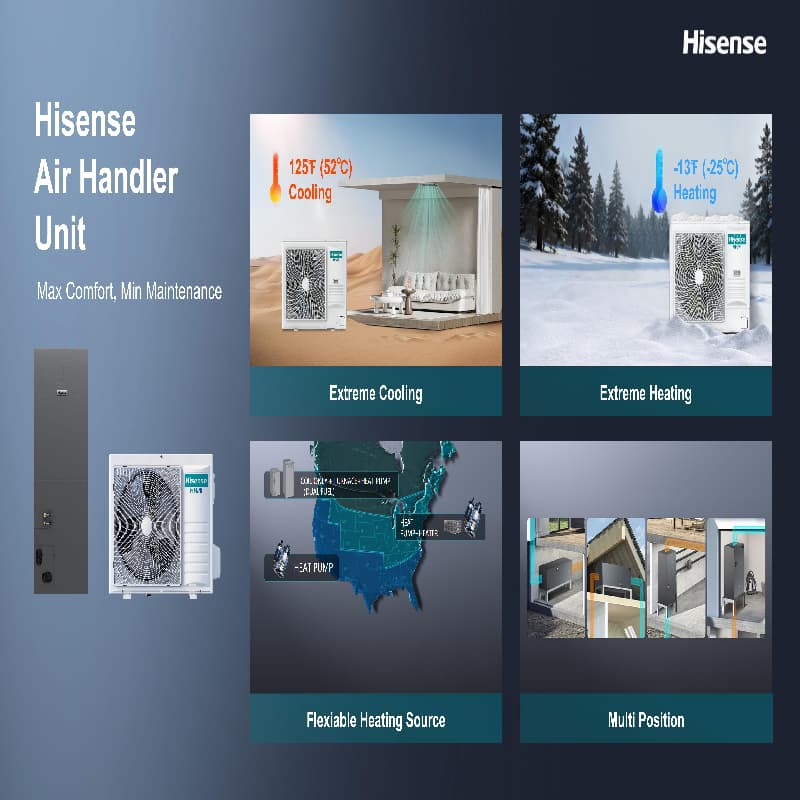
First off, let’s get one thing straight: there’s no one-size-fits-all AHU. The 10,000 sq ft elementary school downtown needs something totally different than the 50,000 sq ft industrial warehouse on the edge of town. The first step is sizing it right—but “right sizing” isn’t just about picking the biggest unit you can afford. Oversize it, and it’ll cycle on and off like crazy, wasting energy and wearing out parts faster. Underestimate it, and it’ll run 24/7 just to keep up, killing your utility budget. How do you nail it? You gotta calculate the required air change rate (ACH) for your space. For offices, that’s usually 4-6 ACH; hospitals go higher, like 6-12, because of pathogen control; warehouses might dip to 3-5 if it’s just storage. Don’t forget to factor in peak loads, too—like a 90-degree summer afternoon when everyone’s cranking computers and lighting, or a freezing winter week with 50 people crammed in a conference room. Skip that, and your AHU’ll be gasping when you need it most. My team always does a free load calculation for clients, by the way—no charge, no sales pitch, just helping you get the math right before you even look at units.
Next up, IAQ is non-negotiable these days. Post-pandemic, customers and tenants are way more picky about fresh air and clean filters. If your building’s in a dense urban area with lots of traffic pollution, or a hospital with airborne germs, basic filters ain’t gonna cut it. MERV ratings matter here—MERV 8 is standard, but MERV 13 is the sweet spot for most commercial spaces, and MERV 14 or higher for healthcare or labs. Oh, and don’t sleep on energy recovery ventilation (ERV) or heat recovery ventilation (HRV) units if you’re in a place with extreme temps. ERVs swap both heat and moisture between incoming and outgoing air, so in the summer, it cools the hot, humid outside air before it hits your space, and in the winter, it adds moisture to dry heated air. HRVs do just heat, but either one can cut your energy bills by 20-30%—trust me, that adds up fast. We’ve installed ERVs in a few downtown high-rises lately, and their clients swear the air feels way fresher, even on days when the city’s air quality is garbage.
Then there’s the unit type and layout. AHUs come in two main flavors: rooftop and indoor. Rooftop units are perfect for buildings with no extra indoor space, like small offices or strip malls—they’re easy to install and access for maintenance, but they’re exposed to the elements, so you need one rated for your climate (like a cold-climate model with freeze protection if you’re in Minnesota). Indoor units are better for larger spaces where you have the room, like hospitals or schools, because they’re quieter and more stable, but you gotta make sure your mechanical room can fit it—don’t forget to measure for duct connections, access panels, and clearance for filters and fans. Also, think about how the unit’s laid out: do you need a built-in humidifier? A reheat coil for zones? A direct-drive fan instead of a belt-drive? Direct-drive fans are more efficient, need less maintenance, and last longer—worth the extra cash upfront, in my book.
Maintenance is another big one that people overlook. Even the best AHU’ll die early if you skip upkeep. Look for units with easy-to-access parts—filters that slide out, not ones you gotta unbolt a panel to replace. Digital controls are a game-changer here, too. Old analog controls require you to manually adjust temps and check the unit every week, but modern BACnet or Modbus controls let you monitor everything remotely: filter pressure, fan speed, energy use, even alerts when a part’s about to fail. My team installs these smart controls on almost all our units, and clients love being able to check their AHU from their phone while they’re on vacation. We also offer annual maintenance plans—we’ll come change filters, inspect coils, tighten belts, and make sure everything’s running smooth for a fair price. It’s way cheaper than replacing a whole unit early.
Budget, let’s talk about the elephant in the room. Don’t just go for the cheapest unit you can find. A $10k AHU might seem like a steal now, but if it uses 30% more energy or breaks down in 5 years, you’ll end up paying double in the long run. Look at the total cost of ownership (TCO), not just the upfront price. Cheaper units usually have lower SEER ratings (for cooling) or EER ratings (for efficiency), which means higher utility bills. Also, check the warranty—we offer a 5-year parts warranty on all our AHUs, and 10 years on the coil, because we stand behind our stuff. Some cheap brands only offer 1 year, so if something breaks after that, you’re on the hook for thousands.
Wait, let’s not forget zoning. If your building has different spaces with different needs—like a office where people like 72 degrees and a break room where everyone’s making coffee and the temp’s higher—you don’t wanna heat or cool the whole building the same. Zoned AHUs let you split the space into 2-4 zones, each with its own control, so you’re only conditioning what you need. That can cut energy use by another 15-20%, and your tenants’ll be way happier because their space is exactly the temp they want. We’ve installed zoned systems in a few multi-tenant buildings, and the property managers have told us their tenant retention went up because of it.
Oh, and regulatory stuff. You can’t just install any AHU—local building codes, ASHRAE standards, and energy efficiency regulations (like IECC in the US) have rules for air flow, efficiency, and IAQ. For example, ASHRAE 62.1 sets the minimum outdoor air rates for commercial buildings, and your AHU has to meet that. Skip this, and you might fail an inspection or get fined. My team’s super familiar with all these rules, so we can help you pick a unit that checks every box without you having to stress about it.
I’ve seen a lot of people make mistakes here. Last year, a small café in Austin bought a cheap rooftop AHU, figured it’d work fine. But they didn’t account for the Texas heat—their unit ran nonstop all summer, their electric bill was $3k a month, and it died after 18 months. They called us, we helped them size a rooftop unit with a higher SEER rating, and even added a smart control that adjusts based on outdoor temp. Now their bill’s down to $1.8k, and it’s still going strong. That’s the kind of thing I hate to see—folks cutting corners because they don’t know what to look for.
So to wrap this up: start with sizing based on your space’s ACH and peak loads, don’t skip IAQ and efficiency, pick the right unit type for your location, look for easy maintenance and smart controls, calculate TCO not just upfront cost, consider zoning if you need it, and make sure it meets codes. This isn’t rocket science, but it is stuff that matters.
If you’re in the market for a new AHU, or just have questions about what you already have, hit us up to chat. We’ll walk you through every step, no pressure, no confusing jargon. Don’t wait until your old unit breaks down and you’re stuck with an emergency purchase—plan ahead, and get something that works for your building for years.
Integrated Cooling System REFERENCES
ASHRAE Standard 62.1-2022: Ventilation for Acceptable Indoor Air Quality
Air-Conditioning, Heating, and Refrigeration Institute (AHRI): Product Performance Standards for Air Handling Units
International Energy Conservation Code (IECC) 2021: Commercial Building Requirements
Building Owners and Managers Association (BOMA): Energy Efficiency Guidelines for Commercial HVAC Systems
Hangzhou Dayu HVAC Engineering Co., Ltd.
Address: Room 1004, Building 1, Xicheng Business Tower, Xihu District, Hangzhou City, Zhejiang Province, China
E-mail: info@hi-hvac.com
WebSite: https://www.hi-hvac.com/
