Hey everyone, Long Bed Wood Lathe

If you’re reading this, chances are you’ve stared at a chunk of beautiful hardwood—say, a 6-foot walnut billet or a 7-foot maple spindle blank—and thought, “Wait, how the heck do I turn that on a long bed wood lathe?” I get it. A few years back, when we first launched our long bed wood lathe line (you know, the ones with the 8-foot beds we get so many questions about), a customer brought in a 9-foot cherry blank and told us he’d been trying to turn it on a short-bed model for two weeks. He had bruises on his arms from holding steady, chunks of wood flying everywhere, and a spindle that was so wobbly it looked like Jell-O on a stick. That’s the exact panic we’re fixing today—turning long spindles isn’t just about having a long bed; it’s about small, intentional moves that keep both your workpiece and your sanity intact. Let’s break this down like we’re chatting over coffee (no stuffy jargon, promise).
First off, let’s talk about why a long bed lathe matters here. A short-bed lathe maxes out at 4 feet or so—you can’t span more than that without the headstock and tailstock being too close, which introduces flex. Our long bed models give you the room you need: 6, 8, even 10 feet of space between centers. But even with the right machine, if you skip the basics, you’ll still be fighting that wobble. Let’s start with the setup, because that’s 80% of the battle for long spindles. I once watched a new machinist rush this step, and by the time he got his tool on the wood, the whole thing was vibrating so hard the workshop lights shook. Don’t be that guy.
Step one: Properly mount your workpiece. Long spindles are heavy— that 7-foot oak blank I mentioned earlier? It can weigh 50+ pounds if it’s solid, and if it’s green, even more. So first, inspect your ends: cut them dead straight, no jagged edges or splits. If you’re using a spur drive (the pointy one that grips the wood), make sure it’s seated all the way in the headstock. A lot of people just tap it in with a mallet, but actually give it a little twist to make sure the teeth are locked into the grain—if they slip mid-turn, you’re in for a nightmare. Then the tailstock: don’t crank that tight! I know, I know, you think more pressure = less wobble, but over-tightening causes the wood to warp or crack, especially in dense hardwoods. Instead, get it snug, then give it a quarter turn with the tailstock handle. That’s it. Also, for really long workpieces (anything over 6 feet), you’ll want to use a steady rest. Not the follow rest that moves with you—no, a fixed steady rest, mounted somewhere in the middle of the bed. This is non-negotiable, trust me. It takes the weight off the center of the spindle and eliminates most of the flex. Pro tip: if your steady rest has adjustable pads, use leather or rubber on the contact points—metal on wood scratches the surface and leaves marks you’ll have to sand out later.
Next up: tool selection and positioning. Short spindles let you get right up close to the headstock, but long ones? That’s a one-way ticket to vibration city. The general rule here is: the further your tool is from the tool rest, the worse your cut will be. So you need to move the tool rest as close to the workpiece as possible. Like, within 1/8 inch. No, not a half inch—1/8 max. Our long bed lathes have extra-wide tool rests for this exact reason, by the way—you don’t have to lean way over the bed to get close. As for tools: skip the thin, flimsy spindle gouges. Go for a mid-to-wide flute gouge (1/2 inch is perfect) because they’re stiffer and less likely to flex mid-cut. Also, avoid using a skew chisel for long stretches of the spindle—skews are great for the ends, but they can catch on the grain if you’re working along a 6-foot length. I like to use a roughing gouge first to get the basic cylinder shape, then switch to a parting tool to refine the edges before moving to a detail gouge.
Then there’s spindle speed. This is where a lot of beginners mess up, especially with long workpieces. Most of us know to slow down for large diameters, but for long spindles, you need to slow down even more. Why? Because the longer the workpiece, the more it’s prone to harmonic vibration—like when you pluck a long ruler off a desk and it vibrates. If you spin that too fast, the vibration amplifies, and before you know it, you’re turning a wobbly mess instead of a smooth spindle. For a 7-foot spindle, I run our long bed lathe at 600-800 RPM max. If you’re turning a lighter piece (like a 6-foot ash spindle for a chair leg), you can push it to 1000 RPM, but never higher than that. Also, make sure your speed is consistent—our long bed lathes have variable speed control, so you can lock it in without it surging, which helps with smooth cuts.
Now, the actual turning technique. No rushing here. Take small, light cuts—think 1/32 to 1/16 inch deep, not 1/8 inch. A deep cut on a long spindle will cause the whole thing to twist, not just cut. And feed the tool along the bed slowly—move it with the carriage, if your long bed lathe has one. Wait, yes—carriage! Our long bed models have a sliding carriage that lets you move the tool evenly along the length, instead of holding the tool by hand. That’s a game-changer. You’ll get a way straighter, more consistent spindle, because you’re not shifting your hand or arm mid-cut. If your lathe doesn’t have a carriage (some of our compact long bed models don’t, for hobbyists), use two hands: one on the tool handle near the rest, and one on the end of the tool for control. Keep your elbows tight to your sides—this stabilizes you, so you don’t shake.
Wait, what about sanding? Long spindles are a pain to sand because you can’t reach every part easily. If you try to climb on the lathe while it’s spinning, that’s a safety hazard—don’t do it. Instead, sand by hand, with the lathe turned off and unplugged. Start with 80 grit, work your way up to 220, and use a sanding stick or a small block to reach into the curves. For super long spindles, you can wrap sandpaper around a thin wooden dowel and slide it along the length—way easier than reaching with your arm. And never sand while the lathe is spinning; even a small piece of sandpaper can catch and fly, that’s a quick trip to the ER no one needs.
Oh, and let’s talk about common mistakes we see all the time with long spindles. First, not balancing the workpiece. If your spindle has a slight bend (which most do, even if it looks straight), it will vibrate a lot when spun. To fix this, before you start turning, mark the heavy side with a pencil. When you mount it on the lathe, align that mark 180 degrees from the spur drive’s sharpest tooth. This evens out the weight and reduces vibration. Second, forgetting to tighten the bed’s locking levers. Our long bed lathes have levers at the headstock and tailstock to lock them in place—if you skip that, the tailstock can slide a little as you turn, messing up the alignment of the spindle. Third, not cleaning the wood first. Dirt, sawdust, or bark on the ends will make the spur drive slip, so wipe down the ends with a rag before mounting.
Let me share a quick story to drive this home. A customer called us last month, panicking because he’d turned 3 feet of a 8-foot walnut spindle and it was still wobbly. Turns out he’d used a short steady rest, cranked the tailstock way too tight, and was running his lathe at 1800 RPM—for an 8-foot spindle. We walked him through adjusting the steady rest, slowing the speed to 700 RPM, and using a fixed middle steady. A week later, he sent us a photo of the finished spindle— it was for a dining table leg, and it looked perfect. No wobble, smooth curves, even grain. That’s what happens when you follow these steps, not just rely on a long bed lathe itself.
At the end of the day, turning a long spindle on a long bed wood lathe isn’t rocket science, but it does require attention to the small details. It’s not just about having the right machine (though our long bed lathes are built to handle this exact task, with extra rigidity and wide beds that make setup way easier than short-bed models)—it’s about mounting the workpiece right, using the right tools and speed, taking small cuts, and avoiding those common pitfalls.
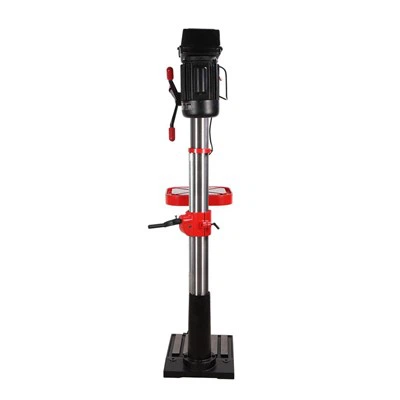
If you’re thinking about upgrading to a long bed lathe to tackle those big spindle projects, or if you have questions about setting up yours for a long turn, don’t hesitate to reach out. We work with woodworkers of all levels, from hobbyists turning chair legs to professional woodworkers making large furniture, and we’re here to help you get the best results. Just get in touch to talk through your projects, share challenges, or learn more about our line of long bed wood lathes designed specifically for these kinds of jobs.
Wood Lathes References:
- "Woodturning: A Foundation Course" by Mike Darlow
- "The Complete Guide to Wood Lathes and Turning" by Garry Griffiths
- Long Bed Wood Lathe Operational Manual, Standard Model Series, 2024
YS Machine Tools Co., Ltd.
We’re well-known as one of the leading long bed wood lathe suppliers in China, featured by quality products and good service. Please rest assured to buy customized long bed wood lathe at competitive price from our factory. Contact us for more details.
Address: 300 Sandusky st, Ohio, 43611, USA
E-mail: yishoumachinetools@gmail.com
WebSite: https://www.ysmachinetool.com/
