If you’ve ever stared at a bakery display case, squinting at two very different types of pastries both covered in pink, petal-shaped bits, you’re not alone. I get DMs all the time from people asking: “Is there even a difference between floral pastries and flower pastries? Because they look the same to me!” And yeah, I get it—when you’re not deep in the weeds of making (and selling) floral-inspired pastries for a living, the line can feel super blurry. But after 5 years of running my little floral-inspired pastries operation, I can tell you there’s a whole lot more to the distinction than just how pretty they look. Let’s break it down like we’re chatting over a cold latte (no boring textbook terms, promise). Floral-Inspired Pastries

First off, let’s get the obvious out of the way: both revolve around flowers, right? That’s the only real overlap. But the devil’s in the details—what you use, how you make it, and even the vibe it’s going for. Let’s start with flower pastries, because that’s the one most people mix up with what I make, and it’s actually way more literal. When someone says “flower pastry,” they’re talking about a pastry that’s shaped like a bloom. Full stop. Think of a classic French macaron shaped like a rose, or a croissant twisted and curled into the form of a daisy, or even a sugar cookie stamped with a sunflower outline and colored in with icing. The key here is the shape is the star. The flowers are the blueprint, not the flavor.
I used to test a lot of these early on when I was learning the ropes. There was this one lemon flower pastry I made where I folded buttery croissant dough into layers that looked like peony petals, piped lemon curd in the center, and dusted the whole thing with edible gold luster. It tasted like really good lemon croissant, for sure, but if I told anyone it tasted like a flower? They’d have laughed in my face. The only floral thing about it was the shape. That’s the big tell for flower pastries: the flower is just a design choice. It’s like how you might make a cake shaped like a cat—cute, obvious, but the cake doesn’t taste like cat. Got it?
Now, my whole thing is floral pastries, which is a totally different beast. For us, flowers aren’t just a shape—they’re a key ingredient, sometimes the most important one. Let’s take a basic example: a floral shortbread. A flower pastry shortbread would be cut into a rose shape and maybe have a little icing swirl on top. A floral shortbread? We’d infuse the butter with dried rose petals first, so every bite has that subtle, not-too-sweet rose flavor. Then we’d fold in finely chopped edible lavender buds, not just dust the top with them for looks. And when we add a topping? It’d be candied jasmine petals that we actually steeped in simple syrup for a day, not just plucked from a grocery store flower bouquet and stuck on. No shade to flower pastries—they’re fun, especially for kids’ parties or Instagram, but floral pastries are all about that natural, aromatic depth from the flowers themselves.
Wait, let’s get specific about ingredients, because that’s where the science stuff comes in that makes all the difference. I can’t stress this enough: not all flowers are edible, right? That’s a huge mistake a lot of home bakers (and even some not-so-great commercial bakeries) make. For flower pastries? They can get away with fake, food-safe shapes, no big deal. But for floral pastries? We have to use only organically grown, pesticide-free edible flowers—no exceptions. I source mine from a small farm 45 minutes outside the city that grows nothing but edible blooms, because if I used a regular grocery store rose that was treated with fungicides? That could make someone sick.
The farm we work with grows every single variety we use: rose, lavender, jasmine, elderflower, even something called borage that tastes like cucumber, which is wild. For flower pastries? Most of the time they use fondant or colored icing that’s not even made from real flowers, if we’re being honest. That’s why a flower pastry shaped like a lily might taste like nothing but sugar and artificial vanilla, while a floral lily pastry would have actual lily extract or dried lily petals baked right into the dough.
Another big difference is the texture and experience of eating them. Let’s take a tarts, since that’s something I do a lot of both. A flower tart would be a plain buttery tart shell, filled with vanilla pastry cream, and then you arrange sugared daisies around the edge like a border. Each bite: crust, cream, a touch of sweet icing, no real floral flavor. A floral tart? Same tart shell, but the pastry cream is infused with elderflower and has a little lemon zest to brighten it up. Then we top it with fresh, raw pansies (the kind you can eat, duh) that add a slight peppery, fresh kick—they don’t just look pretty, they taste good. It’s a whole eating experience, not just a visual one.
I get asked all the time why I don’t just call what I do “flower pastries” because it’s simpler, but that’s like calling a salad with actual herbs and veggies the same thing as a pile of iceberg lettuce with plastic croutons. Both are technically food, but one is intentional and thoughtful, and the other is just a gimmick. Let’s talk about the rise in popularity too, because that’s why the difference has been getting more confusing lately. A few years ago, “flower pastries” blew up on TikTok—think those viral, super detailed shaped pastries that people post for likes. Everyone was making them, and they were everywhere in grocery stores and big bakeries. Then, as people started caring more about actual flavor than just aesthetics, the demand for something that tasted good and had actual flowers in it grew, and that’s how floral pastries became a thing.
I’ve seen so many bakeries mix them up, and that’s not just a branding mistake—it’s a difference in quality. Last year I catered a wedding where the couple had seen a “floral pastry” post online, but when the delivery came, it was just flower pastries shaped like peonies, no actual floral flavor. They were upset, and honestly? I would have been too if I paid premium prices for something that looked pretty but tasted like plain sugar. That’s the line for me: if you bite into a pastry and the only flower thing about it is how it’s shaped, it’s a flower pastry. If you can name the exact flower you’re tasting in each bite? That’s a floral pastry.
Don’t get me wrong, I love flower pastries! I made a ton of them for my niece’s 10th birthday last year—shaped like her favorite flowers, with sprinkles and frosting, and she went absolutely nuts for them. They have their place, especially for events where the main thing is fun and photos. But when you’re craving something that has that subtle, aromatic, almost herbal floral kick? The kind that pairs perfectly with a morning coffee or afternoon tea? That’s what we make. And that’s where the real value is, in my opinion.
Another way to tell them apart is the shelf life and how they’re stored. Flower pastries, especially the fancy shaped ones with fondant, can sit out for days because the fondant is like a sugar shell that locks everything in. We can make them a week ahead, no problem. But floral pastries? We have to make them fresh every single day, mostly because the flowers we use are fragile. We use them within 24 hours of harvesting, because if they sit around too long, their flavor fades, and they get limp. Also, we can’t use any preservatives that would kill the natural flavor of the flowers, so they have a short shelf life—and that’s a good thing, because it means there’s no weird chemicals in there.
I also want to talk about the intent behind each one, because that’s the most important difference of all. When you make a flower pastry, the intent is to create something that looks like a flower, that makes people stop and say “wow, that’s pretty.” When you make a floral pastry, the intent is to showcase the flower—to let people taste the delicate, unique flavor of a bloom in a way they never have before. It’s not just about the visual; it’s about the experience. I remember a regular customer who comes in every Saturday for our jasmine shortbread—she told me she never liked floral desserts before, because they all tasted like artificial perfume, but our shortbread made her realize flowers can taste natural and good. That’s the stuff that makes what we do worth it, right?
Wait, let’s clear up one more common mix-up: some people think floral pastries only use the petals of flowers, but that’s not the case. We use all kinds of edible flower parts, as long as they’re safe. For example, we use elderflower heads to make our elderflower scone mix—each little tiny flower in the head adds that bright, sweet, slightly honeyed flavor. We also use citrus blossom for our lemon bars, which adds a subtle floral note that makes the lemon taste even brighter. Flower pastries almost never use anything more than a decorative petal, if that—they don’t want to add extra flavor, because the whole point is the shape.
I see a lot of people online arguing about which is better, and honestly? There’s no right or wrong, but there is a difference. If you’re looking for a fun, Instagram-worthy treat for a party, grab a flower pastry. If you’re looking for a flavorful, thoughtfully made pastry that showcases the beauty of real flowers? That’s ours. That’s why I started my little operation—because I was tired of seeing pretty pastries that tasted like nothing, and I wanted to make something that was both beautiful and delicious, something that made people go “oh, that’s what a rose should taste like.”
Now, if you’re reading this and you’re a café owner, event planner, or just someone who wants to stock the best floral-inspired treats for your customers, let’s chat. We’ve got everything from lavender macarons to elderflower tarts, all made fresh daily with organic edible flowers, no weird preservatives or artificial flavors. Whether you need a bulk order for a wedding, a weekly delivery for your café, or just want to try a sample of our best-selling jasmine shortbread, reach out anytime. We’re here to help you add something special to your menu, something that’s not just pretty, but actually tastes amazing.
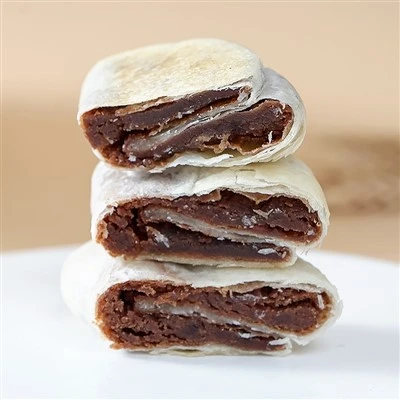
At the end of the day, the difference between floral pastries and flower pastries comes down to intention, ingredients, and experience. One’s all about the look, the other’s all about the flavor of the flower itself. And if you ask me? The best part is there’s room for both—we can have our pretty shaped pastries and our flavorful floral ones. But if you want the real deal when it comes to pastries that highlight the beauty of flowers in every bite, you know where to find us.
Frozen Pastries References:
- Edible Flower Safety & Best Practices, Culinary Institute of America, 2022
- The Rise of Floral-Inspired Desserts in Modern Patisserie, Pastry Arts Magazine, Vol. 18, No. 3, 2023
- Organic Edible Flower Sourcing for Small Batch Bakeries, Specialty Food Association, 2021
- Consumer Trends: Flavor vs. Aesthetics in Packaged & Artisanal Desserts, NPD Group, 2024
Fujian Luchen Food Co., Ltd.
As one of the most professional floral-inspired pastries manufacturers and suppliers in China since 1986, our products have good reputation in the market. Please feel free to wholesale bulk delicious floral-inspired pastries from our factory. Good service and quality products are available.
Address: No.19, Shangxipulou, Nansheng Town, Pinghe County, Zhangzhou City, Fujian Province
E-mail: service@xmnahan.com
WebSite: https://www.luchenbakery.com/
