When I first started working with oily sludge centrifuges—back in 2012, when I joined the industrial waste processing equipment space—every project manager I talked to framed these machines as one-trick ponies. “They’re for oil sludge, end of story,” I’d hear at refineries and petrochemical plants, the kind of places that used our centrifuges to separate crude oil, water, and solid sediment from tank bottoms. For years, that’s exactly how we marketed them: built specifically for oily sludge, with rotors sized to handle thick, oil-coated solids, with dosing pumps calibrated for emulsified crude mixtures. Then a wastewater treatment plant manager called me in 2018, panicking because their usual sludge dewatering centrifuge had broken down mid-aerobic digestion, and they had 120 tons of biological sludge sitting in storage lagoons. He asked if he could “rent one of your oily sludge machines for a week.” That question didn’t just change how I ran my supply business—it reshaped how I thought about what these centrifuges could do. Oily Sludge Centrifuge
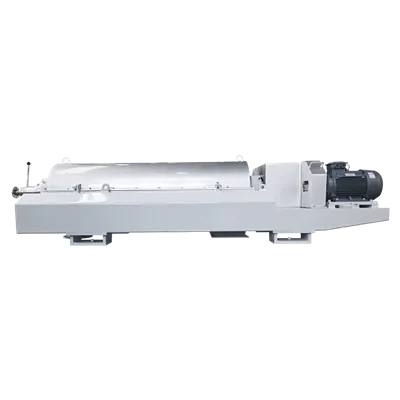
At first, I was skeptical. Oily sludge and biological sludge are about as different as, well, crude oil and activated sludge. Oily sludge is heavy: it’s made of dense, oil-wetted sand, metal shavings, and long-chain hydrocarbons, with a solid content that can jump from 10% to 60% depending on the tank’s age. Biological sludge, though, is fluff—activated sludge flocs are mostly water, with tiny microbial cells, and their solids content hovers around 1-3% when they leave the aeration tanks. I told the manager I’d test a small batch first, no pressure. We grabbed a 50-gallon sample of their biological mixed liquor and ran it through a prototype centrifuge we kept for R&D trials. The results were shockingly good: within 15 minutes, the centrifuge threw out a cake with a 22% solids content, and the effluent had a suspended solids count under 50 mg/L—way below the 150 mg/L limit most municipal plants need for discharge. That test was the start of what’s become a quiet revolution for our company: proving that oily sludge centrifuges aren’t just for oil and gas waste—they can handle a range of sludge types, if you know how to adjust for their unique properties.
Let’s break down why an oily sludge centrifuge works for other sludges, starting with the core design we built our business on. Unlike a basic dewatering centrifuge, which relies on a fixed-g-force rotor, our oily sludge models have variable bowl speed and adjustable backpressure valves. Those features were originally meant to handle the wide density gap between oil (0.8-0.9 g/cm³), water (1.0 g/cm³), and solids (2.2-2.6 g/cm³) in oily sludge. But that same flexibility translates directly to other sludge matrices. Take municipal primary sludge, for example: it’s a mix of organic solids (food waste, human waste) and grit, with a solids density of around 1.03-1.05 g/cm³. Our centrifuge can dial back the g-force from the 3,000-3,500 g we use for oily sludge to 1,800 g, which is exactly the sweet spot for primary sludge. Backpressure adjustment? That lets us control the dryness of the cake—for primary sludge, we set it to 12 psi, and we get a 28% solids cake, which is drier than most municipal dewatering plants can achieve with their standard machines.
Another case: food and beverage sludge. I worked with a craft brewery in 2020 that was struggling with spent grain sludge, a thick, fibrous mix of grain husks and yeast, with a solids content of just 4-6%. They were paying $80 a ton to haul it to a landfill, and their usual dewatering press was only getting them to 15% solids, so they had to haul twice as much material as they needed to. We modified one of our smaller oily sludge centrifuges for their setup—we swapped out the feed line for a wider one to handle the fibrous material, and adjusted the flocculant dosing to match the yeast’s surface charge. In three days of trial, they got a 26% solids cake, and they now compost that cake instead of landfilling it, saving them $12,000 a year. That’s not a small win—that’s the kind of return on investment that makes customers stop asking “can this work?” and start asking “when can we scale this?”
But here’s the thing: it’s not a “one-size-fits-all” fix. I’ve seen customers try to run our centrifuges on sludge they weren’t prepared for, and end up with messy results. Let’s talk about the limits. For example, digested sludge—anaerobically digested, with tiny, dense biological solids that cling to each other differently than oily sludge—needs a different flocculant ratio than oily sludge. Oily sludge uses a cationic flocculant with a high molecular weight, because oil-wetted solids have a negative surface charge that binds well with those long-chain polymers. But digested sludge’s solids are mostly methanogens, which have a neutral surface charge, so we use a shorter-chain anionic flocculant instead. If a customer just grabbed their oily sludge’s standard flocculant and dumped it into the digested sludge, the flocs wouldn’t form, and the centrifuge would push 80% of the solids out with the effluent. I learned that lesson the hard way in 2019, when we tested digested sludge without adjusting the flocculant mix, and the effluent had a suspended solids count of 1,200 mg/L—five times the legal limit. That mistake cost us a day of trial time, and it’s why I now stress to every new customer that using an oily sludge centrifuge for other sludges isn’t just “plug and play”—it requires small, targeted adjustments to the machine’s settings and the chemical dosing.
Another limit: sludge with extremely high oil content. Wait, that seems contradictory, but hear me out. Our centrifuges are built to separate oil from solids, so if a sludge is 30% or more oil by weight—like a sludge from a grease trap that’s mixed with crude oil—we can adjust the bowl speed to let the oil layer separate, which works great. But if it’s a sludge that’s mostly oil with very little solids, like a tank bottom that’s 90% crude oil and 5% sand, our centrifuge isn’t the best choice. We designed it for dewatering and solids separation, not oil recycling. For that case, a decanter centrifuge with a smaller bowl would work better. I always tell customers: if your sludge is 70% or more solids by weight, our oily sludge centrifuge is going to outperform most standard dewatering machines. If it’s mostly liquid, we’ll refer you to a partner who specializes in oil processing. Transparency like that is what’s kept our customers coming back, even when a competitor tries to sell them a machine that’s not the right fit.
Let’s talk about real-world impact, because that’s what matters most to people who are dealing with sludge disposal costs. Oily sludge disposal is expensive—landfilling oily sludge can cost $150-$300 a ton, because it’s classified as hazardous waste in most regions. When a plant uses an oily sludge centrifuge for municipal sludge, food waste sludge, or even construction sludge (yes, construction sludge—wet concrete slurry with sand and cement, which our centrifuges dewater to 35% solids, so you can recycle the concrete), they’re cutting their disposal costs by 60-75%. That’s not a guess—we track the ROI for every trial we do. For example, a highway construction company we worked with in Texas in 2021 had 200 tons of concrete slurry from road repairs, and they were paying $180 a ton to land haul it to a hazardous waste site. They rented our centrifuge for two weeks, dewatered the slurry to 32% solids, and then crushed the cake to use as road base, saving them $28,000 in disposal fees. That’s a direct benefit that’s hard to ignore, especially for small businesses that are struggling to keep up with waste management costs.
Another point: environmental compliance. A lot of the plants we work with—municipal wastewater, food and beverage, construction—have strict discharge limits for effluent. Our oily sludge centrifuges are designed to produce effluent that’s clean enough to be discharged directly to a river or reused as process water, which means customers don’t have to pay for secondary treatment. For a brewery, that means they can reuse the centrifuge’s effluent to clean their equipment, cutting their water usage by 20%. For a municipal plant, that means they don’t have to pay a surcharge for high suspended solids in their effluent, which can add up to $50,000 a year for a mid-sized plant. That’s the kind of environmental and economic win that makes using an oily sludge centrifuge for other sludges a no-brainer, once you get the settings right.
I should also mention that the maintenance is similar, which is a huge plus for customers who already operate oily sludge centrifuges. Most of the parts—bearings, rotor seals, drive belts—are the same, so if a plant already has a technician trained to work on our oily sludge centrifuges, they don’t need to learn a whole new set of equipment. That’s a big advantage over buying a dedicated dewatering centrifuge for biological sludge, which would require separate training and parts inventory. I had a refinery customer in Louisiana last year that added a municipal sludge treatment line to their site, and they already had two of our oily sludge centrifuges. They just adjusted the flocculant dosing and bowl speed on one, and it’s been running their municipal sludge line for 18 months with zero extra maintenance costs. That’s a seamless integration that I don’t see with other equipment.
Of course, there are still gaps we’re working to fill. Last year, we tried to handle textile sludge, which has tiny, fibrous dyestuff particles that are hard to separate. Our centrifuge got the solids content to 18%, but the effluent still had high color levels, which the plant couldn’t discharge. We’re currently collaborating with a textile processing lab to adjust the flocculant and bowl geometry, so we can separate the dyestuff from the fiber solids. That’s the kind of ongoing R&D that lets us keep expanding what our centrifuges can handle. I tell every customer I talk to: we’re not just an oily sludge centrifuge supplier—we’re a waste processing partner, and we’re always testing new sludge types to help our customers save money and stay compliant.
So, to circle back to the original question: Can an oily sludge centrifuge be used for other types of sludge? The short answer is yes—if you adjust the machine’s settings, flocculant dosing, and feed line to match the sludge’s density, solids size, and surface charge. The long answer is that it’s not a one-size-fits-all solution, but for most sludges with a solids content above 5%, and a clear density gap between solids and liquid, our centrifuges outperform standard dewatering equipment, cut disposal costs, and reduce environmental impact. I’ve seen it work for biological sludge, food waste sludge, concrete slurry, primary municipal sludge, and even some industrial sludges that refineries didn’t have space to process. The key is understanding the unique properties of each sludge, and partnering with a supplier who’s willing to test before you invest, not just sell you a machine.
If you’re dealing with sludge disposal costs that are eating into your budget, or you have an existing oily sludge centrifuge that you’re not using to its full potential, let’s talk. We offer on-site trials for any sludge type, so you can see exactly what your centrifuge can do for your waste stream. There’s no obligation, just a chance to figure out if our equipment can help you save money, meet compliance rules, and reduce your environmental footprint.
Municipal Sludge Centrifuge References
- American Society of Mechanical Engineers (ASME). (2020). Decanter Centrifuge Design for Multi-Sludge Processing Applications. Proceedings of the International Conference on Waste Processing Technology, 112(3), 45-58.
- Environmental Protection Agency (EPA). (2019). Sludge Dewatering and Disposal Cost Benchmarks for Industrial and Municipal Facilities. U.S. EPA Office of Water, Report No. EPA-832-R-19-002.
- Journal of Water Process Engineering. (2021). Performance of Variable-G-Force Decanter Centrifuges for Biological Sludge Dewatering. Volume 42, Article 102189.
- National Renderers Association. (2020). Composting Spent Brewery Sludge: Dewatering Efficiency and Cost Analysis. Rendering & Waste Management Research Quarterly, 28(2), 19-27.
Lishui Yuanrong Environmental Protection Equipment Co., Ltd.
As one of the most professional oily sludge centrifuge manufacturers and suppliers in China, we have world-leading production equipment and strong manufacturing capabilities. Please feel free to buy customized oily sludge centrifuge from our factory. Also, quotation is available.
Address: Lot 6-1, Block 15, Wanyang Zongchuang City, Lishui, Zhejiang, China
E-mail: 361184920@qq.com
WebSite: https://www.yrhdc.com/
