If you’ve ever walked through a factory floor building things like heavy machinery parts, wind turbine components, or even the frames for construction cranes, you’ve probably passed a horizontal boring mill CNC at work. As a supplier of these machines, I get to talk to shop owners, machinists, and operations managers every single week, and one question pops up more than any other: “What’s the actual point of a horizontal boring mill, anyway? Why not just use a vertical mill?” Horizontal Boring Mill CNC
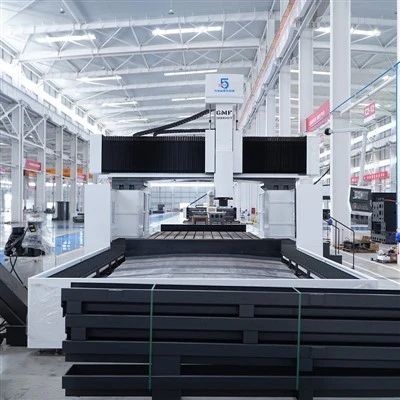
Let me keep this real—vertical mills are great for small parts, quick jobs, or materials that don’t need deep, straight cuts. But when you’re dealing with parts that are massive, require tight tolerance (like within a fraction of a hair’s width), or need holes bored straight through 12 inches of solid steel? That’s where a horizontal boring mill CNC shines. I’ve seen first-hand how these machines turn a scraggly, imprecise metal blank into a part that keeps a entire power plant running, or a wind turbine spinning without a single vibration.
Now, let’s break down the actual industrial applications that make these machines non-negotiable, not just fancy pieces of equipment. First up: energy sector infrastructure. Wind turbine towers aren’t just big pipes bolted together. The main gearbox housing inside a turbine needs perfectly aligned bores for the shafts that transfer power from the blades to the generator. A horizontal mill can rotate the part 360 degrees (with 5-axis models, even that’s automated!) so we can bore holes along the horizontal axis without moving the whole heavy gearbox, which weighs 20+ tons. I recently worked with a renewable energy client that was manually boring those gearbox holes before—their defect rate was 8% and each part took 3 full days. After they picked up our horizontal CNC mill? Defects dropped to 0.2% and they cut part time to 12 hours. That’s not just efficiency—that’s money back in their pocket, and less downtime for wind farms. Oil and gas gets the same love too: wellhead casings, pump housings, and valve bodies all need deep, concentric bores that don’t wobble. Vertical mills can’t reach the depth or the stability needed there—horizontal mills don’t suffer from that “chatter” you get when you bore deep holes on a vertical setup.
Next, construction and heavy equipment manufacturing. Think about the backhoe loader you see digging a ditch, or the bulldozer pushing dirt. All of those have massive hydraulic cylinders, pivot pins, and frame parts that need perfectly aligned holes. A bulldozer’s track frame, for example, has to hold 8 huge track pins, each spaced exactly 4mm apart (yes, 4mm!) to keep the tracks from slipping off. If you try to do that on a vertical mill, you have to move the entire 10,000lb frame between cuts, which introduces human error. Our horizontal CNC mill locks that frame in place, bores all the holes in one setup, and the tolerance is consistent every time. We had a client that builds construction equipment go from 2 units a week to 7 units a week after upgrading to a horizontal mill—they stopped outsourcing half their boring work, which was eating 30% of their production time. Even cranes—like the ones that build skyscrapers—have boom sections that need horizontal bores to connect multiple segments together. Get that bore wrong, and the crane can’t lift 50 tons of steel, plain and simple. Horizontal mills eliminate that risk.
Then there’s aerospace and defense, which is all about super tight tolerances. Aircraft landing gear parts? They’re made from titanium or high-strength aluminum, and need bores that are straight to within 0.001 inches (that’s thinner than a human hair!). The F-15 fighter jet’s landing gear wheel hub, for example, needs 12 precision holes to attach the wheels, and each hole has to line up perfectly so the tire doesn’t wobble at 150 mph. Vertical mills can’t hold that consistency over large, complex parts. Horizontal CNC mills, though, have the spindle aligned horizontally, which lets the cutting tool stay rigid even at long reach. I talked to an aerospace machinist last month who told me that before switching to a horizontal mill, they had to rework 1 in 5 landing gear hubs. Now it’s 1 in 100, and they cut rework time by 90%. Defense contractors love these machines too for parts like tank turret housings, missile launchers, and submarine pressure hull components—anything that has to be reliable under extreme conditions has to be machined with a tool that doesn’t cut corners.
Wait, what about automotive, you ask? A lot of people think automotive is all small parts and assembly lines, but the big OEMs (original equipment manufacturers) rely on horizontal mills for engine blocks and transmission cases. A V8 engine block, for example, has 8 cylinder bores that have to be perfectly aligned horizontally so the pistons move smoothly. If those bores are even slightly off, the engine will lose power, waste gas, or even seize up. Vertical mills can handle small engine parts, but when you’re making 10,000 engine blocks a month, you need a machine that can machine the entire block in one setup. Our horizontal CNC mills are set up with automatic tool changers too—so you can bore, mill, and even tap holes without stopping. That’s why big automotive plants stick with horizontal mills for their large core components. I can’t tell you how many times I’ve heard a Ford or GM client say their horizontal mill is the backbone of their engine line.
Now, let’s talk about something a lot of people don’t mention: custom and one-off heavy parts. Not every job is a 10,000-part run. Sometimes you need a custom part for a museum exhibit, a ship repair, or a specialized piece of agricultural equipment. A farmer might need a custom pivot bracket for a center-pivot irrigation system that’s been discontinued, or a shipyard might need a replacement propeller shaft housing that’s no longer in production. Horizontal mills handle that too—they can take a big, oddly shaped part and machine it with precision, even if it’s a single unit. I had a marine customer last year that needed a replacement part for a 1970s cargo ship, and vertical mills couldn’t handle the size or the required tolerance. Our horizontal mill got the job done in 2 days, and the ship was back in service a week earlier than expected. That’s the beauty of these machines—they work for both mass production and custom jobs, depending on how you set them up.
Let me also be real about why horizontal CNC mills make sense for your operation, not just the big guys. A lot of small to medium-sized shops think, “That’s too expensive, only big plants can afford that.” But modern horizontal mills are more flexible than people think. They can handle small, medium, and large parts, and with CNC automation, you don’t need a 20-year veteran machinist to run them. I’ve seen shops with 5-person teams run a horizontal mill 24/7 with just one operator—you load the part, set the program, and the machine does the rest. That cuts down on labor costs and lets small shops take on jobs they couldn’t before.
Now, why do I know all this? Because I’m not just selling machines— I work with these shops every day. I’ve watched the frustration of a machinist trying to get a deep bore right on a vertical mill, I’ve seen the panic when a big part is off by a hair, and I’ve celebrated with shop owners when their production numbers jump. The takeaway here is that horizontal boring mill CNC isn’t a fancy, unnecessary tool. It’s a workhorse that powers industries from energy to aerospace, keeps construction moving, and even helps small shops stay competitive.
If you’re running a shop that builds heavy parts, or if you’re looking to upgrade your boring capabilities, I get it—you want a machine that delivers consistent results, cuts down on downtime, and makes your team’s jobs easier. I’ve been in this industry long enough to know that not every machine works for every job, but 9 times out of 10, a horizontal CNC mill is the right call when you’re dealing with large, precise, or deep cuts.

If you want to chat more about how a horizontal boring mill CNC could work for your operation, or ask about specs, pricing, or how to set one up, just reach out. No sales fluff, no pushy calls—just straight talk about what your shop needs.
Moving Column Gantry References
- Modern Machine Shop. (2022). "Horizontal Boring Mills: The Workhorses of Heavy Industrial Machining."
- Aerospace Industries Association. (2021). "Precision Machining Requirements for Commercial and Defense Aerospace Components."
- National Institute for Metalworking Skills (NIMS). (2023). "CNC Machining Applications for Heavy Equipment Manufacturing."
- Wind Energy Works. (2022). "Machining Standards for Wind Turbine Gearbox Components."
- American Society of Mechanical Engineers (ASME). (2021). "Tolerance Specifications for Hydraulic and Pneumatic Components."
5Axis (Shandong) CNC Equipment Co., Ltd.
As one of the most professional horizontal boring mill CNC manufacturers and suppliers in China, we also accept customized orders. Please feel free to buy cheap horizontal boring mill CNC for sale here from our factory. For price consultation, contact us.
Address: No.2000, Beixin West Road, Jinghe Street, Tengzhou City, Zaozhuang City, Shandong Province
E-mail: summer@good5axis.com
WebSite: https://www.china5axis.com/
