Hey there! I’m a supplier of pad-mounted transformers, and I often get asked a really important question: Can a pad-mounted transformer be connected in parallel? Well, let’s dive right into this topic and break it down. Pad Mounted Transformer
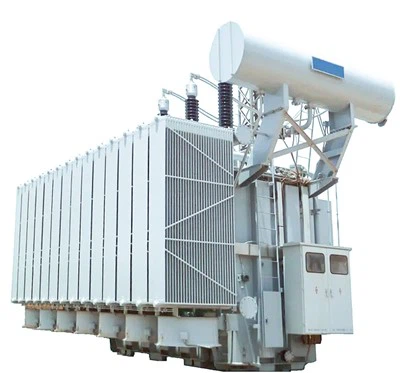
First off, let’s understand what a pad-mounted transformer is. It’s a type of transformer that’s usually installed on a concrete pad outdoors. These transformers are commonly used in distribution systems to step down voltage from the primary distribution level to a lower voltage for end – users, like in residential areas, commercial buildings, and industrial facilities.
Now, to answer the question of whether they can be connected in parallel, the short answer is yes, but there are a whole bunch of things to consider.
Why Connect Pad – Mounted Transformers in Parallel?
There are a few good reasons for connecting pad – mounted transformers in parallel. One of the main reasons is to increase the total capacity. If you have a growing load, say in a developing neighborhood or an expanding industrial park, a single transformer might not be able to handle all the power demand. By connecting multiple transformers in parallel, you can effectively increase the amount of power that can be supplied.
Another reason is for reliability. If one transformer fails, the others can still keep supplying power. This is crucial in areas where power outages can have serious consequences, like in hospitals or data centers.
Conditions for Parallel Connection
When it comes to connecting pad – mounted transformers in parallel, there are several conditions that need to be met.
Voltage Ratio
The voltage ratio of the transformers must be the same. If the voltage ratios are different, there will be a circulating current between the transformers. This circulating current can cause unnecessary power losses and overheating, which can damage the transformers over time. For example, if one transformer has a voltage ratio of 10:1 and another has a ratio of 11:1, there will be a problem when they are connected in parallel.
Phase Sequence
The phase sequence of the transformers must match. In a three – phase system, the phases need to be in the correct order. If the phase sequences are different, it can lead to short – circuits and other electrical problems. You can think of it like a dance; if the dancers (phases) are not moving in sync, there will be chaos.
Impedance
The impedance of the transformers should be similar. The impedance determines how the load is shared between the transformers. If the impedances are too different, one transformer might end up carrying more load than the other, which can cause overloading and premature failure.
Polarity
The polarity of the transformers must be correct. Incorrect polarity can lead to large circulating currents and damage to the transformers. It’s like trying to connect a battery the wrong way; it just won’t work properly.
The Process of Parallel Connection
Connecting pad – mounted transformers in parallel is not a DIY job. It requires a professional electrical engineer to do a detailed analysis and design.
First, the engineer will measure the parameters of each transformer, such as the voltage ratio, impedance, and phase sequence. Then, based on these measurements, they will determine if the transformers can be connected in parallel.
Once it’s determined that the transformers can be connected, the actual connection process begins. The primary and secondary windings of the transformers are carefully connected according to the design. After the connection, a series of tests are carried out to ensure that everything is working properly. These tests include measuring the circulating current, checking the load sharing, and verifying the voltage levels.
Challenges and Risks
Even when all the conditions are met, there are still some challenges and risks associated with connecting pad – mounted transformers in parallel.
One of the challenges is the load sharing. As I mentioned earlier, if the impedances of the transformers are not well – matched, the load may not be evenly distributed. This can lead to overloading of one transformer while the other is under – utilized.
Another risk is the potential for short – circuits. If there is a fault in one of the transformers or in the connection, it can cause a short – circuit, which can damage the transformers and disrupt the power supply.
Real – World Examples
In many real – world scenarios, parallel connection of pad – mounted transformers is a common practice. For example, in a large shopping mall, the power demand can be quite high. By connecting multiple pad – mounted transformers in parallel, the mall can ensure a stable and reliable power supply.
In some industrial areas, where there are large machinery and equipment, parallel – connected transformers are used to handle the high power requirements. This allows the industrial facilities to operate smoothly without any power – related issues.
Conclusion
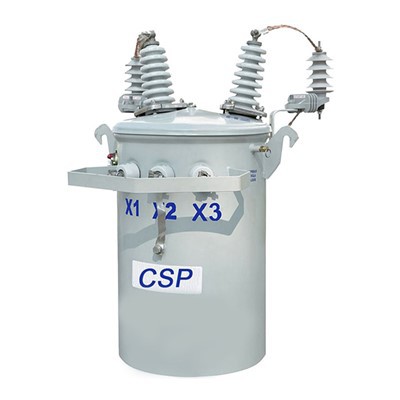
So, in conclusion, yes, a pad – mounted transformer can be connected in parallel, but it’s not something to be taken lightly. It requires careful planning, analysis, and professional installation. If you’re considering parallel connection of pad – mounted transformers for your project, it’s important to work with experienced electrical engineers and reliable suppliers.
Conventional Power Transformer As a pad – mounted transformer supplier, I have a lot of experience in this field. I can provide you with high – quality transformers and offer technical support to ensure that your parallel connection project goes smoothly. If you’re interested in learning more about pad – mounted transformers or have a project in mind, don’t hesitate to get in touch. We can have a detailed discussion about your needs and come up with the best solution for you.
References
- Electrical Power Systems by J. R. Lucas
- Transformer Engineering: Design, Technology, and Diagnostics by G. K. Dubey
Nantong Yawei New Energy Technology Co., Ltd.
As one of the most professional pad mounted transformer manufacturers and suppliers in China, we’re featured by quality products and good service. Please rest assured to wholesale durable pad mounted transformer made in China here from our factory. Customized orders are welcome.
Address: Room 28-101, Building 27 and 28, No.333 Kaiyuan Avenue, Sunzhuang Subdistrict, Hai’an City, Nantong City, Jiangsu Province, China
E-mail: admin@nantongyawei.com
WebSite: https://www.nantongyawei.com/
