If you’ve ever needed to store cryogenic liquids—think liquid nitrogen, oxygen, argon, or even liquefied natural gas (LNG)—you know picking the right tank is make or break for your operation. As someone who’s been selling cryogenic storage tanks for over a decade, I’ve lost count of how many customers come to me asking: “Vertical vs. horizontal—what’s the actual difference, and which do I need?” It’s not just a question of shape, either. There’s physics, space, cost, and even safety that goes into this choice, and I’m breaking it down like I do for every new client, no jargon, no fluff. Cryogenic Storage Tank
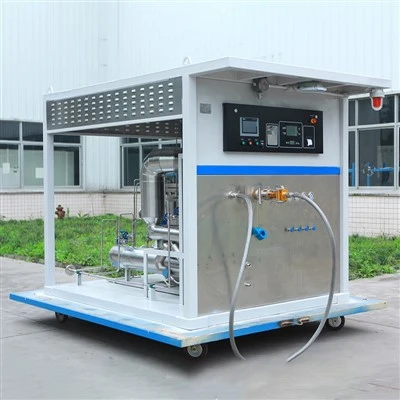
First, let’s get the basics straight: cryogenic tanks are double-walled vessels, right? The inner tank holds the super-cold liquid (we’re talking -150°C for LNG, -196°C for liquid nitrogen), and the outer tank has vacuum insulation in between to stop heat from seeping in and causing boil-off. That’s non-negotiable for every tank, whether vertical or horizontal. The big difference is how that double-walled structure is oriented, and that small shape change ripples through every part of your setup.
Let’s start with vertical tanks because they’re the workhorses for most high-volume, fixed-location operations I deal with. If you picture a big, metal cylinder standing straight up on thick legs, that’s a vertical cryogenic tank. They’re taller than they are wide, usually, and I’ve installed everything from 500-gallon small units for labs to 100,000-gallon monsters for industrial manufacturing plants. Why do so many folks go vertical first? Space, for one thing. If you’re working in a facility where you’ve got floor space but limited headroom, wait—no, hold on, reverse that. Wait, no, vertical is perfect when you have abundant headroom and tight footprint on the ground. A 10,000-gallon vertical tank only takes up about 10 feet of floor space, but it’s 25 feet tall. If you’re in a manufacturing yard where you can stack height but can’t pave a huge chunk of ground for a tank, that’s your guy.
Then there’s the boil-off rate. I always tell customers, “Boil-off is your enemy here—you’re paying for that cold liquid, you don’t want it evaporating into thin air.” Vertical tanks have a lower surface area-to-volume ratio than horizontal ones when you’re talking about the same total storage capacity. Let’s do quick math: a 10,000-gallon vertical tank has about 750 square feet of outer surface area, while a horizontal tank of the same volume has around 920 square feet. Less surface area exposed to heat means less heat transfer, so less boil-off. That adds up to real cost savings over a year—some of my clients save thousands on utility costs just by picking vertical over horizontal, especially if they’re storing liquid for long periods.
Wait, but let’s not sleep on the downsides of vertical tanks. They’re top-heavy. If your facility is in an area with high wind, hurricanes, or even frequent seismic activity, a tall vertical tank needs a way sturdier foundation. I’ve had to reinforce concrete bases twice as thick for a 20,000-gallon vertical tank that went in a tornado-prone region. Also, accessing the liquid’s outlets—fill ports, withdrawal valves, pressure relief valves—are all on the top of the tank, so you need a ladder or a safety platform to get up there. For someone who’s refilling small tanks multiple times a day, that’s a minor hassle, but if you’re dealing with a 50,000-gallon unit, you’ll want to make sure your team has the gear to work safely up top.
Now, horizontal tanks. These are the ones that look like big, metal hot tubs laying flat, supported by steel skids or concrete cradles. They’re shorter than they are wide, and I mostly sell these for mobile or semi-permanent setups. Let’s get their pros out first. Mobility is the big one. Horizontal tanks come pre-skidded—you can hook a crane or a flatbed to them, move them around a construction yard, or even relocate a small one if your facility changes layout. That’s a huge win for construction companies, or labs that might move to a new building in a few years. Also, if you have zero headroom? Wait, no—wait, horizontal is for when you’ve got tons of floor space but almost no headroom. If your facility’s ceiling is only 12 feet high, a vertical tank won’t fit, but a horizontal tank of the same volume will sit at 8 feet tall, perfect.
Another big plus for horizontal tanks: pressure management. Because they’re laid low, the pressure inside the tank is more evenly distributed across the entire surface. Vertical tanks have more pressure at the bottom from the weight of the liquid above, so you need thicker steel there. Horizontal tanks have more uniform pressure, so you can use slightly thinner material, which cuts down on upfront costs. Wait, hold on—let’s test that with a client last year: he needed a 5,000-gallon tank for a temporary LNG fueling station. He had zero headroom, so he went horizontal, and his upfront cost was 12% less than the vertical equivalent. That’s not a small number for a small business.
But horizontal tanks have their downsides, too. First, that higher surface area-to-volume ratio we talked about earlier? That means more boil-off. For long-term storage, that extra evaporation adds up. I had a food processing client a few years back who went with a horizontal tank because they thought it was cheaper, but by the end of the first year, they were paying $1,800 extra in lost nitrogen to boil-off. They swapped to a vertical tank after that, and saved that money every year. Also, footprint— a 10,000-gallon horizontal tank takes up 18 feet by 18 feet of floor space, vs. 10 feet by 10 feet for a vertical of the same size. If you’re in a facility where every square foot costs money, that’s a big hit. Plus, accessing valves on a horizontal tank? They’re usually on the end or the top, so you might need a platform just as big, but the tank itself takes up more room around you to maneuver safely.
Wait, let’s talk about use cases, because that’s where the rubber meets the road. Let’s break down what I recommend for different clients:
If you’re a manufacturing plant, hospital, or lab with fixed operations, lots of headroom, and storing cryogens for weeks or months? Vertical is almost always the right call. My hospital clients use verticals because they store liquid oxygen for backup generators, and they can’t afford to waste a drop on boil-off. They’ve got the yard space to stack height, so it’s perfect.
If you’re a construction team, temporary fueling station, or small operation with no headroom, or you might need to move the tank later? Horizontal is your guy. I did a job last year for a pipeline crew that needed to store LNG on-site for 6 months, and they moved the tank to three different job sites. A vertical would’ve been impossible to crane without specialized rigging, but the horizontal skidded right onto a flatbed.
Also, let’s not forget about smaller capacity tanks. For tanks under 1,000 gallons, the difference is negligible. I sell small vertical tanks for lab freezers, and small horizontal for portable cryogenic shipping units, but the boil-off gap is tiny, so it’s really just about fit in the space you have.
Wait, a lot of customers ask me about maintenance, too. Is one easier to maintain than the other? Short answer: not really. Both need annual vacuum checks, leak tests on the outer jacket, and valve inspections. The only difference is access to the valves—verticals have all valves up top, so if you have a cherry picker, that’s easy; horizontal might have valves on the end, so you just need to clear a little space around the end of the tank. No big deal, really.
Let’s address a common myth: some people think vertical tanks are safer because they’re grounded better. No, both are grounded the same—they have a grounding lug on the outer tank, regardless of shape, to prevent static electricity buildup from cryogenic vapor. Another myth: horizontal tanks can’t hold as much pressure. Nope, both are rated for the same pressure, usually up to 250 PSI for standard cryo tanks. That’s a big one I get asked all the time, and I always correct it right away.
Now, if you’re still stuck? Let me walk through the quick checklist I give every client to narrow it down:
- Space: Measure your available floor space and height. If height is unlimited and floor is tight, go vertical. If height is tight and floor is available, go horizontal.
- Storage duration: If you’re storing liquid for more than 2 weeks, prioritize lower boil-off (so vertical). If it’s less than a week, horizontal’s extra boil-off is no big deal.
- Mobility: If you might move the tank in the next 5 years, horizontal is non-negotiable. Vertical is for permanent installations.
- Budget: Upfront, horizontal is usually cheaper for same volume, but if you factor in boil-off costs over 5 years, vertical almost always has lower total cost of ownership.
Wait, I’ve got a story that drives this home. A food processing customer came to me two years ago, confused because he’d heard vertical was better but he only had 10 feet of headroom. I told him, “If your headroom’s only 10 feet, horizontal’s the only fit, and if you’re only storing liquid nitrogen for 3 days at a time, that extra boil-off is $50 a month, not $150.” He went with horizontal, saved $3,000 upfront, and never had a complaint. Another customer, a chemical plant, had 30 feet of headroom, stored argon for 6 months at a time, and went vertical—saved $2,200 a year in boil-off costs. That’s the tradeoff, right? It’s not a “one size fits all” answer, it’s matching the tank to your needs.
As a tank supplier, I don’t push one over the other just to make a sale. I’ve turned down jobs where a horizontal was a bad fit for a client, because I’d rather they get a tank that works for them than one they regret buying. At the end of the day, a cryogenic tank is an investment—you don’t want to waste money on extra space, extra boil-off, or a tank that doesn’t fit your facility.
If you’re still not sure which one makes sense for your operation, or you need a quote for either vertical or horizontal cryogenic tanks, reach out to our team to connect with one of our experts for a custom consultation. We’ll walk through your space, usage, and budget to find the right tank for you, no pressure, no sales pitch. It’s just what we do.
Gas Station Management System References:
- ASME Boiler and Pressure Vessel Code, Section VIII, Division 1: Rules for Construction of Pressure Vessels
- Cryogenic Engineering Principles, 2nd Edition, by R. Barron
- International Organization for Standardization (ISO) 13358: Cryogenic vessels – Vacuum-insulated transportable storage vessels
- Thermal Design of Cryogenic Systems, by G. F. Nellis and S. A. Klein
- Cryogenic Storage Tanks: Selection, Operation, and Maintenance, Cryogenic Industry Manufacturers Association (CIMA) Technical Bulletin
Chengdu Hi-tech Panda Energy Technology Co., Ltd.
With abundant experience, we are one of the most professional cryogenic storage tank manufacturers in China. Please feel free to buy high quality cryogenic storage tank for sale here from our factory. Also, customized service is available.
Address: No.1604, 16th Floor, Unit 2, Building 1, No.1700, North Section of Tianfu Avenue, Chengdu High-tech Zone, China (Sichuan) Pilot Free Trade Zone
E-mail: Haikepanda-sos@aliyun.com
WebSite: https://www.haike-energe.com/
