If you’ve ever stopped to think about how your industrial processes keep running smoothly—whether it’s protecting turbine engines from tiny particles, purifying hydraulic fluids, or filtering corrosive chemical streams—chances are a metal filter or a sintered fibre felt filter is playing a quiet, critical role. For over a decade, I’ve worked as a sintered fibre felt material and filter supplier, and over those years, I’ve lost count of how many times customers have asked me: “Why would I pick one over the other?” It’s a fair question; both are engineered from metal, but their designs, performance, and real-world uses are night and day. Let’s break this down like I would when sitting across from a customer in my workshop—no jargon that makes your eyes glaze over, just the hard, practical stuff that actually matters. Sintered Fibre Felt Material and Filter
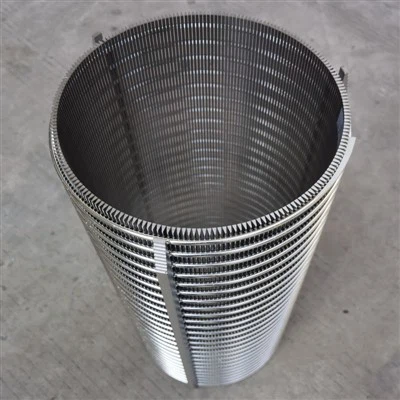
First, let’s start with the basics, because I’ve seen so many people mix these two up. A standard metal filter, most often a woven metal mesh or a perforated metal sheet, is made by weaving thin metal wires into a tight grid or punching uniform holes through a flat metal sheet. It’s simple: you take layers of this mesh or sheet and press them together to build a filter. A sintered fibre felt filter, on the other hand, starts with tiny, loose metal fibres (think of them as super thin metal strands, sometimes only a few micrometers thick—thinner than a human hair) that are randomly laid out into a porous mat. Then we heat that mat, right below the metal’s melting point, so the fibres fuse together at their contact points—no glue, no binders, just solid metal bonds. That fundamental difference in how they’re made drives every other comparison, so keep that in the back of your head.
Let’s start with filtration precision, because that’s what most customers care about first. If you’re filtering particles to keep a delicate piece of equipment running, you don’t want a 10-micron particle slipping through when you thought you had a 10-micron barrier. Woven metal mesh filters have consistent pore sizes, sure—but those pores are limited by the size of the gaps between the woven wires. Even a high-twist woven mesh might have a pore size that’s 10 to 20% larger than the wire diameter. Perforated metal filters are even worse: their pore size is exactly the size of the punched holes, but they’re uniform only in a flat plane, and burrs left over from the punching process can create tiny gaps where particles can sneak through. I had a customer last year in the aviation industry who was using a perforated metal filter for a jet engine lubrication system; they kept getting premature part failures until they switched to sintered fibre felt. The sintered filter’s random fibre structure creates a three-dimensional network of tiny, interconnected pores—so particle capture isn’t just a surface barrier, it’s depth filtration. That means it can trap smaller particles, sometimes down to 1 micron or even less, and it doesn’t let particles bypass through gaps. If precision is your top priority, sintered fibre felt is the clear winner here.
Next up, pressure drop and flow rate, two metrics that directly translate to operational cost. A lot of customers assume tighter filtration means higher pressure drop—but that’s only true if you don’t design the filter right. Woven and perforated metal filters, especially when they’re set to fine pore sizes, have relatively low open area. Open area is the percentage of the filter’s surface that’s open to flow; a 10-micron woven mesh might have an open area of only 20 to 30%. That means when fluid or gas pushes through, it has to squeeze through a narrow space, creating friction, which raises pressure drop. Higher pressure drop means your pump or compressor has to work harder to move the same amount of material, which adds up to higher energy bills month after month. Sintered fibre felt filters, though? Their random fibre structure has a much higher open area—often 40 to 50%—even at very fine filtration ratings. The pores are interconnected in three dimensions, so flow is smoother; particles get trapped in the depth of the felt, not just on the surface where they can clog the pores fast. I’ve seen sintered filters reduce pressure drop by 30 to 40% compared to equivalent pore size metal mesh, which for a chemical plant running 24/7 can save tens of thousands of dollars a year in energy costs. The catch here, though: if you need extremely high flow at very low pressure, perforated metal filters might work, but only for larger pore sizes—once you go below 50 microns, sintered felt will outperform every time.
Then there’s durability and thermal stability, which are make-or-break for high-temperature or high-stress applications. Both filters are made from metal, so they have good heat resistance, but their mechanical properties are very different. Woven metal mesh filters have good tensile strength, but when you’re subject to cyclic stress—like heating and cooling that causes expansion and contraction, or repeated pulsing of fluid flow—those woven wires can shift, fray, or pull loose over time. I’ve had customers send back woven mesh filters that were supposed to last 6 months, but failed in 2 because the wires shifted under pressure, creating larger pores. Perforated metal filters are even stiffer, but they’re brittle; if you get a sharp impact or a sudden pressure spike, they can crack or dent, ruining the pore structure. Sintered fibre felt? The fused fibre structure is actually much more flexible and durable in these cyclic conditions. The fibres are tiny, so they can bend and flex without breaking, and the fusions between fibres create a strong, stable network that doesn’t shift or fray. We’ve tested our sintered filters under 1,000+ thermal cycles between -40°C and 500°C, and they maintained their filtration accuracy the whole time. For high-temperature applications like furnace gas filtration, or cyclic use like engine exhaust systems, sintered felt is far more reliable. It’s also more resistant to vibration, which is a huge plus for aerospace and automotive parts.
Corrosion resistance is another big one, especially for customers in chemical processing, oil and gas, or marine industries. Not all metal is created equal, so let’s compare the same base material—say, 316L stainless steel, which is the go-to for corrosive environments. Woven metal mesh and perforated metal filters have good corrosion resistance, but their surfaces are more exposed to chemical attack. The weave gaps in mesh can trap small amounts of corrosive fluid, creating localized corrosion (what we call pitting) that eats away at the wire over time. Perforated metal’s sharp edges and burrs are also more prone to corrosion, because those areas have higher energy and break down faster. Sintered fibre felt, on the other hand, has a uniform, smooth surface (we finish ours with a light polishing step) and its random fibre structure means there are no deep gaps or crevices where corrosive materials can get trapped. The fibres are fully fused, so there’s nowhere for moisture or chemicals to hide. I had a customer in the fertilizer industry last year who was filtering ammonium nitrate solution; they were using 316L woven mesh filters that corroded in 3 months, no matter how often they cleaned them. Switching to our 316L sintered filters, they’re still running after 18 months with no corrosion issues. That’s a game-changer for processes where downtime means lost production and money.
Cleanability and long service life are closely tied to all these factors, and they’re what separate a one-use filter from a filter that pays for itself over time. Woven metal mesh filters and perforated metal filters can be cleaned—usually by back-flushing or sonic cleaning—but because the particles only get trapped on the surface, the smaller particles get wedged into the weave holes or the perforation edges, making them hard to remove. After a few cleaning cycles, the pores start to clog permanently, and the filtration accuracy drops. Perforated filters are even harder to clean, because their flat surface and sharp holes trap particles very effectively, and once they’re clogged, there’s not much you can do. Sintered fibre felt, with its depth filtration, traps particles throughout the entire thickness of the mat—usually between 1 and 5 millimeters, depending on the grade. That means when you back-flush or use pulse cleaning, particles get dislodged much easier, and you can get 10 to 20 cleaning cycles out of a single sintered filter, compared to 2 to 4 for a metal mesh or perforated filter. For a customer who’s replacing filters every month, that cuts their filter cost by 70% right there. The only downside here: if you have extremely fine particles (sub-micron), you might need to use a more gentle cleaning method to avoid damaging the fibres, but that’s a small trade-off for longer service life.
Wait, let’s not forget about customization and application fit, because not every use case is the same. There are definitely times where a metal filter is the right choice, and I always tell customers that. For example, if you need a very large surface area for high-flow gas filtration at low temperatures, a perforated metal sheet is cheap, easy to manufacture, and works perfectly. If you need a simple, low-cost filter for coarse particle separation (above 50 microns, say), woven metal mesh is a great, budget-friendly option. But for most medium to high-precision applications—lubrication filtration, pharmaceutical purification, exhaust gas treatment, water filtration—sintered fibre felt is the better long-term investment. It also offers more customization: we can adjust the fibre size, felt thickness, and sintering temperature to get exactly the pore size, flow rate, and durability a customer needs. A woven mesh’s pore size is limited by wire size, but with sintered felt, we can tune pores from 0.5 microns all the way up to 100 microns, to fit whatever the process requires.
I’ve had too many customers come to me after paying for a cheap metal filter that failed prematurely, leading to downtime, damaged equipment, and higher replacement costs. The upfront cost of a sintered fibre felt filter is a bit higher than a basic woven or perforated metal filter, but when you factor in lower energy use, longer service life, fewer replacements, and less downtime, it works out to 30 to 50% lower total cost of ownership over a year. That’s the math I always lay out for people, and it’s rarely wrong.

If you’re working on a project and trying to decide between these two, the first thing to ask yourself is: how precise does my filtration need to be? How much heat or corrosion will the filter be exposed to? What’s the maximum downtime I can afford? If you’re not sure, that’s what I’m here for. I’ve been in this industry long enough to work with customers across dozens of sectors, from aerospace to food and beverage, and I can help you test which filter will work best for your specific process, no pressure, no sales pitch that doesn’t match your needs.
Sintered Metal Powder Filter For anyone who’s tired of filters that don’t live up to their promises, or who wants to cut operational costs without sacrificing performance, don’t hesitate to reach out for a procurement discussion. We can provide sample filters for testing, talk through your process requirements, and find a sintered fibre felt filter that fits exactly what you need. It’s not about selling you the most expensive product—it’s about finding the one that works best for your business.
References
- Tummala, R. R., & Lu, D. (Eds.). (2017). Materials for Advanced Filter Systems. Springer.
- Benyahia, F. (2020). Porosity and Filtration Performance of Sintered Metallic Fibre Structures. Journal of Industrial and Engineering Chemistry, 86, 212-221.
- ASTM International. (2018). Standard Test Method for Pore Size Characteristics of Sintered Metal Filters. ASTM B966-18.
- Liu, Y., et al. (2019). Comparative Analysis of Pressure Drop and Contamination Retention for Woven Mesh and Sintered Fibre Filters in Hydraulic Systems. Tribology International, 138, 105892.
- Nickel Institute. (2021). Corrosion Resistance of Sintered Metallic Filters for Process Industry Applications. Technical Report NI 2021-04.
Henan Easy Filter Equipment Co., Ltd.
As one of the leading sintered fibre felt material and filter manufacturers and suppliers in China, we offer a wide range of products with superior quality. Please rest assured to buy advanced sintered fibre felt material and filter from our factory. We also accept customized orders.
Address: Apartment No.1, Building No.2, Zhengshang Jinyushijia, Xinzhong Street, Xinxiang, Henan, China.
E-mail: vivian@easyfiltertech.com
WebSite: https://www.easyfilter-china.com/
