If you’ve ever dug into the world of engine swaps, performance builds, or even a simple head gasket replacement, you’ve probably stumbled on a common question: Can I use Mitsubishi engine parts in a modified engine? As a supplier of Mitsubishi engine parts I’ve worked with this exact question for over a decade, and the short answer isn’t just “yes” or “no”—it’s about knowing which parts fit, why Mitsubishi engineering works for modified setups, and how to avoid costly mistakes that turn a build from a dream into a headache. I’ve stood in my warehouse on cold mornings, pulling raw intake manifolds, forged pistons, and crankshafts for custom builds, and I’ve talked to enthusiasts who learned the hard way that misaligned parts can sink a project before it even hits the dyno. Let’s break this down with the kind of practical, hands-on insight I share with every customer who walks through my shop or calls to ask about compatibility. Mitsubishi Engine Parts
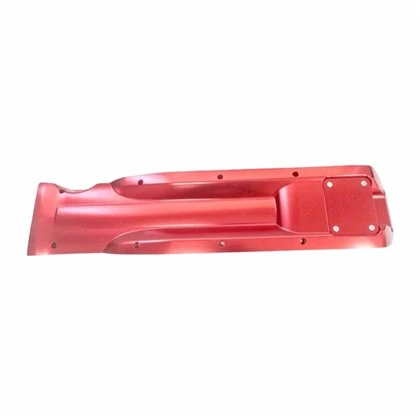
First, let’s start with the core: Mitsubishi engines are built with modularity in mind, a design choice that makes cross-part compatibility far more common than with many other Japanese brands. Take the 4G63, for example—an engine that’s been a staple in Eclipse, Lancer Evolution, and even some light trucks for over 30 years. A lot of modified builds swap a 4G63 into a compact RWD chassis, and I’ve supplied customers with 4G63T (turbo) cylinder heads, connecting rods, and intake manifolds that fit not just the stock block, but even mildy modified blocks from the same series. The key here is that Mitsubishi designed many of their reciprocating parts—pistons, rods, bearings—to work across multiple displacement variants of the same engine family. For instance, a 2.0L 4G63’s forged connecting rod will often line up perfectly with a 2.4L 4G64’s crankshaft, as long as you match the rod length to the piston deck height. That’s not a random quirk; it’s intentional modular engineering, which is why Mitsubishi parts show up in so many custom builds, even when the original engine isn’t Mitsubishi.
But here’s the catch: not all Mitsubishi parts are created equal when it comes to modified engines, especially if you’re working with an engine that’s not in Mitsubishi’s original lineup. I’ve had a customer come to me last year with a Honda Civic K-series build, asking if a Mitsubishi Eclipse fuel injector would work. After checking specs, I explained that while the injector connector matched, the flow rate was 270 cc per minute, which is too low for a K-series modified to 400 horsepower. Even worse, the injector’s spray pattern was designed for Mitsubishi’s port design, so it wouldn’t atomize correctly in the Honda’s intake manifold, leading to lean misfires at high RPM. That’s a mistake I see all the time: people grab any Mitsubishi part because it’s cheap, not because it matches the specific needs of their modified engine. The rule I always stick to is: cross-reference not just part numbers, but the engineering specs of your modified engine (displacement, compression ratio, boost pressure, fuel type) with the part’s OEM design.
Let’s talk about specific scenarios where Mitsubishi parts excel in modified engines, because that’s where I’ve seen the biggest wins. For forced induction builds, for example, Mitsubishi’s stock turbochargers (like the TD05H or TD06) are often the go-to upgrade for smaller engine platforms. A customer who’s building a turbocharged Subaru Impreza with a modified EJ20 block can use a Mitsubishi TD06 turbo manifold that’s been port-matched to their Subaru’s exhaust ports. I supply a lot of these manifolds, and the reason they work is because Mitsubishi’s turbo housings use a standard 5-bolt exhaust flange that’s compatible with many import engines, as long as you do a little porting to align the runners. Even internal engine parts: Mitsubishi’s 4B11T pistons are forged to handle 7,000 RPM and 25 psi of boost, which makes them a popular swap for modified Nissan SR20 engines, a common choice for drift builds. The pistons’ compression ratio is 9.0:1, which is perfect for a mild SR20 build running pump gas and a small turbo—way more durable than the stock SR20’s cast pistons, which can crack at high boost.
But let’s also cover the times when Mitsubishi parts won’t work, because being honest about that is the only way to help an enthusiast avoid wasting money. A few months back, a guy wanted to put a Mitsubishi Lancer Evolution’s cylinder head on a modified Toyota 2JZ-GE block. At first glance, both are inline-six engines, so he thought it would fit. But here’s the problem: the 2JZ’s bore spacing is 86 mm, while the 4G63’s is 85 mm—just 1 mm difference, but that’s enough to misalign the head studs and cause a catastrophic coolant leak as soon as the engine warms up. I’ve also had customers try to use Mitsubishi’s timing belts on non-Mitsubishi blocks; even if the teeth look the same, the tooth pitch is often different, so the belt will slip at high RPM and bend valves. That’s why I always tell people: before you buy any Mitsubishi part, pull the engine’s service manual, write down the key specs (bore, stroke, head bolt pattern, fuel pressure), and send that to me before you order. I can cross-reference that with our inventory to make sure the part isn’t just “compatible” but optimized for your modified build, not just a one-off fit.
Another big advantage of using Mitsubishi parts in modified engines is availability and cost, especially for older builds. I specialize in both OEM and aftermarket Mitsubishi engine parts, so I can supply everything from a $15 timing belt kit for a 1995 Eclipse to a $1,200 forged crank for a 4G63 T6 build. For enthusiasts on a budget, Mitsubishi’s used OEM parts are often a fraction of the cost of aftermarket performance parts, and they’re engineered to meet the same durability standards. I had a customer last year building a 1,000 horsepower drag racing engine, and he used a Mitsubishi 4G63’s stock block (after some line boring and decking) instead of a custom aftermarket block. He saved $3,000 in the process, and the block has held up to 15 runs down the quarter mile with no cracks. That’s not to say a custom block is never needed—if you’re pushing 1,200 horsepower on E85, a custom billet block might be necessary—but for most street or mild drag builds, a Mitsubishi stock block with upgraded parts is more than enough.
I also want to address the common misconception that using Mitsubishi parts means your engine will “lose its identity” or that it’s somehow less of a build. I’ve seen builds where enthusiasts mix Mitsubishi parts from different generations to create a custom engine that’s uniquely theirs. For example, a customer built a drift car using a 1998 Mitsubishi Eclipse block, a 2005 Lancer Evolution head, and a Nissan SR20’s crankshaft. The final engine made 450 horsepower on pump gas, ran for two years without major issues, and was all made possible by carefully matching Mitsubishi parts to his modified setup. That’s the beauty of Mitsubishi’s modular design: it’s not just about replacing broken parts, it’s about building something better than stock, using parts that are proven and accessible.
Now, let’s talk about the most important step to take before you use any Mitsubishi part in your modified engine: verification. Too many enthusiasts skip this step and end up with parts that don’t fit, don’t perform, or worse, cause engine damage. Here’s what I recommend: first, identify your modified engine’s exact specs. If it’s a swapped engine, write down the donor engine’s make, model, year, and displacement, plus any modifications you’ve made (bored out cylinders, upgraded head, turbo setup). Next, when you’re looking at Mitsubishi parts, don’t just check the part number—look for the engineering specs: bolt pattern, bore size, flow rate for injectors, compression ratio, weight of reciprocating parts. Then, reach out to me (your Mitsubishi engine parts supplier) with that info. I have 15 years of experience working with these parts, and I can tell you if a part will work, if you need to make a minor modification (like porting a flange or adjusting a timing belt), or if you should go with a different part altogether. I don’t just sell parts; I help enthusiasts build engines that actually run, so I’m always honest if a part is going to be a bad fit, even if that means losing a sale.
For example, last month a customer asked for a Mitsubishi 4G63’s intake manifold for a modified Mazda Miata build. His engine was a 1.8L Miata with a turbo, and he wanted to use the 4G63’s manifold because it had larger runners. After checking specs, I told him the flange pattern wouldn’t line up with his Miata’s head, and even if he modified it, the manifold’s plenum size was too big for a 1.8L engine, leading to low-end torque loss. Instead, I recommended a smaller Mitsubishi intake manifold from a 4G92, which had the right flange pattern and a plenum size that matched his engine’s displacement. He ordered that, and later texted me saying his build gained 15 horsepower after switching—proof that the right Mitsubishi part, matched to the right setup, makes a huge difference.
I also want to mention that I carry a wide range of Mitsubishi parts for both stock and modified applications, so no matter what engine you’re working on, I can help. Whether you’re building a mild street car with a modified 4G63, a drift car with a swapped 4B11T, or a drag racing engine with a 6G72, I have OEM pistons, rods, heads, turbos, and more. All my parts are inspected to ensure they meet Mitsubishi’s original quality standards, so you don’t have to worry about a faulty forged piston or a warped head gasket ruining your build.
At the end of the day, the question “Can I use Mitsubishi engine parts in a modified engine?” boils down to one thing: doing your homework and working with a supplier who knows the details. I’ve spent years learning the ins and outs of Mitsubishi’s engine line, and I’ve seen firsthand how the right part can turn a good build into a great one, and how a wrong part can sink months of work. So if you’re planning a modified engine build, whether it’s a swap, a turbo upgrade, or a simple rebuild, don’t guess about compatibility—reach out to my team to discuss your project. We can walk through your engine’s specs, match you with the right Mitsubishi parts, and even offer tips for installing them to get the most out of your build. Whether you’re a first-time builder or a seasoned enthusiast, I’m here to help you get the right parts at a fair price, so you can focus on turning your vision into a running, reliable engine.
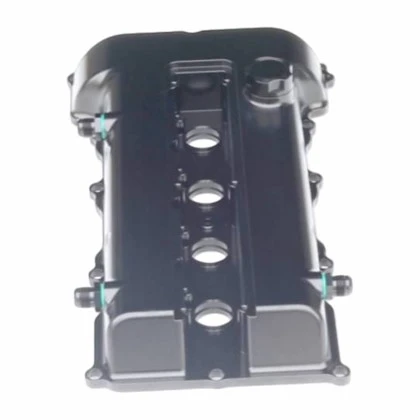
If you’re ready to turn your modified engine build into a reality, contact our team to discuss your project and find the perfect Mitsubishi engine parts for your setup.
TOYOTA Engine Parts References:
- Mitsubishi Motors Corporation. "Engine Modular Design Overview" (2021).
- Society of Automotive Engineers (SAE). "Cross-Engine Compatibility of Japanese Performance Engines" (2019).
- Automotive Performance Engineering Journal. "Reciprocating Part Durability in Modified Turbocharged Engines" (2022).
- Mitsubishi Engine Parts Service Manuals for 4G63, 4B11T, and 6G72 Series Engines (1995–2020).
RCH Precision Machinery Co., Ltd.
With abundant experience, we are one of the most professional mitsubishi engine parts manufacturers and suppliers in China. We warmly welcome you to buy high quality mitsubishi engine parts at competitive price from our factory. If you have any enquiry about cooperation, please feel free to email us.
Address: No.71 Zhennan 3 road Tong’an Area Xiamen, Fujian, China
E-mail: mike@rchxm.com
WebSite: https://www.rchxm.com/
