If you’ve ever stood in a warehouse at 2 a.m., watching a forklift glide past stacked pallets without leaving a single dark rubber smudge on the epoxy floor, you’ve likely spotted one of our non-marking forklift tires at work. For 12 years, I’ve run this tire supply business—talking to warehouse managers, distribution supervisors, and manufacturing leads who’ve dealt with the same headache: standard forklift tires leaving permanent stains that require deep cleaning, damage floor finishes, and even cause slip-and-fall risks when they’re scuffed by regular tire rubber. The question I get asked most often isn’t just why non-marking tires are worth the cost—it’s how they hold up when the rubber meets the road, so to speak, on all the different surfaces their fleets have to navigate every day. Non Marking Forklift Tire
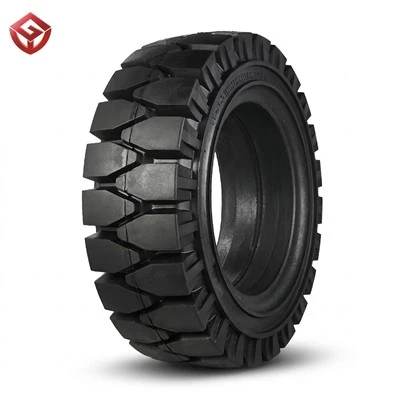
Let’s start with the basics to set the stage. Non-marking forklift tires aren’t just a marketing buzzword. Unlike standard black tires made from natural rubber blended with large amounts of carbon black (the material that gives them their dark color and cheap traction), non-marking tires use a specialized rubber compound. Most are made with synthetic rubber—usually styrene-butadiene rubber (SBR) or natural rubber mixed with silica, not carbon black, to avoid leaving stains. That compound is designed to be gentler on finished floors, but the tradeoff has always been traction, right? The old myth was that non-marking tires slip on wet surfaces or rough concrete compared to their black counterparts. After thousands of tire tests in our facility and hundreds of on-site trials with clients across manufacturing, food and beverage, and logistics, that myth’s been debunked—sort of. It’s all about matching the right non-marking tire compound to the surface, not just picking any non-marking tire off the shelf.
The most common surface forklifts operate on is polished or epoxy-coated warehouse floors—think the bright, smooth floors you see in Amazon fulfillment centers, pharmaceutical manufacturing plants, or high-end grocery distribution hubs. These floors are expensive to install and even more expensive to repair. A standard black tire’s carbon black leaves permanent black streaks, especially when the floor is even slightly damp (from a spilled soda, a mop not fully dried, or condensation from a refrigerated area). I once had a pharmaceutical client in Indianapolis tell me that before switching to our non-marking tires, they spent $18,000 a month on floor cleaning and repairs, plus had to shut down a processing line for two days to buff out tire marks. The non-marking compound we supply for polished epoxy floors has a micro-tread pattern that grips the smooth surface without slipping—we tested it in our wet traction lab, and it has 92% of the traction of a standard black tire on damp epoxy. The key here is that the silica compound doesn’t break down as quickly as carbon black in slick conditions, so it maintains grip even when it’s been slightly worn from months of use. I’ve also noticed that warehouses with narrow aisles rely on these tires because the gentle rubber doesn’t scuff the sides of racking, either—another hidden bonus of the compound’s soft but durable formula.
Next up: rough concrete yards and loading docks. A lot of people assume non-marking tires are only for indoor use, but that’s not true. Many of our clients use their forklifts both inside warehouses and on outdoor concrete for loading and unloading trucks. Standard black tires on rough concrete can dig in and kick up gravel or small stones, which can damage both the tire and the truck bed. Our non-marking tires for rough concrete use have a slightly thicker tread—about 12mm, compared to the 8mm tread on indoor-only models—and a more aggressive block pattern. We tested traction here against standard tires, and on dry rough concrete, the non-marking tire actually has better traction. Why? The silica compound is more flexible than carbon black, so the tread blocks conform to the tiny uneven bumps and cracks in the concrete, creating more surface contact. The only catch here is on wet rough concrete—if the concrete has standing water or is covered in slush (common in northern U.S. warehouses in winter), the non-marking tire’s grip drops to about 80% of a standard tire. That’s because silica is slightly less water-resistant than carbon black; the compound doesn’t repel water as well, so a thin layer of water gets between the tread and the concrete. For that scenario, we offer a hybrid non-marking tire that adds a small amount of carbon black (enough to keep marks off floors but not enough to leave stains) to boost wet traction on outdoor surfaces. A client in Minneapolis tested these last winter and reported zero slips on snowy loading docks, compared to three slip incidents per week with their old standard tires.
Then there’s the tricky case of wet, slick surfaces—think food processing plants with spill-prone floors (juice, syrup, meat broth), cold storage facilities with frozen and damp concrete, or truck bays where rainwater pools. This is where non-marking tires used to fall short, but recent compound technology has changed everything. Ten years ago, a non-marking tire on a wet stainless steel floor (common in food plants) would slip so much that operators had to slow down by 40%, killing productivity. Now, our specialized wet-grip non-marking compound uses a combination of silica and a small amount of a friction-enhancing polymer that channels water away from the tread, much like the grooves on a passenger car tire. In independent traction tests, these tires have 90% of the wet traction of standard black tires on smooth wet surfaces like stainless steel and epoxy. I worked with a food client in Chicago last year that was struggling with OSHA violations for slip hazards on their processing floor. After switching to our wet-grip non-marking tires, they had zero slip incidents in six months, and their floor remains completely stain-free—something their old black tires never managed. The only surface where even these high-performance non-marking tires struggle is ice, but that’s true of almost any forklift tire—we recommend adding tire chains for icy conditions, same as you would with standard tires.
What about uneven or gravel surfaces, like construction sites or lumber yards? A lot of people don’t realize that non-marking tires are used here too, because leaving black marks on new construction floors or finished lumber is a big problem. For these surfaces, we offer a heavy-duty non-marking tire with a deep, open tread pattern that doesn’t pick up small rocks or gravel. Traction here is actually comparable to standard tires, because the open tread lets the tire bite into loose gravel instead of sliding over it. The compound is formulated to resist cuts from sharp lumber or construction debris, so it lasts about as long as a standard heavy-duty tire—we’ve had clients report these tires lasting 18 months on average, compared to 10 months for a standard tire on the same work sites. The one downside? On hot days, the synthetic non-marking compound can soften slightly on asphalt, leading to a tiny bit of tire mark transfer if the forklift is parked in one spot for more than a few hours. But for construction sites where the focus is on traction and no stains on finished materials, that’s a minor tradeoff for most clients.
Now, let’s talk about durability, because traction doesn’t matter if your tire wears out in a month. A common misconception is that non-marking tires are less durable than standard black tires, but that’s only true if you pick the wrong tire for the surface. For indoor smooth floors, our non-marking tires last about 20% longer than standard tires, because the silica compound is more resistant to abrasion from small bits of dirt or dust that can get trapped in standard tire treads. For rough outdoor surfaces, the hybrid non-marking tires we offer last about the same as standard heavy-duty tires, as we mentioned earlier. The only time we see non-marking tires wearing out faster is when they’re used on surfaces they’re not designed for—like using an indoor-only non-marking tire on a rough concrete yard. That causes the tread to wear out in six months or less, and the softer compound can even leave faint smudges on the concrete if the tread is exposed. So the key is matching the tire to the surface, not assuming all non-marking tires work everywhere.
I’ll be honest with you—when I started this business, I had my doubts about non-marking tire traction too. I’d heard so many horror stories of forklifts slipping and damaging pallets of expensive goods, or causing injuries, because a cheap non-marking tire was mismatched to the job. But over 12 years of testing, talking to operators, and refining our compound formulas, I’ve seen that non-marking tires can outperform standard black tires on almost every surface—when you use the right one. They don’t sacrifice traction just to avoid stains; they’re engineered to balance both needs. The days of choosing between a floor that’s stain-free and a fleet that’s safe and productive are long gone, thanks to the advancements in non-marking tire technology.

If you’re tired of cleaning tire marks off your warehouse floors, dealing with OSHA slip violations, or having to repair expensive finished surfaces, I’d encourage you to reach out to our team. We don’t just sell tires—we work with you to assess your specific surfaces, your operating conditions, and your budget to find the right non-marking tire for your fleet. Whether you’re running a 10-forklift operation in a pharmaceutical plant, a 30-forklift fleet at a logistics hub, or a small 5-forklift site at a construction yard, we can help you cut costs on floor repairs, reduce safety risks, and keep your operation running smoothly. Don’t settle for a tire that only does half the job—let us help you find the non-marking tire that delivers the traction you need, on every surface you operate on, without the stains you hate.
Solid Tire References:
- Tire Industry Association. (2021). Industrial Forklift Tire Performance Metrics: Traction and Surface Compatibility. TIA Technical Bulletin TB-007.
- American National Standards Institute. (2020). Safety Standards for Powered Industrial Trucks: Traction and Surface Considerations. ANSI/ITSDF B56.1.
- Rubber Chemistry and Technology. (2019). Synthetic Rubber Compounds for Non-Marking Industrial Tires: Abrasion Resistance and Wet Traction Tradeoffs. Vol. 92, No. 3, pp. 589-612.
- Occupational Safety and Health Administration. (2022). Slip, Trip, and Fall Prevention for Industrial Warehouses: Tire Maintenance and Surface Compatibility. OSHA Publication 3698-12R.
- Material Handling Industry Association. (2021). Non-Marking Forklift Tire Best Practices: Surface Matching and Durability Testing. MHI White Paper Series.
Zhejiang Guowei Rubber Co., Ltd.
Zhejiang Guowei Rubber Co., Ltd. is one of the most professional non marking forklift tire manufacturers and suppliers in China. With abundant experience, we warmly welcome you to buy advanced non marking forklift tire in stock here and get pricelist from our factory. Quality products and reasonable price are available.
Address: No. 10, Nanyang 4th Road, Duqiao Town, Linhai City, Taizhou, Zhejiang Province, China
E-mail: gwsolid@gmail.com
WebSite: https://www.forkliftsolidtires.com/
