If you’ve ever kicked off a new product project, you’ve probably hit that moment where you have a rough sketch, a few ideas, and no clue if they’ll even work in real life. That’s where rapid prototyping (RP) comes in—think of it as your “fast fail” safety net that skips months of waiting and turns concepts into tangible stuff before you sink too much time or cash into a final design. I run a rapid prototyping shop, and every day, I work with teams of all sizes—from startup founders with a napkin sketch to big engineering teams testing a medical device prototype—to make RP less of a buzzword and more of a game-changer. Let’s break it down simply, no stuffy jargon, just what it actually means, how we do it, and why it’s not just for “tech guys” anymore. Rapid Prototyping

First, let’s get what rapid prototyping isn’t straight: it’s not 3D printing alone. Yeah, 3D printing (aka additive manufacturing) is super common for making prototypes fast, but RP covers way more. It’s any process that turns a digital design (like a CAD file, or even a doodle scanned into a computer) into a physical part in days, not weeks. The core goal here is speed—get a version in your hands fast so you can test it, break it, tweak it, and test again before you lock in your final design. Before RP, teams would send designs off to a custom machine shop, wait 4–6 weeks for a single prototype, and if something was off? They’d do it all over again, losing time and money. Now, we can turn around a functional prototype in 2–5 days depending on complexity, and sometimes even same-day for simple parts.
Let’s talk about the different types of RP because not all prototypes are created equal. That’s something I see a lot of people mix up: you don’t use a $100k 3D printer for a one-off test fit, just like you wouldn’t machine a high-stress part from a $5 plastic block. Let’s start with additive manufacturing, the one most folks know: that’s 3D printing. We use a few common methods here: FDM (fused deposition modeling) is great for rough, quick concept prototypes—think test fit for a phone case or a custom bike handlebar grip. It’s cheap, works with lots of plastics, and we can spit it out in a few hours. Then there’s SLA (stereolithography), which uses light to cure liquid resin—super smooth, precise, perfect for prototypes that need to look close to the final product, like a consumer electronics prototype for a trade show. SLA parts have almost no layer lines, so they look and feel like injection-molded plastic before you even make the mold.
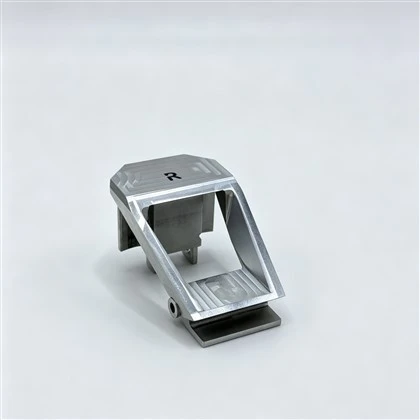
Next is CNC machining, which is subtractive—we cut a solid block of material (metal, plastic, wood) down to your design. This is the go-to if your prototype needs to handle real stress, like a small engine part or a bracket for a drone that’s going to fly. FDM might snap if you push it too hard, but a CNC-machined aluminum part? That’ll hold up to test runs, vibration, whatever you throw at it. It’s a little slower than FDM, but still way faster than waiting for a custom part. We also do vacuum casting for when you need a batch of 5–10 identical prototypes, right after your design is locked in a little more. We make a master part (usually via 3D printing or CNC), make a silicone mold around it, then pour liquid urethane into the mold to get parts that feel almost exactly like injection-molded parts—great for testing how a product works in the hands of real users before you spend six figures on a production mold.
Wait, let’s bust a common myth about RP: some people think it’s only for startups or new products. Nope! We work with old-school manufacturers too, updating a 30-year-old part that broke and no one has the CAD file for. Instead of recreating the part from scratch, we scan the old part, tweak it a little, and have a prototype back in a few days to test fit on the machine. It cuts their downtime from weeks to days, which keeps their production line running. And we do medical device prototypes too, which is super exciting—things like custom surgical tools or small implant components that need to fit a patient’s unique anatomy. RP lets us test fit and adjust the design before it goes into clinical trials, which makes a huge difference in patient outcomes.
So why is rapid prototyping such a big deal right now? For one thing, the tools have gotten way cheaper and more accessible in the last 10 years. 10 years ago, a good SLA machine cost like $50k; now, there are desktop versions for hobbyists, but industrial ones that produce high-quality parts are more affordable and faster than ever. That accessibility means small teams don’t have to go through a big corporation’s hoops to turn their idea into a physical thing. We had a client last year, a high school robotics team, come to us with a sketch for a new robot arm grip. They couldn’t afford a custom machine shop, so we printed their prototype for a few hundred bucks, they tested it, tweaked the CAD file, and came back two weeks later with an improved design that won their regional competition. That’s the kind of stuff that makes RP matter, not just for big products, but for anyone with an idea that could change something small.
But here’s what people don’t tell you: rapid prototyping isn’t just about speed. It’s about iteration. The magic isn’t the first prototype—it’s the third, fourth, or tenth one. When you can get a part in your hands in 3 days, you don’t wait 6 weeks to find out the hinge on your new coffee maker prototype is too flimsy. You test it on day 4, design a sturdier hinge by day 7, print it by day 10, and test again. That loop—design, prototype, test, repeat—cuts down development time by 50% or more. A lot of our clients tell us they used to take 6 months to get from idea to first production run; now they do it in 2 or 3. That’s not just saving time—it’s getting products to market faster, which means beating competitors to the punch, testing with customers earlier, and avoiding costly mistakes.
We see mistakes all the time, too, which is why RP is so critical. A few months back, a client came to us with a CAD file for a new laptop stand. They thought the legs would fold flat for travel, but when they printed the first prototype, the joints were too loose and the stand wobbled if you put a full-size laptop on it. Instead of retooling a mold for production, they fixed the joint design, printed a new prototype in 4 days, tested it, and had a rock-solid design that went to production a week later. If they’d gone straight to production, they’d have wasted thousands on bad molds and a product that would have returned for defects. That’s the risk RP eliminates—small, cheap mistakes early, instead of huge, expensive ones later.
Now, let’s talk about what goes into making a good prototype. It’s not just pressing “print” or loading a CNC file. We spend time with every client to figure out exactly what they need the prototype for. Are they doing a fit check (will this part go into the machine correctly)? A function test (can it hold 10 lbs without breaking)? A user test (does this phone case feel good in someone’s hand)? Those answers change what process we use, what material, and how detailed we make it. For a concept prototype that’s just to show investors, we’ll use a cheap FDM plastic, no need for a super smooth finish. For a functional test part, we’ll use aluminum or a high-temp plastic that can handle the stress. For a trade show display piece, we’ll finish it with paint or a clear coat to make it look like the final product. That’s the value we add as a rapid prototyping supplier—we don’t just send you a part; we make sure it’s the right part for what you need.
Another thing: materials have come a long way. You’re not limited to basic plastics and aluminum anymore. We can work with medical-grade plastics, heat-resistant ceramics, even small batches of titanium for aerospace prototypes. If you have a unique material need, we can source it and work with you to get the prototype you need. We also handle post-processing—sanding, painting, anodizing, whatever you need to get the part ready for testing or showing. A lot of other places will just give you a raw 3D print with layer lines, but we take the time to finish it right so it works for your purpose.
Wait, let’s address a common misconception: is rapid prototyping only for low-volume parts? Absolutely not. It’s perfect for low-volume, yes—like 1–100 parts for testing, clinical trials, or small runs. But it’s also amazing for mid-volume, too. If you need 500 parts for a limited product run, vacuum casting or injection molding tools that we can build fast (not the 12-week wait for traditional molds) let you make those parts in weeks, not months. That’s why a lot of consumer brands use RP to test a limited launch of a product, then scale up production once they know it works.
We’ve had some wild projects over the years, too. One client was a costume designer working on a superhero suit for a movie—they needed custom armor plates that fit perfectly to an actor’s body. We scanned the actor, turned that scan into a CAD file, printed the armor in a flexible, durable plastic, and it fit exactly. Another project was a custom prosthetic hand for a teen who loved skateboarding. We worked with his family and his doctor to tweak the design to be lightweight, strong, and have space for a custom skateboard mounting bracket. They tested the first prototype, adjusted the grip, and ended up with a prosthetic he actually wanted to wear, not just something that works. Those projects remind me that RP isn’t just for products—it’s for people, for ideas that solve real problems.
Now, if you’re reading this and you have an idea, a broken part, or a project that’s stuck waiting for a prototype, here’s the thing: you don’t have to go it alone. A lot of people try to prototype on their own with a desktop 3D printer, but if you’re dealing with tight tolerances, high-stress parts, or materials that are hard to work with, an industrial rapid prototyping service will get you a better part faster. We work with every kind of team, from solopreneurs with a side hustle idea to Fortune 500 companies updating product lines. We’ll walk you through the process: send us your CAD file (or even just a sketch, we can scan it and turn it into a design), chat with you about what you need the prototype to do, get you a quote fast, and have that part in your hands in days.
If you’re ready to stop waiting and turn your concept into something tangible, don’t hesitate to reach out for a procurement consultation. We can answer any questions, walk you through our process, and help you pick the right method and material for your project. Whether you’re just starting out or you’re deep in a product development loop, rapid prototyping is the fastest, most cost-effective way to get your idea off the ground.
CNC Turning Services References:
- Gibson, I., Rosen, D. W., & Stucker, B. (2015). Additive Manufacturing Technologies: 3D Printing, Rapid Prototyping, and Direct Digital Manufacturing. Springer.
- ASTM International. (2020). Standard Terminology for Additive Manufacturing – Coordinate Systems and Test Methodologies (ASTM F2942-20).
- Wohlers, T. T. (2022). Wohlers Report 2022: Additive Manufacturing and 3D Printing State of the Industry. Wohlers Associates.
Dongguan Bosi Precision Co., Ltd.
With abundant experience, we are one of the most professional rapid prototyping manufacturers and suppliers in China. We warmly welcome you to buy high quality rapid prototyping made in China here from our factory. We also accept customized orders.
Address: Room 101, Building2, No. 30 Shangsheng Road, Changan, Dongguan, Guangdong
E-mail: irene@bosiprecision.com
WebSite: https://www.bosiprecision.com/
