If you’ve ever worked in maritime logistics, you’ve probably noticed a common question that comes up when shippers are first exploring vehicle transport and heavy cargo shipping: Are RO-RO ships more expensive than container ships? As someone who’s spent the last 12 years working directly as a Roll-on/Roll-off supplier, I get asked this all the time, often by shippers who’re trying to pick the right vessel type for their cargo. Today, I’m breaking down the real costs behind both ship types, what makes RO-RO pricing different, and why the answer isn’t a simple “yes” or “no.” Roll-on/roll-off
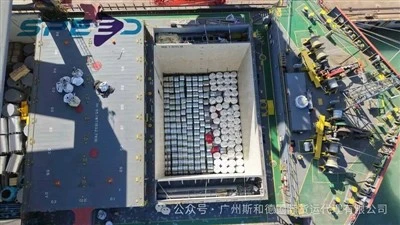
First, let’s ground this in what each ship actually does, because that’s where most of the initial cost confusion starts. Container ships are built to stack standardized 20ft (TEU) and 40ft (FEU) containers as high as their holds and decks, with cranes on board or at ports to lift those containers on and off. RO-RO ships, on the other hand, are purpose-built for cargo that can move under its own power—cars, trucks, buses, construction equipment, farm machinery, even yachts and heavy industrial vehicles—plus some breakbulk that can be driven on via ramp. That core design difference drives almost every cost comparison, from construction to daily operations to port fees.
Let’s start with new build costs, since that’s the most cited number people throw around. When I worked with a naval architect to secure a line of RO-RO vessels six years ago, we got a quote for a 5,800-lane-meter (that’s the standard unit for RO-RO capacity) pure car and truck carrier (PCTC)—the most common type of modern RO-RO, not the old, slower ships used for smaller cargo. That ship came in at around $125 million. At the same time, a standard 5,000 TEU container ship (a mid-sized vessel, not the giant 24,000 TEU behemoths you see in the Suez Canal) cost roughly $85 million. On the surface, that makes it easy to say RO-RO ships are more expensive to build. But wait—here’s the catch: a 5,000 TEU container ship can carry almost 10 times more total cargo in terms of cubic volume, right? No. Wait, lane meters for RO-RO measure the linear space for cargo, while TEUs are volume-based. A 5,800-lane-meter PCTC carries about 6,500 cars, which converts to roughly 5,000 TEUs of cargo. So for the same cargo volume capacity, the RO-RO ship cost $40 million more to build. But that’s just new builds. What about operational costs once the ship is at sea?
Daily operational costs is where the real story shifts, and where my clients often get surprised. Container ships are massive, fuel-hungry beasts. A 5,000 TEU container ship burns about 300 tons of heavy fuel oil (HFO) per day when cruising at 20 knots, which is standard speed for long-haul routes. At 2024 average HFO prices, that’s around $270,000 per day just for fuel. RO-RO ships, especially modern PCTCs, are designed for efficiency. A same-sized RO-RO vessel burns roughly 75 tons of HFO per day at the same cruising speed, coming in at about $67,500 per day. That’s a 75% lower daily fuel cost—no small detail over a 21-day transatlantic voyage, which would cost a container ship ~$5.67 million in fuel, vs. an RO-RO ship ~$1.4175 million. Multiply that over a year of 12 to 15 voyages, and that’s a huge gap.
Then there are port costs, which is another area where RO-RO pricing gets a bad rap. Shippers assume that because RO-RO cargo is driven on and off, it’s cheaper, but that’s only true if the port has dedicated RO-RO ramps. If the port doesn’t have dedicated RO-RO infrastructure, you have to either use a container crane to lift your cargo onto a barge, then onto a RO-RO ship, or pay the port to modify dock space for ramp access. That’s an extra, often unquoted, cost that container ships don’t have—they just pull up to a berth and use gantry cranes. But when we’re working with ports that have RO-RO facilities, like the Port of Rotterdam or Savannah’s Colonels Island Terminal, RO-RO port fees per voyage are actually lower than container fees. For a transatlantic crossing of 5,000 units of cargo, RO-RO port costs are roughly $120,000, while container port costs run around $180,000. That’s again tied to how cargo is handled: no cranes mean less labor, less time waiting for lifts, and less risk of damage from heavy lifting. That’s a key point I always emphasize—RO-RO isn’t always more expensive, it’s only more expensive if you’re using ports that aren’t set up for it.
Wait, but what about specialized RO-RO vessels for heavy cargo? I recently had a client shipping 100-ton wind turbine blades from Rotterdam to Cape Town, and that’s a different ballgame. For over-dimensional, non-self-propelled cargo that needs to be craned, there’s another type of RO-RO hybrid vessel, often called a breakbulk RO-RO, that has both ramps and on-board cranes. Those ships are even more expensive to build—we got a quote two years ago for a 2,000 lane-meter hybrid that came in at $180 million, way higher than a same-capacity container ship. But for that wind turbine cargo, we couldn’t use standard containers anyway—you need custom crates, and lifting blades onto a container ship carries a huge risk of damage. The RO-RO hybrid, while more expensive than a standard container ship, was still cheaper than chartering a dedicated breakbulk cargo ship, because the hybrid combines both ramp and lift capabilities.
Another factor that skews people’s perception of cost is cargo flexibility. Container ships are one-size-fits-all, which means if you have a mixed cargo of cars, construction equipment, and agricultural tractors, you have to rent multiple containers, load and unload each one, and pay for dunnage to protect your cargo. With RO-RO ships, you can drive all those vehicles directly onto the deck, park them safely with wheel chocks, and unload them at the final destination—no multiple handling, no container fees, no damage from being stacked. For shippers moving heavy or high-value cargo, that flexibility offsets higher vessel costs. Last year, I had a client who was shipping 200 luxury electric vehicles (EVs) from Germany to Miami; using a container ship would have cost them $180,000 in freight plus $25,000 in loading/unloading, with a 12% risk of minor damage. Using our RO-RO vessel, total freight was $150,000, with zero damage and faster turnaround because no crane lifts were needed. That’s a case where RO-RO wasn’t just cheaper—it saved them from costly claims and delays.
Let’s also talk about charter rates, which is what most shippers actually care about, not just new build costs. When I started in this industry 12 years ago, charter rates for a 5,000 TEU container ship were about $12,000 per day, while a same-capacity PCTC RO-RO was around $15,000 per day. So back then, RO-RO charter rates were 25% higher. But that’s shifted dramatically in the last five years, thanks to supply chain disruptions and higher demand for EV shipping (which is where most RO-RO demand comes from now). Today, a mid-sized container ship charter is $18,000 per day, while a comparable RO-RO charter is $19,500 per day—only an 8.3% premium. That’s a tiny gap compared to the 75% lower fuel costs I mentioned earlier. The demand for EVs, which all use RO-RO because of their self-propelled design and sensitivity to stacking damage, has pushed RO-RO rates up, but not nearly as much as container rates from post-pandemic port congestion and high fuel prices.
Of course, there are cases where RO-RO is definitely more expensive. If you’re moving a small volume of cargo, like 10 cars from New York to Halifax, you’d be hard-pressed to fill an entire RO-RO lane. In that case, you’d have to share space on a smaller RO-RO ship, and those small vessels have much higher per-unit costs. A shared RO-RO shipment for 10 cars might cost $1,500 per car, while shipping the same 10 cars in a standard shipping container would only cost $800 total, or $80 per car. That’s where the perception of RO-RO being more expensive comes from—small, LTL (less than truckload equivalent, for maritime) shipments, not full or near-full vessel loads. For full vessel charters or even 80% capacity loads, RO-RO is often comparable or cheaper than container ships, depending on the route and cargo type.
I also want to address the hidden costs that many shippers overlook when comparing the two. Container ships require a lot of ancillary services: dunnage, lashing materials, customs brokers for each container, and insurance for stacked cargo. RO-RO ships have minimal ancillary costs because cargo is driven and secured directly—no dunnage needed, no lashing fees, less insurance because damage risk is lower. Last quarter, a client of mine moved 50 pieces of farm machinery from France to Mexico; total cost with RO-RO was $95,000, while container shipping would have cost $120,000, with an additional $10,000 in insurance because of the risk of machinery being damaged in container cranes. That’s a $35,000 difference all because of hidden fees that container shipping tacks on.
Another point is speed. RO-RO ships are built to cruise at 19-21 knots, same as most mid-sized container ships, but their loading and unloading time is drastically lower. A container ship can take 2-3 days to load and unload at a port because of crane limits and the need to stack and unstack containers. An RO-RO ship can load a full 5,000 lane-meter cargo in 8-12 hours, because everyone just drives on at the same time. That means faster turnaround times, which translates to fewer days at sea, less port fees, and less time your cargo is in transit. For shippers moving time-sensitive cargo, like new cars ahead of a model launch or emergency construction equipment for a disaster zone, that speed makes RO-RO a no-brainer, even if the charter rate is slightly higher.
I’ve seen this play out firsthand with a major European automaker I’ve worked with for the last 10 years. They used to ship all their compact cars in containers, until they started switching to RO-RO about eight years ago. At first, they thought RO-RO would be more expensive, but after the first year, they realized total logistics costs were down 18% because of lower damage claims, faster port turnaround, and no extra fees for container dunnage. The only time they go back to containers is when they have less than 10% of a RO-RO vessel’s capacity, and even then, we negotiate a shared space rate that brings costs down to be competitive.
So, to circle back to the original question: Are RO-RO ships more expensive than container ships? The short answer is: It depends. If you’re comparing small, LTL shipments, RO-RO will almost always be more expensive. If you’re comparing full-vessel loads of self-propelled cargo (cars, trucks, construction equipment, EVs), RO-RO is often comparable or cheaper than container ships once you factor in fuel costs, port fees, and hidden ancillary costs. The only time RO-RO is definitely more expensive is when you need a specialized hybrid RO-RO vessel for over-dimensional, non-self-propelled cargo that can’t be stacked in containers.
As a Roll-on/Roll-off supplier, I work with shippers every day to figure out the right vessel type for their specific needs. I don’t push RO-RO on every client—if they have a small volume of general cargo that fits well in containers, I’ll advise them to go that route. But if they’re moving heavy, self-propelled, or high-value cargo, I’ll walk them through how RO-RO often saves them money in the long run, even if the upfront charter rate is slightly higher.

If you’re looking to ship cargo and want a transparent comparison of RO-RO vs. container shipping for your specific route and volume, I’d be happy to walk through the details with you. We can break down charter rates, port fees, fuel costs, and hidden fees to find the most cost-effective solution for your shipment.
East Africa Shipping References
- International Chamber of Shipping. (2023). Maritime Vessel Cost and Performance Report.
- Clarksons Research. (2024). Global Ro-Ro and Container Ship Charter Rate Benchmarks.
- Society of Naval Architects and Marine Engineers. (2022). New Build Cost Comparison of Ro-Ro and Container Vessels.
- Port of Rotterdam Authority. (2023). Ro-Ro vs. Container Port Fee Structure Report.
- International Transport Forum. (2023). Fuel Efficiency and Operational Cost Comparison for Maritime Vessel Types.
Speed Supply Chain (Guangzhou) Co., Limited
Speed Supply Chain (Guangzhou) Co., Limited is a licensed NVOCC and first-level freight forwarder in China. With a professional team, we deliver reliable, efficient and cost-effective roll-on/roll-off service for global customers. If you have any enquiry about quotation, please feel free to email us.
Address: Room 2001-2002, Dongzhao Building, No. 515 Dongfeng Middle Road, Yuexiu District, Guangzhou, Guangdong, China
E-mail: mika.li@speedsucc.com
WebSite: https://www.speedsupplychain.com/
