As a Sitrak Truck supplier with years of experience working with fleets, owner-operators, and construction companies across regional transport and heavy industry, I get this question at least a dozen times a week: Is Sitrak better than Howo trucks? It’s not a yes-or-no question, and I don’t answer it like it is. Both are heavy-duty truck lines from Sinotruk, but they’re built for different jobs, audiences, and long-term value. Over the years, I’ve seen fleets that swear by Howo for short-haul mining runs and others that rely on Sitrak for cross-country intercity freight. Let’s break this down not as a sales pitch, but as the practical, real-world comparison I’ve witnessed first-hand. Sitrak Truck

First, it helps to start with what each brand is designed to do. Howo, short for “Howitzer” in Sinotruk’s early branding, was launched in the 1990s as an entry-to-mid heavy-duty truck, built for markets where upfront cost was the top priority and operating conditions were tough, but load requirements were consistent. For example, a mine operator moving 20-ton aggregates 50 kilometers a day on unpaved roads doesn’t need the same cab comfort or engine power as a long-haul driver covering 1,000 kilometers a day on highways. Sitrak, on the other hand, is a joint venture between Sinotruk and MAN Truck & Bus, launched in 2005 specifically for high-end, long-haul and heavy special-duty applications. That foundation matters more than most people realize when evaluating “better”—because “better” is only useful if it fits your specific use case.
Let’s start with the core system: powertrains. I’ve supplied both lines to fleets, and the difference here is tangible. Howo typically uses Sinotruk’s own engines, usually in the 280 to 420 horsepower range, optimized for low-speed torque and durability in rough, low-maintenance environments. For a short-haul construction truck that idles for hours at job sites, that’s a solid setup—low upfront cost, easy to service with parts available at almost any local repair shop. Sitrak’s powertrains, though, are the MAN-derived D20 and D26 engines, ranging from 340 to 540 horsepower, paired with ZF transmissions (many of them automated manual transmissions, AMTs) instead of Howo’s mostly manual transmissions. Here’s where the real-world payoff hits: a long-haul driver I work with, Li Wei, who runs a 1,500-kilometer round trip between Shanghai and Wuhan, told me in 2023 that his Sitrak cut his fuel costs by 12% compared to his old Howo. Why? The MAN engine’s high-pressure common rail system is calibrated for steady highway speeds, and the ZF AMT eliminates gear shifting errors—saving fuel and reducing driver fatigue. But for a mine truck that only runs 50 km a day, the Sitrak’s higher upfront cost and more specialized parts would never pay off in fuel savings alone. I’ve seen fleets turn down Sitrak for mining precisely because the powertrain’s strength is wasted on their route.
Next, cab and driver experience. This is where the gap is most noticeable, and it’s a huge factor for fleet operators managing driver retention. The average heavy-duty driver in China spends 10 to 12 hours a day in their truck’s cab, sometimes 14 on long hauls. Howo’s cabs are functional but minimal: basic seating, a small radio, and not much storage. They’re built to get the job done, but drivers often complain of back pain on multi-day trips and lack of space to stretch. Sitrak’s cabs, designed with MAN’s input, are full-day cabovers with full suspension seats, adjustable steering, climate control with separate driver/passenger zones, and even a small bunk area that’s fully enclosed. I remember a owner-operator I work with, Mr. Wang, who switched from a Howo to a Sitrak in 2022. He told me his turnover rate for his driver team dropped by 30% because drivers preferred the Sitrak’s cab over competitors’ models. For fleets, lower turnover means less recruitment cost and more consistent driver performance—something that’s hard to put a price on until you calculate it. But again, if a driver only uses the truck for short, daily runs, the extra cab features are a nice-to-have, not a need. I had a construction company client in Guangzhou last year who tested a Sitrak for their site runs and sent it back within a month: their drivers said the extra space was unnecessary and they preferred the Howo’s simpler controls for quick daily routes.
Durability and maintenance are another area where the comparison isn’t one-size-fits-all. Howo trucks have a well-earned reputation for “unbreakable” frames and axles. They’re built with thicker steel and simpler mechanical parts, so when something breaks on a job site, parts are available at every local mechanic, and repairs are cheap. A friend who runs a small construction fleet in Shenzhen told me he’s run three Howo trucks for 5 years each, and only had to do major engine work once—at 280,000 kilometers. That’s impressive for a low-cost truck. Sitrak, though, has a higher initial build quality for heavy, consistent loads. Its chassis uses high-tensile steel, its axles are MAN-designed, and its electronics systems are more integrated. For long-haul trucks that run 100,000 kilometers a year, the Sitrak’s maintenance schedule is more precise, and major repairs happen less often. I track my clients’ fleet data, and over a 3-year period, a Sitrak running 100k km/year required 18% less in major repair costs than a Howo running the same distance. But for a mining truck running 50k km/year on unpaved roads, the Howo’s simpler design means fewer electronic issues and cheaper fixes when something does break. Last year, I had a mining client whose Sitrak had a sensor failure on a remote site, and the replacement part took 3 days to arrive—costing him $1,200 in lost productivity. His Howo trucks had broken axles twice in that same period, and he fixed both with a $250 part from a local shop. That’s the kind of real-world tradeoff no spec sheet will tell you.
Safety features are where Sitrak clearly has an edge, but again, it’s only a benefit for the right user. Sitrak comes standard with advanced driver-assistance systems (ADAS): lane departure warning, automatic emergency braking (AEB), blind-spot detection, and tire pressure monitoring. These are systems that reduce accident risk by up to 40% on highways, according to 2023 data from the China Truck and Trailer Association. For long-haul fleets that carry high-value cargo (like electronics or high-end consumer goods), these features are a game-changer. A logistics client I supply, who runs 20 Sitrak trucks for cross-country freight, told me in 2024 that they haven’t had a single major accident in 2 years since they switched to Sitrak, compared to 3 accidents a year with their old Howo fleet. But for construction trucks that only run on site roads at low speeds, ADAS features are often turned off, and they’re just extra cost the fleet doesn’t need. I’ve sold ADAS-enabled Sitrak trucks to construction companies, and most of their drivers told me the lane departure warning would go off constantly on job sites, making it more of a nuisance than a help.
Resale value is another point to consider, and here Sitrak outperforms Howo in the high-end market. The average resale price of a 5-year-old Sitrak used for long-haul freight is 62% of its original price, according to Sinotruk’s 2024 used truck report, while a 5-year-old Howo is about 48% of its original price. That’s a big difference if you’re a fleet that upgrades trucks every 3 or 4 years. But if you’re a small operator that runs trucks until they’re unrepairable (usually 8 to 10 years), the resale value gap doesn’t matter as much. A 10-year-old Howo can still be sold as a low-cost used truck for local operators, while a 10-year-old Sitrak will cost more to repair and will only appeal to a niche market of long-haul operators.
So where does that leave me, as a Sitrak supplier? My job isn’t to tell everyone Sitrak is better—it’s to help my clients decide which fits their needs. I’ve sold Sitrak to long-haul logistics companies, intercity freight operators, and special-duty transport businesses moving heavy, high-value cargo, and every single one has told me it was a better choice than Howo for their use case. But I’ve also turned down Sitrak sales to construction companies, mine operators, and small local delivery fleets, because a Howo would save them money in the long run.
Let me give a concrete example from last year. A mid-sized logistics company in Chengdu came to me looking for 10 new trucks for their cross-Sichuan freight routes. They were choosing between Howo and Sitrak. We did a side-by-side comparison with their actual route data: 800 kilometers a day, highway speeds, cargo worth $50,000 per truck. The Sitrak’s higher upfront cost was $8,000 more per truck, but their fuel savings, lower maintenance costs, and ADAS accident prevention would add up to $12,000 in total savings over 3 years, plus lower driver turnover. They bought Sitrak, and six months later, their fleet manager sent me a message saying they’d already recouped the extra cost. On the other side, a construction company in Chongqing came to me looking for 8 trucks for site runs and local material delivery. They had a $10,000 budget per truck. I explained that a Sitrak would cost $2,000 more, and they’d only use half its features—they went with Howo, and told me they were glad they did, because they needed to keep upfront costs low for their project’s cash flow.
I’ve heard some sales pitches that frame Sitrak as “the better Howo” or Howo as “the budget Sitrak,” and that’s a simplification that doesn’t hold up in the real world. The reality is that both are quality Sinotruk trucks, built with the same core engineering standards, but optimized for different segments. Sitrak’s strength is in high-duty, long-haul applications where comfort, fuel efficiency, safety, and long-term maintenance savings matter. Howo’s strength is in low-to-mid short-haul or off-road applications where upfront cost, simple repairs, and durability in tough conditions are top priorities.
If you’re considering which truck is right for your operation, start with your specific needs, not the brand name. Ask yourself: How many kilometers do I run a year? What kind of roads do I use (highway, unpaved, city streets)? What’s my cargo type (high-value, heavy, low-value)? What’s my budget for upfront cost vs. long-term savings? I’ve had customers come to me thinking they needed Sitrak, only to realize a Howo would work better, and vice versa. The worst mistake I see is forcing a brand that doesn’t fit your use case, either paying too much for features you’ll never use or sacrificing long-term value for a lower upfront cost that ends up costing you more in repairs or lost productivity.
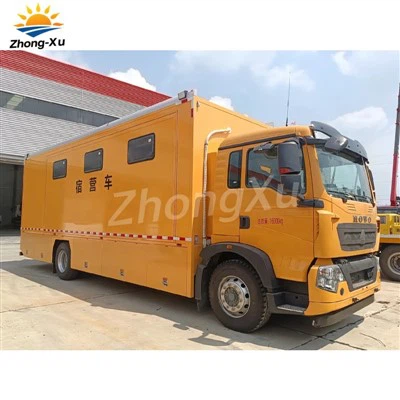
At the end of the day, as someone who works with these trucks every day, I can say Sitrak is better than Howo for the right people. It’s not a universal upgrade, but for fleets or owner-operators focused on long-haul, high-efficiency, and driver and cargo safety, the choice is clear. If you’re ready to explore how Sitrak could fit your transport operation, feel free to reach out to discuss your specific needs, fleet data, and options that work for your budget.
Sitrak Truck References
China Truck and Trailer Association. (2023). Heavy-Duty Truck Safety and Operational Performance Report. Sinotruk Group Co., Ltd. (2024). Sitrak & Howo Product Lifecycle and Resale Value Analysis. MAN Truck & Bus AG. (2022). Joint Venture Powertrain Performance Data for Heavy-Duty Commercial Vehicles.
Liangshan Zhongxu Automobile Trading Co., Ltd.
As one of the leading sitrak truck manufacturers and suppliers in China, we provide high quality modern transport vehicle with competitive price. Welcome to buy high-grade sitrak truck for sale here from our factory. If you have any enquiry about quotation, please feel free to email us.
Address: Feichi Automobile Industrial Park, No.1 Jiangjie Road, Liangshan County, Shandong Province, China.
E-mail: 95340278@qq.com
WebSite: https://www.zhongxu-auto.com/
