Hey everyone, it’s Jake here from the flattened expanded metal shop—you know, the team that’s been helping out solar gear makers for a minute now. Lately, I’ve been getting so many DMs and calls from solar panel engineers and buyers asking the same thing: “What the hell do we actually need from flattened expanded metal for solar apps?” Fair question! Most folks see expanded metal as just some grid stuff, but when it’s sitting under, around, or on a solar panel, it’s got to do a lot more than just look like a metal sieve. I’m gonna break this down like we’re chatting over a cup of coffee at the warehouse, no stuffy jargon, just real talk about what matters when we’re crafting flattened expanded metal for solar. Flattened Expanded Metal
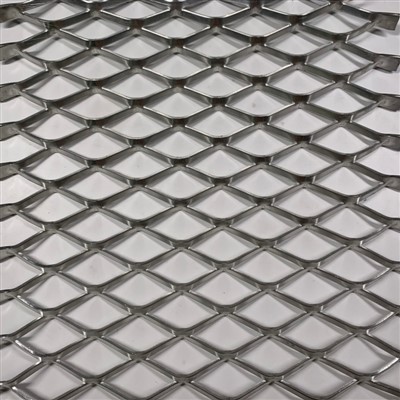
First off, let’s get one thing straight: solar panels don’t play around with temperature. Those things bake in the sun all day, so any metal part attached to ‘em’s gotta handle that heat without throwing a fit. That’s why alloy choice is non-negotiable here. You can’t just grab any old steel expanded metal and call it good—regular steel rusts like crazy when it’s exposed to outdoor humidity and that constant UV-driven heat swing, right? We’re talking about either 304 or 316 stainless steel, or even aluminum 5052 if cost is a tight crunch, but stainless is the go-to for most solar setups. Wait, let’s be clear: not all stainless is equal. 316 has that molybdenum kick that fights corrosion way better in coastal areas—perfect for solar farms near the ocean that get salt spray. 304 works great for inland utility-scale arrays, but skip the cheap 200 series stainless, that stuff will pit and fail in 2 years, and nobody wants to replace thousands of panels’ hardware in 2025, that’s a nightmare.
Next up, the flattening process itself. Expanded metal starts as a sheet that’s been slit and stretched into that diamond shape, right? But if you don’t flatten it right, you’ve got wavy edges or a surface that flexes too much when you install it. For solar, flattened expanded metal needs to be dead flat—no more than like 0.5mm of warp across a 1m sheet. Why? Because if it’s wavy, when you mount it as a backsheet support or a frame reinforcement, it won’t sit flush, and that can cause micro-cracks in the solar cells over time from uneven pressure. We use a multi-roll flattening line that’s custom-calibrated for our sheet thicknesses, not just the off-the-shelf machines you see at general metal shops. That means every sheet leaves our facility with the flatness spec solar OEMs actually need, not the generic “flat enough for a shelf” spec.
Speaking of sheet thickness—don’t sleep on this. Too thin, and the expanded metal will bend under its own weight when it’s sized for a 2m panel. Too thick, and you’re wasting money on extra metal and adding unnecessary weight to the panel, which is a big deal for rooftop solar where weight limits are strict. The sweet spot for most solar applications is between 0.8mm and 1.5mm, depending on whether it’s going behind the panel as a substrate or along the edges as a frame brace. For example, thin-film solar panels might want the 0.8mm aluminum for light weight, while silicon PV panels often use 1.2mm stainless for the extra rigidity to handle wind loads during storms. We always ask clients what their panel size and mounting location is before quoting, because a one-size-fits-all approach here just doesn’t fly.
Then there’s the mesh opening size. This is a big one that a lot of first-time buyers get wrong. If you’re using flattened expanded metal as a heat sink cover or a vent for the solar panel’s junction box, you need openings that are big enough for air to flow through—otherwise, the panel overheats, and that kills efficiency. We’re talking about diamond openings that are at least 10mm on the long axis for venting, so air can circulate easily without letting too much dust or debris in (wait, but if it’s a top-mounted cover, you don’t want openings too big that leaves get stuck, so we balance that). If you’re using it as a mounting bracket, smaller openings—like 5mm long diamonds—give better grip for the fasteners, so the panel stays put during high winds. We also size the strand thickness of the diamond openings to match the opening size: a 10mm opening needs a 1mm thick strand, so the metal doesn’t buckle or break under load.
Corrosion resistance isn’t just about the alloy, by the way—surface finish matters too. When you’re dealing with solar panels, anything attached to them is exposed to rain, snow, bird droppings, even acid rain in industrial areas. We offer two main finishes for solar flattened expanded metal: mill finish for aluminum (it forms its own protective oxide layer, so that’s solid) and a clear passivation for stainless steel, which seals off the tiny surface pores that can turn into rust spots down the line. We skip the painted finishes for most outdoor solar apps, because paint can chip and peel when exposed to UV, leaving the metal unprotected. The only time we use a powder coat is for indoor test panels, but for real-world solar, passivation is the way to go—it’s long-lasting and doesn’t add any extra bulk that would mess with the panel’s efficiency.
Load capacity is another requirement that gets overlooked. Solar panels have to handle all kinds of forces: wind lift, snow weight, even accidental impacts from hail. The flattened expanded metal you use can be part of that load support. We run custom load tests for every client’s order. For utility-scale solar farms in places like Iowa that get 2 feet of snow in winter, we need the expanded metal to hold up 50kg per square meter without bending more than 2mm. For rooftop solar in Florida, where wind speeds can hit 150km/h during hurricane season, we adjust the strand size and mesh density to resist wind lift without adding too much weight to the roof. A lot of cheaper expanded metal suppliers just use generic load specs, but we tailor it to the exact location and use case of the client’s panels, because nobody wants a panel blowing off a roof mid-storm—That’s bad for the environment and way worse for our reputation.
Wait, let’s talk about installation ease. If you’re a solar installer, you don’t want to be fighting with a weirdly sized metal sheet that’s impossible to cut or drill. So, the flattened expanded metal has to be compatible with standard mounting hardware—meaning the holes or the edge dimensions have to align with common panel frame holes, or be easy to punch or drill on-site. We can also add pre-punched mounting holes as a custom service, so clients don’t have to do any extra work after receiving the metal. It might seem like a small thing, but when you’re installing 100 panels an hour, not having to stop and drill extra holes saves hours of time, which translates to money in the client’s pocket.
Also, let’s not forget about efficiency. Solar panels work best when they’re cool, and flattened expanded metal can help with that if it’s placed right. The mesh openings allow air to circulate under the panel, pulling heat away from the solar cells. If the metal is too dense, it blocks airflow, making the panel run hotter and lose 5-10% of its output. If it’s too spread out, it doesn’t add any structural support. Our team does a quick airflow calculation for every custom order, using the mesh size and strand density, to make sure the expanded metal doesn’t hurt the panel’s efficiency. That’s why we don’t just sell off-the-shelf mesh—we tweak every order to balance structural needs and airflow, so the client gets the best of both worlds.
Oh, and one more thing: consistency across orders. Nothing is more frustrating than getting a shipment of flattened expanded metal where half the sheets are flat and half are wavy, or the mesh size is off by a few millimeters. That’s why we run quality checks on every single sheet that leaves our warehouse—we measure flatness with a digital level, check mesh dimensions with a caliper, and do a corrosion resistance test by spraying a salt solution on a sample and checking for pitting after 72 hours (that’s the standard for outdoor metal parts). We track every order with lot numbers, so if a client has an issue later, we can go back and see exactly what we made, when, and what specs we used. For large utility-scale projects, consistency is key—they can’t have different parts that don’t fit when they’re installing thousands of panels.
Let me give you a real example to make this concrete. Last year, we worked with a solar farm developer in Arizona that was putting up a 10MW array. They initially used generic 1mm 304 stainless expanded metal, but after 6 months, they noticed some panels were overheating by 8 degrees C, which was cutting their annual output by around 3%. They came to us, and we switched them to 1.2mm 316 stainless, adjusted the mesh openings to 12mm instead of 8mm, and did a passivation finish. After installing our metal, their panel temperatures dropped to normal, and their efficiency went back up. They ordered another 15MW worth a few months later—word travels fast in the solar industry.
Look, I know this sounds like a lot, but when you’re dealing with solar panels, every component matters. The flattened expanded metal isn’t just a random part—it’s supporting the panel, helping it stay cool, keeping it fixed in storms, and lasting for 25+ years. If you’re a solar engineer, installer, or project manager reading this, and you’re tired of dealing with metal suppliers that cut corners to save a buck, hit us up. We don’t do generic orders, we don’t skip quality checks, and we get that your solar projects need to work for decades, not just until the next quarter.

Don’t waste time with parts that will fail in a few years. The right flattened expanded metal can make or break your solar panel’s performance and longevity. Reach out whenever you’re ready to chat specs, ask questions, or get a custom quote—we’re here to help you get the metal that actually works for your solar application.
Decorative Expanded Metal References:
- International Code Council (ICC) Solar Installation Standards, 2021 Edition
- NREL (National Renewable Energy Laboratory) Report on Solar Panel Thermal Management, 2022
- ASTM A240 Standard Specification for Chromium and Chromium-Nickel Stainless Steel Plate, Sheet, and Strip for Pressure Vessels and for General Applications, 2023
- Solar Energy Industries Association (SEIA) Guide to Balancing Structural Integrity and Efficiency in PV Arrays, 2022
- Corrosion Doctors, Outdoor Metal Corrosion Resistance for Solar Equipment, 2023
Anping Yilida Metal Wire Mesh Co., Ltd.
Anping Yilida Metal Wire Mesh Co., Ltd. is one of the most reliable flattened expanded metal manufacturers and suppliers in China, also supports customized service. Please feel free to buy bulk high quality flattened expanded metal made in China here from our factory.
Address: Wire Mesh Development Zone, Anping, Hebei Province, China
E-mail: sales@wiremesh-yg.cn
WebSite: https://www.yilidametal.com/
