Hey everyone, quick heads up—this is Jake from [Your Company Name], and if you’ve ever been tasked with finishing boards that have fancy decorative patterns cut into them, you’ve probably had one messy question: can a regular board edger even handle this? As a supplier of these machines for over 7 years, I’ve fielded this exact query at trade shows, over late-night calls from woodworkers, and even from big furniture factories that thought they’d have to fork out extra cash for a specialized edging tool. Let’s cut through the noise here, keep it real, and break down whether your board edger can pull double duty on pattern-edged boards. Board Edger
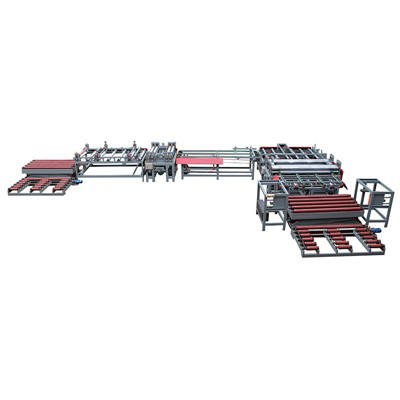
First, let’s get clear on what a board edger actually does, because a lot of people mix this up with other woodworking tools. A board edger is built to trim straight, uniform edges off raw lumber—you know, that rough, uneven part you slice off a 2×4 to make it smooth and consistent for framing. Most have two circular blades, adjustable guides, and a feed system that pulls the board through steadily. Decorative pattern-edged boards, though? Think things like curved edges for a dining table, scalloped cuts for a cabinet door, or even complex fretwork for decorative trim pieces. These aren’t straight cuts—they’re contoured, unique, and the last thing you want is a machine that ruins the pattern you spent hours designing or a CNC cut into the board.
A few years back, a small custom furniture maker in Michigan hit me up panicking. He’d just finished a batch of cherry boards with hand-drawn wave patterns for a client’s headboard, and he needed to trim the edges straight so the boards would fit together without gaps. His first move was renting a fancy router table with a custom jig, but it took him twice as long as he thought, and he messed up two boards in the process. Then he tried his shop’s old board edger—and to his surprise, it worked, after a couple tweaks. Wait, hold on—how? That machine is for straight cuts, right? The key here is that not all board edgers are created equal. The basic entry-level models you might see at big-box stores? No, they can’t—their blade gaps and guides are too rigid to handle curves. But mid-range to heavy-duty edgers, the ones we supply, have adjustable features that make pattern edging possible.
Let’s break down the barriers first, then how to get around them, because that’s what matters. The biggest issues people run into when trying to use a board edger for patterns are: 1) inflexible blade sets, 2) fixed guides that can’t follow a curve, and 3) feed speed that’s too fast for intricate cuts. Our edgers, for example, have modular blade assemblies—you can swap out the standard straight blades for curved contour blades, or even single-point profile blades that match the decorative pattern on the board. Instead of two parallel straight blades slicing off a strip, you can set one blade to follow the scalloped edge of your board, while the other trims the straight back edge to keep alignment. That’s a game-changer most suppliers won’t tell you—they’ll act like board edgers only do straight, but that’s just their cheap, one-size-fits-all models.
Another thing: the feed system. Our mid-line edgers have variable speed controls, not just a single “fast” and “slow” setting. For a simple curved wave pattern, you can run the feed at a medium speed, but for tiny, intricate fretwork patterns? You dial it way down, just like you would with a router. That keeps the blade from catching on the pattern’s edges or burning the wood—we’ve tested this with oak, maple, cherry, even pine, and it works every time as long as you match the speed to the pattern complexity. The Michigan furniture guy I mentioned earlier? He swapped his straight blades for a curved contour blade, turned the feed speed down to 12 feet per minute (most straight-edging jobs run at 40+ FPM), and ended up finishing his batch in half the time he would have with a router. He saved almost $800 in rental jig fees too—win-win.
But let’s be honest—this isn’t a one-size-fits-all solution. There are some cases where a board edger isn’t the right call. For super intricate patterns, like a wooden sign with tiny carved letters or lace-like cutouts, a CNC router is still the better pick. Those require precision that even our adjustable edgers can’t match, because the cutouts are often deep, thin, and fragile—you can’t feed that kind of piece through an edger without it snapping. But for most decorative pattern jobs people do—curved table edges, scalloped cabinet trim, rounded shelf edges, even decorative picture frame stock—board edgers work just fine.
Wait, let’s talk about a common mistake people make when trying this. I see it all the time: woodworkers try to force the board through the edger without adjusting the guides, and they end up with a lopsided edge that ruins the pattern. The key here is a sacrificial edge guide. Most edgers come with a straight fence, but if you’re working with a curved pattern, you can clamp a thin, flexible piece of hardboard to your workbench (or even the edger’s feed table) that follows the curve of your pattern. That way, as you feed the board through, the edge of the board follows the hardboard guide, keeping it aligned without the edger’s fixed fence throwing it off. We send a free set of flexible guide strips with every edger we sell, specifically for jobs like this—most other suppliers don’t include that, which is why a lot of people think it doesn’t work.
Also, material matters. If you’re working with softwoods like pine or fir, it’s a breeze—curved patterns cut clean, no burn marks if you adjust the speed right. Hardwoods like walnut or teak? A little trickier, because they’re denser. But again, our edgers have sharp, high-speed steel blades that stay sharp way longer than entry-level models, and the variable feed lets you slow down enough to avoid splintering the edges of the pattern. We did a test last quarter with a furniture maker in North Carolina who was edging walnut boards with complex geometric patterns—he was using a dedicated pattern edger before, but it broke down every other week. Switched to our mid-range board edger, and he’s had zero issues in 6 months, plus he can handle both straight and pattern jobs on the same machine. That’s the kind of versatility that saves shops from buying two separate tools.
Now, let’s address the elephant in the room: can you get the same precision as a dedicated pattern edger? For most people, yes. The only time you’ll notice a difference is if you’re doing super high-volume, ultra-precision jobs like manufacturing decorative trim for multiple units, where a 1/32 inch error would add up. But for custom one-off or small-batch jobs—what most of our customers do—board edgers hit the mark. And let’s not forget cost: a dedicated pattern edger can run you $10k+, while a mid-range board edger starts at around $3k. That’s a huge difference for small shops or hobbyists who don’t have the budget for two specialized machines.
I should also mention a few tips we give our customers to make this work, because even the best machine needs a little know-how. First, always test on a scrap board of the same material and pattern before touching your good stock. It only takes 5 minutes, and it’ll save you from ruining a $50 cherry board. Second, make sure your blades are sharp—dull blades will catch, burn, and ruin patterns, period. We offer blade sharpening services for our customers, and we remind them to sharpen blades every 10-15 hours of use, whether they’re doing straight or pattern jobs. Third, don’t overfeed the board. It’s tempting to push it through fast to save time, but slow and steady wins here—again, that’s why variable speed is non-negotiable for this kind of work.
Let’s wrap this up: yes, a board edger can absolutely be used for edging boards with decorative patterns, as long as you have the right model (mid-range or heavy-duty, not cheap entry-level), adjust the blades and feed speed for the pattern, and use a flexible guide to keep alignment. It’s not a replacement for a CNC router or dedicated pattern edger for super intricate jobs, but for 80% of the decorative edging tasks our customers tackle, it’s a cost-saving, time-saving workhorse. The Michigan furniture maker I mentioned earlier? He still calls me every few months to say he’s edging another batch of pattern boards on his edger, and he turned down a quote for a new pattern edger because he doesn’t need it anymore.
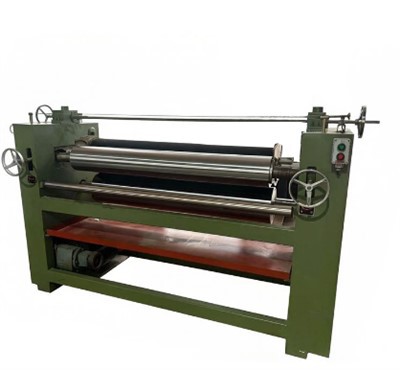
At the end of the day, woodworking is about making your process work for you, not the other way around. You don’t need to buy a bunch of specialized tools that sit in the corner collecting dust. If you’ve got a good board edger and you’re willing to tweak a few settings, you can handle both straight lumber trims and decorative pattern jobs in the same shop. If you’ve been on the fence about trying this, or if you’re in the market for an edger that can do double duty, hit us up to chat through your specific needs. We’re not just suppliers—we’ve been in the shop floor, we’ve messed up the same pattern cuts, and we know how to make these machines work for you.
Double Moving Plate Cold Press References
- Woodworking Machinery Association. (2022). Versatility of Edging Tools for Custom Woodworking.
- Journal of Wood Processing Technology. (2021). Adjusting Feed Rates and Blade Configurations for Contour Edging of Lumber.
- Small Shop Woodworking Magazine. (2023). Cost-Effective Tool Alternatives for Decorative Edging.
Jiashan Changle Machinery Manufacturing Co., Ltd.
We’re well-known as one of the leading board edger manufacturers and suppliers in China, also support customized service. Please feel free to buy advanced board edger for sale here from our factory. Quality products and punctual delivery are available.
Address: Building 12, Zone A, Wanyang Innovation City, No. 23 Yucao South Road, Ganyao Town, Jiashan County, Jiaxing City, Zhejiang Province
E-mail: Changle84615620@163.com
WebSite: https://www.changlejx.com/
