If you’ve ever worked on a vehicle’s braking system, you know the brake master cylinder is the unsung hero that turns your pedal’s gentle press into the hydraulic pressure that stops your wheels. But here’s the thing: even the highest-quality master cylinders we supply as a brake master cylinder supplier won’t perform at their best if the pushrod that connects the master cylinder to the brake booster is misadjusted. I’ve seen this first-hand in the garage and at trade shows—too many technicians skip this small step, leading to soft brakes, premature wear, or even dangerous failure down the line. Today, I’m breaking down how to adjust that pushrod correctly, with insights from years of supplying and servicing these critical components. I’m not just giving you a generic tutorial; this is the practical, science-backed guidance we share with our retail and fleet customers because getting the pushrod right isn’t just a tip—it’s a non-negotiable part of safe braking. Brake Master Cylinder

First, let’s make sure we’re on the same page about what the pushrod does. The pushrod is the solid metal rod that links the brake booster’s vacuum diaphragm to the master cylinder’s piston. Its length determines how far the piston travels into the cylinder when you press the brake. Too long, and the piston doesn’t retract fully—this creates constant pressure on the brake shoes or pads, leading to overheating, warped rotors, and unnecessary wear on your master cylinder. Too short, and the piston doesn’t travel far enough when you press the pedal, resulting in a soft, spongy brake feel that can make stopping distances much longer. For a brake master cylinder to work as intended, the pushrod’s length has to align perfectly with the master cylinder’s piston bore and the booster’s placement.
Now, before you grab a wrench, let’s talk prep. Safety always comes first when working on brakes, so start by disconnecting the negative terminal of the vehicle’s battery to avoid accidental brake light activation or electrical issues. Then, locate the master cylinder and pushrod: on most vehicles, you’ll find the master cylinder mounted on the firewall, directly behind the brake booster (a round, metal canister usually attached to the engine bay). The pushrod will be the rod coming out of the booster and inserting into the back of the master cylinder. You might need to remove a few plastic engine covers or intake components to access it—this is where having a basic socket set and trim tool comes in handy. Also, grab a small ruler (a 6-inch steel ruler works best here) and a set of wrenches to adjust the pushrod’s locknut.
Here’s the key measurement we focus on as a brake master cylinder supplier: the pushrod length must match the manufacturer’s specified “free play gap” or “pushrod depth.” This isn’t a one-size-fits-all number—every vehicle make and model has its own spec, so always check the service manual for the vehicle you’re working on. For example, a 2018 Ford F-150 might call for a 1/16-inch gap between the pushrod end and the master cylinder piston, while a 2020 Honda Civic might specify that the pushrod should rest 0.25 inches inside the master cylinder’s mounting flange. Skipping this manual check is a common mistake; we’ve seen too many technicians guess at the measurement and end up with a master cylinder that fails within a few thousand miles.
Once you have the correct spec, the adjustment process is straightforward, but it requires patience. Step one: measure the current pushrod length. Insert your ruler into the opening of the master cylinder where the pushrod connects, then gently press the pushrod until it rests against the master cylinder piston (don’t force it—you can damage the piston seal if you push too hard). Note the measurement on the ruler: this is your current pushrod depth. Compare it to the manufacturer’s spec. If it’s too long, you’ll need to shorten the pushrod; if it’s too short, lengthen it.
Step two: loosen the pushrod’s locknut. The locknut is a small, hexagonal nut near the middle of the pushrod that holds its length in place. Use a wrench to turn it counterclockwise until it’s loose—you don’t need to remove it entirely, just enough to adjust the rod. Now, adjust the pushrod’s length: most pushrods are threaded, so turning the rod itself will change its length. If you need to shorten it, turn the rod clockwise; to lengthen, turn it counterclockwise. Make small adjustments—even a 1/8-inch change can make a big difference in braking performance.
Step three: recheck the measurement. After each tiny adjustment, insert your ruler back into the master cylinder opening, press the pushrod gently against the piston, and confirm the depth matches the manual’s spec. Once it’s spot-on, hold the pushrod steady with one wrench and tighten the locknut with another. This is critical—if you tighten the locknut without holding the pushrod, the rod will twist and change length, undoing your adjustment. Give the locknut a firm turn to make sure it’s secure, but don’t over-tighten it; that can strip the threads or crack the pushrod.
Wait a second—what about vehicles with a brake booster that uses a clevis pin to connect the pushrod? That’s a common setup on many older models, and the adjustment here is a tiny bit different. For clevis-style pushrods, the spec usually refers to the “pedal free play” instead of pushrod depth. Pedal free play is the small amount of movement you feel at the top of the brake pedal before the booster starts working. For most cars, that’s 1/8 to 1/4 inch of free play. To adjust this, you’ll loosen the clevis pin’s locknut, slide the clevis up or down the pushrod to change the length, then recheck the pedal free play. If there’s too much free play (pedal feels loose at the top), shorten the pushrod; if there’s too little free play (pedal feels hard to press), lengthen it. This method works because the clevis directly connects the pushrod to the pedal, so the free play is a direct reflection of pushrod length.
Now, let’s talk about common mistakes we see as a brake master cylinder supplier, because these are the issues that lead to returns or customer headaches. First, not bleeding the brakes after adjusting the pushrod. When you disconnect the pushrod or adjust it, you can introduce air into the brake lines, which causes a soft pedal. After adjusting, always bleed the system according to the manual—start with the rear wheels, then the front, to get all the air out. Second, forcing the pushrod against the piston during measurement. If you jam the pushrod, you can damage the piston’s rubber seal, leading to internal leaks in the master cylinder. Always press gently, just enough to make contact. Third, ignoring the manufacturer’s spec. Even if you “feel” like the pushrod is right, sticking to the vehicle’s manual is non-negotiable—we test every master cylinder we supply with the exact pushrod length specified for that vehicle, so deviating from that is a recipe for failure.
Another point: what if your pushrod is bent? We supply replacement pushrods as part of our brake master cylinder kits, and we often get calls from customers who bent their pushrod during a repair. A bent pushrod will throw off your adjustment no matter what you do, so if you see any kinks or bends in the rod, it’s time for a replacement. Trying to straighten a bent pushrod can weaken it, leading to breakage when you’re braking at high speeds. Always replace a damaged pushrod instead of trying to fix it.
Once you’ve adjusted the pushrod, it’s good practice to test the braking system before putting the vehicle back on the road. Start the engine (to activate the vacuum brake booster, which is needed for proper pressure) and press the brake pedal gently. It should feel firm, with a small amount of free play at the pedal top. If it feels soft or goes all the way to the floor, you probably have air in the lines or a misadjusted pushrod. If it feels hard, you might have set the pushrod too long, causing constant pressure. Take your time here—testing ensures your adjustment is correct and keeps you safe.
At the end of the day, adjusting the brake master cylinder pushrod is a task that’s easy to overlook, but it’s foundational to braking performance. As a brake master cylinder supplier, we prioritize components that work in harmony with every system in the vehicle, and the pushrod is a key part of that. If you’re working on a fleet of vehicles, a personal car, or a fleet, getting this adjustment right saves you money on repairs, extends the life of your brake components, and most importantly, keeps drivers safe.
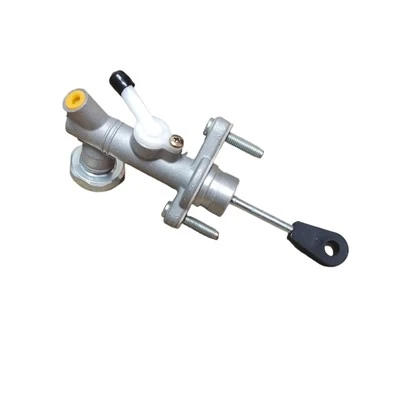
If you need replacement master cylinders, pushrods, or technical guidance for your braking system projects, don’t hesitate to reach out. We’re here to support your needs with high-quality components and expertise you can trust.
Brake Wheel Cylinder References
- Automotive Braking Systems: Principles, Design, and Diagnosis, Society of Automotive Engineers, 2021
- Service Manual for Light Vehicle Brake Systems, National Highway Traffic Safety Administration, 2020
- Brake Master Cylinder Installation and Adjustment Guidelines, Automotive Aftermarket Suppliers Association, 2022
- Hydraulic Brake System Performance Testing, SAE International, 2019
Ruian Xinyao Automobile Parts Co., Ltd.
With abundant experience, we are one of the most professional brake master cylinder manufacturers and suppliers in China. We warmly welcome you to wholesale bulk advanced brake master cylinder from our factory. If you have any enquiry about cooperation, please feel free to email us.
Address: Xialin Industrial Zone, Tangxia Town, Ruian City,Wenzhou City,Zhejiang Province,China
E-mail: 18969725686@163.com
WebSite: https://www.raxinyao.com/
