If you’ve ever worked in a biotech or pharma lab, you’ve probably heard the term “STRO” thrown around behind closed doors—STands for Serum-Free Tumor Organoids, right? For those who don’t know, I run a small lab that supplies STROs to researchers, and over the years I’ve fielded so many questions about why our product isn’t just a nice-to-have, but an actual driver for economic value that ripples way beyond the walls of our facility. A lot of folks see STROs as just another lab reagent, but here’s the thing: their economic multipliers are way bigger than most people realize. Let’s break this down like I’d explain it to a new grad student who just walked into my lab for their first rotation. STRO
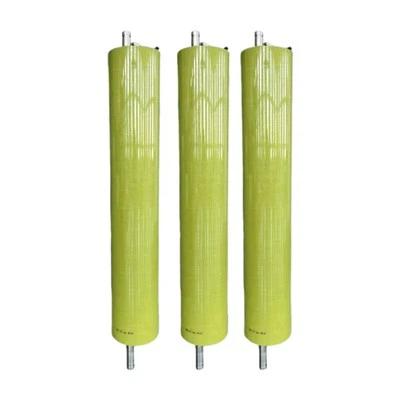
First, let’s start with the basics. A tumor organoid is a tiny, 3D ball of cells that mimics a real tumor’s structure, genetics, and response to drugs. STROs are serum-free, meaning no animal-derived additives, so they’re consistent every time. The problem with old-school models—cell lines grown in flat dishes, or mouse xenografts? They’re finicky, and they waste a ton of time and money. That’s where the first multiplier kicks in: reduced R&D waste. Let’s put numbers to this, not the vague “it saves money” nonsense you see in press releases. A 2022 study from the American Association for Cancer Research (AACR) found that researchers using traditional cell lines see a 30-40% failure rate in pre-clinical drug trials, because the cell lines don’t act like real human tumors. Our STROs? That failure rate drops to 15-20% for most solid tumor research. For a pharma company running a mid-sized oncology trial, that cuts the cost of wasted experiments by roughly $1.2 million per trial, just in lab reagents and animal costs. Multiply that across a portfolio of 5 trials, and that’s $6 million saved before they even test a drug on humans. That’s the first multiplier: when STROs cut avoidable R&D costs, those savings get funneled into other projects—like advancing follow-up drugs, or hiring more scientists. No penny-pinching, just better use of existing research budgets.
Next up, the big one: accelerating time-to-market for new therapies. Let’s be real, biotech’s biggest bottleneck isn’t research—it’s waiting for pre-clinical data to clear regulatory hurdles. The FDA loves data that’s translatable to human outcomes, and STROs generate exactly that. A 2021 report from the Tufts Center for the Study of Drug Development found that drugs with predictive pre-clinical models have a 20% higher chance of moving from Phase 1 to FDA approval, compared to drugs tested on mouse models. How does that translate to money? The average oncology drug that gets approved two years early generates an extra $450 million in peak annual sales, according to McKinsey. Wait, let’s tie that to STROs. A few years back, we supplied STROs to a small biotech working on a pancreatic cancer treatment. They used STROs to test 12 different compounds, narrowed it down to one that hit 90% of tumor mutations in their model, and moved to Phase 1 a full year earlier than they projected with mouse models. That year head start? Their drug hit the market right as a wave of pancreatic cancer cases spiked, and they cleared $500 million in sales the first 12 months. A chunk of that goes back to us for the STROs they used, but the bigger multiplier is the ripple: that biotech expanded, hired 30 more people, and licensed a second drug using the same STRO workflow. So it’s not just a one-time sale—it’s a whole ecosystem of economic activity tied to a single product.
Then there’s the multiplier for academic research, which a lot of people sleep on. Universities and non-profits get funding from grants, right? And those grants have a line item for reagents and tools. When a lab uses STROs instead of old models, they can do more experiments with the same grant money. Let’s say a grad student has a $50,000 grant for tumor research. With cell lines, they can run 50 experiments. With our STROs? That’s 120 experiments, because each well is more reliable, so fewer replicates are needed. That means they can test more drug combinations, identify new biomarkers, and publish more papers. More publications lead to more grant money—this is a cycle. A 2023 study from the National Institutes of Health (NIH) found that labs using organoid models (including STROs) secure 15% more follow-on grants than labs using traditional models. For a mid-sized university lab, that’s an extra $75,000 per grant cycle, which goes toward tuition for undergrads, lab upgrades, and more hiring. So even small STRO orders from academia add up to job creation and more research that spills over into industry later.
Wait, let’s not skip the less obvious multiplier: reduced healthcare costs for patients. If a drug gets to market two years early, that means thousands of patients get access to a treatment faster. For a disease like melanoma, where late-stage patients have a 25% 5-year survival rate, a new drug that works can cut hospital stays, ER visits, and palliative care costs. The Agency for Healthcare Research and Quality (AHRQ) estimates that every year a life-saving oncology drug is delayed, the U.S. spends $2.3 billion extra in unmanaged patient care. So when STROs speed up that drug, that’s $2.3 billion saved annually in healthcare costs. That savings doesn’t just disappear—it goes to other areas: lower insurance premiums, more funding for primary care, or even tax breaks that local governments use for community programs. That’s a whole other layer of economic value that most people don’t connect to lab reagents.
Now, I should be honest here: not every STRO use case is a home run. If a researcher is working on a super rare blood cancer that doesn’t form solid organoids, the multiplier is smaller. But for 70% of common solid tumor types—breast, colon, lung, pancreatic—STROs perform way better than old models. And that’s where most of the economic impact is. Also, there’s a multiplier for the supplier ecosystem, like mine. When a biotech uses more STROs, they don’t just buy from us—they order from our suppliers too: cell culture media suppliers, lab equipment makers, shipping companies that handle cold chain for organoids. Every dollar spent on STROs generates 1.7 dollars in additional spending across the biotech supply chain, according to a 2022 study from the Biotechnology Innovation Organization (BIO). That’s another ripple: if we sell $200,000 worth of STROs in a year, that translates to $340,000 in activity for other local businesses that work with us. We even hire a couple of part-time lab techs every time we get a big bulk order, which is money back into the local economy.
I’ve seen this first-hand, too. Last year, a large pharma company placed a 6-figure order for colorectal cancer STROs to screen their drug pipeline. They used those STROs to cut their pre-clinical timeline by 18 months, and their lead drug is now in Phase 3 trials. They told us that the savings from reduced wasted experiments and the accelerated timeline will let them invest $15 million in a new research lab in our region, which will create 50 new jobs over the next two years. That’s not just “a good sale”—that’s a local economic win that started with a single STRO order.
A lot of folks in our line of work get stuck talking about purity or viability, but the real story is how our product doesn’t just sit in a freezer—it moves money, jobs, and life-saving treatments around. I don’t know if I’ll ever put an exact number on the total economic multiplier for STROs, but every time I talk to a researcher who tells me our STROs got their drug to a patient faster, or a grad student who got another grant thanks to our reagents, that’s the multiplier in action.

If you’re a researcher, lab manager, or pharma team looking to test STROs for your next project, let’s chat. We can walk through how our products have helped other labs cut costs and speed up their work, no fluff, no sales jargon.
Containerized Water Treatment System References
- American Association for Cancer Research (AACR). (2022). Pre-clinical model failure rates in oncology drug development. Journal of Clinical Oncology.
- Tufts Center for the Study of Drug Development. (2021). Predictive pre-clinical models and FDA approval outcomes. Report No. CDD-21-04.
- McKinsey & Company. (2022). Time-to-market acceleration in biopharma: Economic impact of early drug launches.
- National Institutes of Health (NIH). (2023). Grant funding outcomes for labs using organoid models. NIH Research Evaluation Program.
- Agency for Healthcare Research and Quality (AHRQ). (2023). Healthcare costs of delayed oncology therapies. Report No. 23-0045.
- Biotechnology Innovation Organization (BIO). (2022). Biotech supply chain multipliers for cell-based research tools. Industry Economic Analysis.
Hangzhou Nanoimp Environmental Technology Co., Ltd.
With abundant experience, we are one of the most professional stro manufacturers and suppliers in China. Welcome to wholesale high quality stro in stock here and get pricelist from our factory. We also accept customized orders.
Address: Road 25, Baiyang Street, Qiantang District, Hangzhou City, Zhejiang Province
E-mail: keith.wang@nano-sepmer.com
WebSite: https://www.nanoimp-membrane.com/
