Hey everyone, it’s Jake from the industrial diesel generator set team here. First off, I get it—when you’re running a factory, a data center, a construction site, or even a hospital, the last thing you need is your power going out. And if that backup generator kicks in and spits wonky, wobbly power instead of steady, reliable juice? That’s a whole other headache. Today we’re diving into something I get asked at least three times a week: what’s the power output stability of an industrial diesel generator set? No stuffy textbook jargon, just real, hands-on stuff I’ve seen and dealt with working with these units for years. Industrial Diesel Generator Set

First, let’s cut through the confusion. A lot of folks mix up “stability” with just putting out power at all. Nope—stability is way more specific. It’s how consistent the voltage and frequency stay from the second the generator fires up, through full load, partial load, when you add or remove a big piece of equipment, and even during long runs. Think of it like your heart rate: if it jumps all over the place when you walk up stairs or catch your breath, that’s not healthy. For your equipment, that wobbly power is like a heart arrhythmia—it can fry expensive motors, mess up automation, even shut down an entire operation.
Now, let’s talk actual numbers because that’s what matters. The global standard we all follow for these units is ISO 8528, right? It spells out exactly how stable a good industrial diesel gen set needs to be. For voltage, most specs say total voltage deviation shouldn’t be more than ±0.5% under steady load, and even when you throw a sudden load (like a 100HP conveyor kicking on) at it, the voltage dip or spike should bounce back in less than 1.5 seconds. For frequency, it’s ±1% at steady load, and recovery time after a load change is under 2 seconds. Wait, but hold on—those are baseline specs. The stuff we build at our shop doesn’t just hit those; it crushes ’em. We tune every single unit before it leaves our yard, so you’re not crossing your fingers hoping it works.
Why does stability matter so much beyond not frying gear? Let’s use real examples. Last year, we had a customer in food processing—they run a big freeze-drying line that’s worth over $2 million. Their old gen set was a cheap import that would see a 12% voltage dip when the line fired up, taking 5 whole seconds to bounce back. Every time that happened, they’d lose a whole batch of frozen berries because the temperature sensors would glitch and the seal on the freeze dryers would break. By switching to our custom-tuned gen sets, they dropped that voltage dip to less than 2% and recovery time to under a second. No more lost batches, no more overtime for their crew to rework product—saved them like $180k in the first 6 months. That’s the power of good stability, not just “it works when the grid goes out.”
Now, what factors actually mess with stability? Let’s break down the big ones, no fancy terms. First, the engine and the alternator. The diesel engine’s job is to spin the alternator at a constant speed, right? If the engine can’t adjust its fuel injection fast enough when load changes, the speed wavers, which throws frequency off. That’s why we use high-precision electronic governors, not old mechanical ones—mechanical governors take forever to adjust, so you get wobbly frequency. The alternator’s another big one: we use brushless alternators with copper windings, not aluminum, because aluminum can’t handle sudden load changes as well. Brushless means no spark plugs to wear out, so it’s consistent long-term.
Next, how you size the gen set matters a ton. A lot of people think bigger is better, but no—if you get a gen set that’s way too big for your load, it’s going to cycle on and off a lot, run at partial load most of the time, and that kills stability. Partial load operation is where a lot of cheap gen sets fall apart. For example, if your max load is 500kW, and you get a 1000kW gen set, when you’re running at 200kW, the engine is idling too low, so the speed fluctuates. We do a full load audit for every customer before we even quote a unit—we check every piece of equipment they run, their peak load, any future expansions they have planned, and size it to run at 70-80% of max capacity. That’s the sweet spot for stability and fuel efficiency.
Then there’s maintenance. Wait, I know, maintenance sounds boring, but it’s huge for keeping stability over time. A lot of customers call us complaining their gen set is “acting up” after 2 years, and half the time it’s because they skipped oil changes, or the air filter got clogged, or the governor wasn’t calibrated. We have a full maintenance program, but even if you do it yourself, just checking those parts every 6 months keeps stability on track. One customer skipped annual calibrations on their old gen set, and after 3 years, their frequency was swinging by 5%—enough to make their packaging machines misalign, costing them 1000 boxes a week. A 15-minute calibration fixed it.
Now, let’s get to the fine print: what affects stability in real-world conditions. It’s not just lab tests, right? If you’re running in 10°F weather in Minnesota, or 110°F in Texas, or high altitude out in Colorado, does that change things? Yep. Cold weather can make the diesel thicker, so the engine takes a second longer to adjust fuel. Heat can make the alternator windings expand, throwing resistance off. High altitude means less oxygen, so the engine can’t burn fuel as efficiently, which affects speed. We build our gen sets with optional cold weather kits, high altitude turbo adjustments, and oversized cooling systems to account for that—so no matter where you’re located, stability stays consistent. We tested a unit last year at 7500 feet, and it still hit ±0.3% voltage deviation, which is better than the baseline standard.
Wait, but let’s be honest—no gen set is 100% perfectly stable, right? Even the best ones have tiny fluctuations, but it’s about how small and fast they are. The units we sell have what’s called a transient response that’s almost unnoticeable to sensitive equipment. For example, a medical center that runs MRI machines—those things are super finicky, they can pick up even tiny power spikes and mess up a scan. Our gen sets have a transient response so tight, the MRI tech can’t tell the difference between grid power and gen power. That’s the standard we aim for.
A common question I get: “Is stability different between standby and prime power?” Oh, totally. Standby power is just for when the grid goes out, running maybe 100-500 hours a year. Prime power is when the gen set is the main power source, running 24/7, 8000+ hours a year. For prime power, stability is even more critical because it’s running non-stop. We build prime power units with heavier components, better cooling, and more frequent built-in speed adjustments, so they stay stable year-round, not just when the grid drops. One of our prime power units out at a remote mine has been running 24/7 for 4 years, and their voltage deviation averages ±0.2%—that’s insane, way better than specs.
Now, let’s talk about what to look for when you’re shopping for an industrial diesel gen set. Don’t just go by the “rated power” number—ask for the stability specs. Ask for the voltage deviation, frequency deviation, recovery times under load. Ask if they’ve tested the unit with sudden load changes, not just steady load. A lot of cheap suppliers will quote ISO 8528, but they only hit the baseline, not the performance edge. We post full test reports for every unit we sell, so you can see exactly how stable it is, no fine print.
Another thing: digital controls make a huge difference these days. Old gen sets had analog controls that were less precise. Our units use PLC (programmable logic controller) systems with color touchscreens that monitor voltage, frequency, load, engine speed every millisecond. If the load changes even a little, the controller adjusts the fuel injection in real time to keep everything steady. You can even check the stability and performance from your phone or office, which is super convenient.
Wait, let’s wrap this up with something real. Last month, a customer from a construction site called me panicking. They had a 300kW gen set on their job, running for temporary power for cranes and tools. The old unit they rented from someone else was dropping voltage every time a crane lifted a heavy load, making their tools spark and their radios cut out. They were about to lose a whole day of work because they couldn’t run anything. We delivered one of our smaller custom gen sets that afternoon, hooked it up, and their load stayed rock steady. The project manager said it was the smoothest power he’d seen all year. That’s the power of good stability—no downtime, no stress.
So to circle back: the power output stability of a quality industrial diesel generator set isn’t just a number on a spec sheet. It’s the difference between keeping your factory running, avoiding lost product, protecting your expensive equipment, and not pulling your hair out during an outage. The baseline is solid, but the good units go above and beyond, tuned for your specific use case, location, and load.
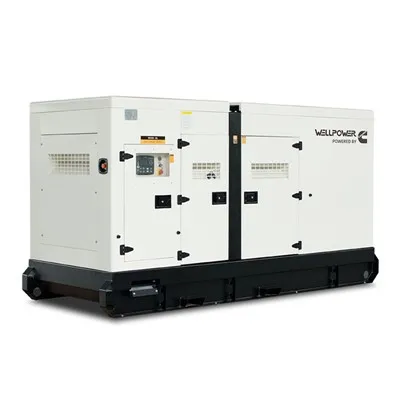
If you’re in the market for an industrial diesel generator set, whether for standby, prime, or temporary power, and you want to make sure it’s got the stability you need to keep your operation running smooth, hit us up. We can do a free load audit, walk you through the specs, and answer any questions you have—no sales pressure, just straight talk about what works.
Household Diesel Generator References
ISO 8528: Reciprocating internal combustion engine driven alternating current generating sets – Part 1: Application, specifications and general methods of test, International Organization for Standardization, 2019.
Diesel Generator Stability and Load Response, Electrical Construction & Maintenance, 2022.
Industrial Power Quality Standards and Applications, IEEE Industry Applications Society, 2021.
Jiangsu Kaichen Electric Power Equipment Co., Ltd.
We are one of the most professional industrial diesel generator set manufacturers and suppliers in China, specialized in providing high quality diesel generators with reasonable price. We warmly welcome you to buy cheap industrial diesel generator set from our factory. Contact us for pricelist and quotation.
Address: Dinghuo Industrial Park, Jiangdu District, Yangzhou, Jiangsu Province
E-mail: 19962469616@163.com
WebSite: https://www.jskaichen-power.com/
