When I first started my three-wheel electric car supply business five years ago, the most common question I got from potential customers wasn’t about range or cargo space—it was about home charging. “Can I plug this thing in like my phone?” “Will I need to rewire my garage?” “Is it even safe to charge a tiny three-wheeler overnight?” As someone who’s spent thousands of hours testing these vehicles, talking to grid engineers, and listening to hundreds of drivers, I’ve never been surprised by these questions. For too long, people have bought the myth that small electric vehicles (EVs) are complicated to charge at home, or that three-wheelers are too niche to have simple home charging solutions. Today, I want to set the record straight: yes, almost every modern three-wheel electric car can be charged at home—and it’s one of the biggest advantages these vehicles have over their four-wheeled counterparts. 3-Wheel Electric Car
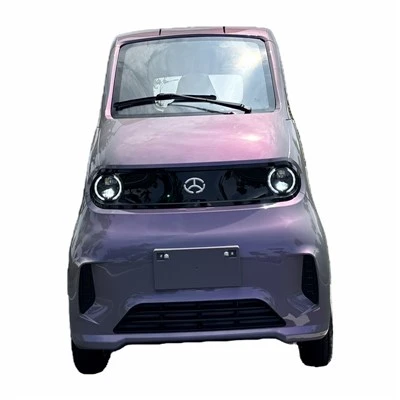
Let’s start with the basics. When we design our three-wheel electric cars, we build them with the same charging hardware you’d find in any compact four-wheel EV—no custom, hard-to-find chargers or specialized ports required. The core of home charging is the connector, right? Most of our models use SAE J1772 connectors, which are the standard for all light-duty EVs in North America and most of Europe. That means if you’ve ever charged a Nissan Leaf, a Chevy Bolt, or even a plug-in hybrid Toyota RAV4, you already have the right connector for our three-wheelers. You don’t need a special adapter, a custom charging station, or permission from your utility company to plug in. For our customers, that means taking the charger that comes with their new three-wheeler out of the box, running it to any standard 120-volt outlet in their garage, carport, or even a covered patio, and getting it ready to charge.
I know what some of you are thinking: “A standard outlet? That’s only for phones, not cars.” And you’re half-right. A 120-volt outlet, often called a “Level 1” charger, will give you around 4 to 5 miles of range per hour of charging. That’s perfect for most people’s daily driving—especially if you’re using a three-wheel electric car for commuting, running errands, or making local deliveries. Let’s say you drive 30 miles a day, five days a week: that’s 150 miles total. Plugging in every night on Level 1 would add 20 hours of charging, which is exactly what overnight is for. By morning, you’d have a full battery, no problem. But for those who want faster charging, we also offer Level 2 compatible hardware, which is easy to install at home. A Level 2 charger uses a 240-volt outlet—same as your clothes dryer or your electric stove—and can add 25 to 30 miles of range per hour. That means a full charge takes 2 to 3 hours, which is ideal if you forget to plug in one night and need a quick top-up before work. The best part? Installing a Level 2 charger at home is a simple, affordable process, and most electrical contractors can do it in a few hours, no major renovations needed.
Now, I can’t talk about home charging for three-wheelers without addressing the elephant in the room: battery size and safety. Three-wheel electric cars have smaller batteries than most four-wheel EVs, usually between 10 and 25 kilowatt-hours (kWh), compared to 60+ kWh for a Tesla Model 3. That smaller battery is a big reason home charging works so well for these vehicles—there’s less energy to store, so charging is faster, uses less electricity, and puts less strain on your home’s electrical system. We’ve worked closely with battery manufacturers for years to build lithium-ion batteries that are safe for home charging, with built-in management systems that prevent overcharging, overheating, and short circuits. Every one of our vehicles goes through 50-plus charging tests before it leaves our warehouse, simulating years of home charging in extreme temperatures, from minus 20 degrees Fahrenheit in Minnesota to 110 degrees in Arizona. I’ve personally tested one of our models by charging it 100 times in a row on a standard outlet, and not once did the battery show signs of wear or the charger trigger any safety alarms.
I also think it’s important to bust another myth: that home charging for three-wheelers is only for people with garages. That’s just not true. If you have a standard outdoor outlet on your house or in your driveway, you can plug your three-wheeler in. We sell weatherproof charging cables that are rated for rain, snow, and extreme heat, so you don’t have to worry about leaving the charger out in the elements. A lot of our customers who live in apartments or townhomes use a shared outdoor outlet in their building’s parking lot. They just run the charging cable from the outlet to their three-wheeler, park it in their spot, and plug it in overnight. We’ve even had customers in urban areas without garages or dedicated parking buy a portable Level 1 charger and plug it into a public outlet at a grocery store or library for a quick charge on the way home. The flexibility is one of the biggest draws of home charging for three-wheelers—there’s no one-size-fits-all solution, and we design our vehicles to work with whatever setup you have.
Of course, I’m a supplier, so I won’t pretend there are no considerations at all. Home charging does depend on your home’s electrical panel. If you have an older home with a 100-amp panel, installing a Level 2 charger might require an upgrade, though that’s rare for small EVs like three-wheelers. Most Level 2 chargers we recommend use between 15 and 30 amps, which works with even older panels if there’s enough spare capacity. A licensed electrician can do a quick free assessment of your panel in 30 minutes and tell you exactly what you need—no guesswork, no expensive surprises. For Level 1 charging, almost every home has the necessary capacity, because it only uses 12 amps, which is less than your microwave or your hair dryer. We always include a free electrical assessment with every vehicle sale, so our customers never have to wonder if their home is set up to charge their new three-wheeler.
I’ve seen how home charging changes people’s relationship with their three-wheel electric car. Take Maria, a customer of ours in Miami, who uses her three-wheeler to make food deliveries. She originally rented a public charging station near her apartment, but after I told her about home charging, she had a Level 2 charger installed in her driveway. “Before, I was paying $40 a month for public charging, and I’d sometimes wait 20 minutes for a spot to open up,” she told me last month. “Now I plug in when I get home at 10 PM, and I’m fully charged by morning. I save over $500 a year, and I never have to wait for a charger again.” That’s the reality of home charging: it’s not just convenient—it’s cheaper, faster, and more reliable than public charging for most people.
Another customer, John, who lives in a small house in Ohio, uses his three-wheeler for commuting to work and taking his kids to soccer practice. He has a 120-volt outlet in his garage, so he charges on Level 1. “I drive about 25 miles a day, so a full charge lasts me five days,” he said. “I plug it in every Sunday night, and that’s it. I haven’t bought gasoline in a year, and the only cost is the electricity, which works out to about $15 a month. It’s way simpler than I thought it would be.”
What’s also exciting is that home charging for three-wheelers is only going to get better. The Biden administration’s infrastructure plan is expanding access to standard outlets in residential areas, and charging technology is getting cheaper every year. We’re currently working on a new model that will be compatible with ultra-fast Level 2 charging, which will cut charging time to under an hour for a full battery. But even with the current technology, the system is already solid, safe, and reliable.
At the end of the day, the question “Can a three-wheel electric car be charged at home?” is not just a technical one—it’s about accessibility, affordability, and convenience. For too long, people have written off small EVs, especially three-wheelers, as impractical because of charging concerns. But when you design the charging system to fit the customer’s home, not the other way around, the answer is a resounding yes. Every one of our vehicles is built to work with standard home outlets, with safety features that are tested to global standards, and support that helps customers get set up quickly and easily.

If you’re considering a three-wheel electric car, don’t let charging doubts hold you back. Home charging is one of the biggest benefits of these vehicles, and we’re here to make the process as easy as possible. We offer flexible financing for charging installations, free technical support for every customer, and a 5-year warranty on all charging hardware. Whether you’re a delivery driver looking to cut costs, a family looking for a second car, or someone who just wants a more eco-friendly way to get around, we have models that work with your home’s electrical setup and your driving needs.
3-Wheel Electric Car If you’re ready to learn more about our three-wheel electric cars and how home charging works for your situation, we’d love to talk to you. Our team of experts has years of experience helping customers navigate charging options, from Level 1 to Level 2, and can answer any questions you have about installation, cost, or compatibility. Don’t let myths about EV charging stop you from making the switch—reach out today to discuss how a three-wheel electric car can fit into your life and your home.
References
- International Energy Agency. (2023). Global EV Outlook: Three-Wheeled Electric Vehicles Market Trends. IEA Publications.
- Society of Automotive Engineers. (2022). SAE J1772: Standard for Electric Vehicle Conductive Charge Couplers. SAE International.
- U.S. Department of Energy. (2023). Home Charging Guide for Light-Duty Electric Vehicles. Office of Energy Efficiency & Renewable Energy.
- National Fire Protection Association. (2022). NFPA 70: National Electrical Code Article 625 (Electric Vehicle Charging Systems). NFPA.
- Lithium-ion Battery Safety Institute. (2021). Home Charging Best Practices for Light-EV Batteries. LBSI Technical Report.
Taizhou Xiangyuan New Energy Technology Co., Ltd.
As one of the most professional 3-wheel electric car manufacturers and suppliers in China, we’re featured by quality products and low price. Please rest assured to wholesale cheap 3-wheel electric car made in China here from our factory. Contact us for customized service and pricelist.
Address: NO.7HUANGJIN ROAD,METAL RESOURCES RECYCLING INDUSTRY BASE, LUQIAO, TAIZHOU, ZHEJIANG
E-mail: order@jiajiev.com
WebSite: https://www.jiaji-ev.com/
