In the world of precision manufacturing, bridge machining center machines stand as stalwarts of efficiency and accuracy. As a leading supplier of these remarkable machines, I am often asked about the lubrication systems they employ. In this blog, I will delve into the different types of lubrication systems used in bridge machining center machines, their functions, advantages, and how they contribute to the overall performance of the machine. Bridge Machining Center Machine

Importance of Lubrication in Bridge Machining Center Machines
Before we explore the specific lubrication systems, it’s crucial to understand why lubrication is so vital in bridge machining center machines. These machines operate at high speeds and under significant loads, generating a substantial amount of heat and friction. Without proper lubrication, the components would wear out quickly, leading to reduced accuracy, increased maintenance costs, and even machine failure.
Lubrication serves several key functions in a bridge machining center machine:
- Reduces Friction: By creating a thin film between moving parts, lubricants minimize friction, allowing the components to move smoothly and efficiently.
- Dissipates Heat: Lubricants absorb and carry away the heat generated during operation, preventing overheating and ensuring the machine operates within its optimal temperature range.
- Prevents Wear and Tear: The lubricating film acts as a protective barrier, reducing the direct contact between moving parts and preventing premature wear and damage.
- Seals and Protects: Lubricants can also help to seal the machine, preventing the ingress of contaminants such as dust, dirt, and moisture, which can cause damage to the components.
Types of Lubrication Systems in Bridge Machining Center Machines
There are several types of lubrication systems commonly used in bridge machining center machines, each with its own unique features and advantages. Let’s take a closer look at some of the most popular ones:
1. Oil Mist Lubrication System
The oil mist lubrication system is a widely used method in bridge machining center machines. In this system, oil is atomized into a fine mist and then delivered to the lubrication points through a network of pipes and nozzles. The oil mist provides continuous lubrication to the moving parts, ensuring smooth operation and reducing friction.
Advantages:
- Efficient Lubrication: The oil mist can reach even the most hard-to-reach areas of the machine, providing comprehensive lubrication to all critical components.
- Reduced Oil Consumption: Since the oil is delivered in a mist form, only a small amount of oil is required, resulting in lower oil consumption and reduced costs.
- Improved Cooling: The oil mist helps to dissipate heat, keeping the machine cool and preventing overheating.
Disadvantages:
- Environmental Concerns: The oil mist can be released into the environment, which may pose a health risk to operators and contribute to air pollution.
- Maintenance Requirements: The oil mist system requires regular maintenance to ensure proper operation, including cleaning the nozzles and filters.
2. Grease Lubrication System
Grease lubrication is another common method used in bridge machining center machines. In this system, grease is applied to the lubrication points using a grease gun or an automatic lubrication system. Grease is a semi-solid lubricant that provides long-lasting lubrication and protection.
Advantages:
- Long-Lasting Lubrication: Grease has a high viscosity and can stay in place for an extended period, providing continuous lubrication without the need for frequent reapplication.
- Sealing Properties: Grease can act as a seal, preventing the ingress of contaminants and protecting the components from damage.
- Low Maintenance: Grease lubrication systems require less maintenance compared to oil-based systems, as the grease does not need to be changed as frequently.
Disadvantages:
- Limited Cooling: Grease has a lower heat dissipation capacity compared to oil, which may result in higher operating temperatures.
- Difficult to Remove: Once applied, grease can be difficult to remove, especially in hard-to-reach areas.
3. Flood Lubrication System
The flood lubrication system is a more traditional method of lubrication, where a large volume of oil is continuously circulated through the machine to lubricate and cool the components. In this system, the oil is pumped from a reservoir and sprayed onto the cutting tool and the workpiece.
Advantages:
- Effective Cooling: The large volume of oil helps to dissipate heat quickly, keeping the machine cool and preventing overheating.
- Comprehensive Lubrication: The oil floods the entire cutting area, providing thorough lubrication to the cutting tool and the workpiece.
- Chip Removal: The oil also helps to flush away the chips generated during machining, preventing them from accumulating and causing damage to the components.
Disadvantages:
- High Oil Consumption: The flood lubrication system requires a large amount of oil, which can be costly and may require frequent oil changes.
- Environmental Concerns: The large volume of oil used in the system can pose a risk of oil spills and environmental contamination.
4. Minimum Quantity Lubrication (MQL) System
The minimum quantity lubrication (MQL) system is a relatively new and innovative lubrication method that uses a very small amount of lubricant to achieve effective lubrication. In this system, a precise amount of oil is mixed with compressed air and sprayed onto the cutting tool and the workpiece in the form of a fine mist.
Advantages:
- Reduced Oil Consumption: The MQL system uses only a small amount of oil, significantly reducing oil consumption and costs.
- Environmental Friendly: Since the amount of oil used is minimal, the MQL system is more environmentally friendly compared to other lubrication methods.
- Improved Machining Performance: The fine mist of oil provides effective lubrication and cooling, resulting in improved machining performance and longer tool life.
Disadvantages:
- Limited Application: The MQL system may not be suitable for all types of machining operations, especially those that require heavy cutting or high-speed machining.
- Equipment Cost: The MQL system requires specialized equipment, which can be expensive to purchase and maintain.
Choosing the Right Lubrication System
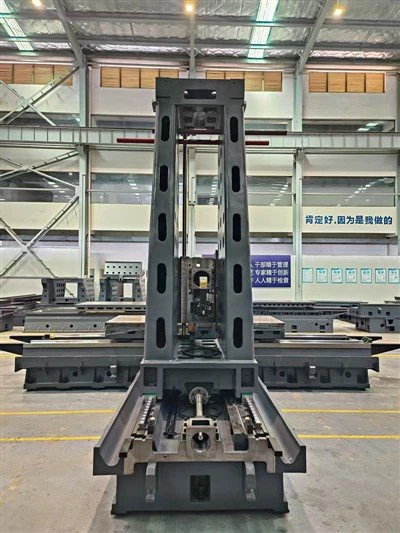
When choosing a lubrication system for a bridge machining center machine, several factors need to be considered, including the type of machining operation, the materials being machined, the operating conditions, and the cost. Here are some general guidelines to help you make the right choice:
- Machining Operation: Different machining operations require different levels of lubrication. For example, heavy cutting operations may require a flood lubrication system, while light machining operations may be suitable for an MQL system.
- Materials Being Machined: The type of materials being machined can also affect the choice of lubrication system. Some materials, such as aluminum and brass, require a lubricant with good anti-wear properties, while others, such as stainless steel, may require a lubricant with high heat resistance.
- Operating Conditions: The operating conditions, such as the temperature, humidity, and dust level, can also influence the choice of lubrication system. For example, in a high-temperature environment, a lubricant with good heat resistance may be required.
- Cost: The cost of the lubrication system, including the initial investment, the cost of the lubricant, and the maintenance costs, should also be considered.
Conclusion
XY Linear Way Vertical Machining Center In conclusion, the lubrication system is a critical component of a bridge machining center machine, playing a vital role in ensuring its smooth operation, accuracy, and longevity. By understanding the different types of lubrication systems available and their advantages and disadvantages, you can choose the right system for your specific needs. As a leading supplier of bridge machining center machines, we are committed to providing our customers with the highest quality machines and the most advanced lubrication systems. If you have any questions or need further information about our products, please do not hesitate to contact us. We look forward to working with you to meet your machining needs.
References
- ASM Handbook, Volume 18: Friction, Lubrication, and Wear Technology.
- Machinery’s Handbook, 30th Edition.
- Lubrication Engineering Handbook, 2nd Edition.
Smartech Machinery & Equipment Co., Ltd.
As one of the most professional bridge machining center machine manufacturers and suppliers in China, we also support customized service. Please rest assured to buy bulk bridge machining center machine made in China here from our factory. Contact us for more details.
Address: Room 2832, Changping Commercial Mansion, Shihua Road, Futian Free Trade Zone, Shenzhen, China
E-mail: smartech@smartechcnc.cn
WebSite: https://www.smartech-cnc.com/
