In the ever – evolving field of filtration technology, the demand for efficient and high – performance filters is constantly on the rise. As a supplier of Activated Carbon Filter Paper, I have witnessed firsthand the crucial role it plays in various filtration applications. In this blog, I will share some insights on how to optimize the design of a filter using Activated Carbon Filter Paper. Activated Carbon Filter Paper
Understanding the Basics of Activated Carbon Filter Paper
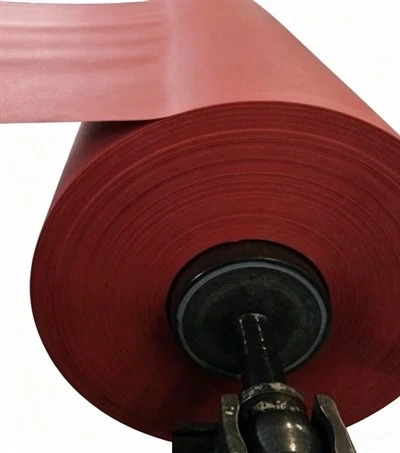
Before delving into the optimization process, it’s essential to understand what Activated Carbon Filter Paper is. Activated carbon is a highly porous material with a large surface area, which enables it to adsorb a wide range of contaminants, including organic compounds, odors, and some gases. Activated Carbon Filter Paper is made by impregnating or coating a paper substrate with activated carbon.
The type of activated carbon used can significantly impact the filter’s performance. Different activation methods and raw materials can result in activated carbon with varying pore sizes, surface areas, and adsorption capacities. For example, activated carbon derived from coconut shells typically has a high microporosity, making it effective for adsorbing small – molecule contaminants such as volatile organic compounds (VOCs). On the other hand, activated carbon from coal may have a broader pore size distribution, suitable for capturing larger molecules and some particulates.
Design Considerations for Filter Optimization
1. Target Contaminants
The first step in optimizing a filter design is to clearly identify the target contaminants. Different contaminants have different physical and chemical properties, and the filter design should be tailored accordingly. For instance, if the goal is to remove odors from a ventilation system, the filter should be designed to have a high adsorption capacity for odor – causing organic compounds. In this case, a high – surface – area activated carbon with a pore size distribution that matches the size of the odor molecules is preferred.
If the filter is intended for removing particulates along with gaseous contaminants, the Activated Carbon Filter Paper can be combined with other filtration media, such as a pre – filter or a HEPA filter. The pre – filter can capture larger particles, preventing them from clogging the activated carbon layer and reducing its adsorption efficiency.
2. Flow Rate
The flow rate of the fluid (air or liquid) passing through the filter is another critical factor. A high flow rate may reduce the contact time between the contaminants and the activated carbon, resulting in lower adsorption efficiency. Conversely, a very low flow rate may limit the overall throughput of the filtration system.
To optimize the filter design for a given flow rate, the thickness and density of the Activated Carbon Filter Paper can be adjusted. A thicker filter paper may provide more adsorption capacity but can also increase the pressure drop across the filter. Therefore, a balance needs to be struck between the adsorption capacity and the pressure drop to ensure efficient filtration at the desired flow rate.
3. Pressure Drop
Pressure drop is the resistance encountered by the fluid as it passes through the filter. A high pressure drop can lead to increased energy consumption and reduced efficiency of the filtration system. When designing a filter using Activated Carbon Filter Paper, it’s important to minimize the pressure drop without sacrificing the filtration efficiency.
One way to reduce the pressure drop is to use a more open – structured paper substrate. Additionally, the distribution of activated carbon on the paper can be optimized. A uniform distribution of activated carbon particles can help to ensure a more even flow of fluid through the filter, reducing the likelihood of localized high – pressure areas.
4. Temperature and Humidity
Temperature and humidity can have a significant impact on the performance of Activated Carbon Filter Paper. High temperatures can reduce the adsorption capacity of activated carbon, as the adsorbed contaminants may desorb more easily. Humidity can also affect the filter’s performance, as water vapor can compete with the target contaminants for adsorption sites on the activated carbon.
When designing a filter for use in environments with high temperature or humidity, special considerations should be taken. For example, the activated carbon can be treated to improve its resistance to high temperatures or to reduce the impact of humidity. Additionally, the filter design can incorporate features to manage the moisture content, such as a moisture – absorbing layer.
Optimization Techniques
1. Carbon Loading
The amount of activated carbon loaded onto the filter paper, known as carbon loading, is a key factor in determining the filter’s adsorption capacity. Increasing the carbon loading generally increases the adsorption capacity, but it can also increase the pressure drop and the cost of the filter.
To optimize the carbon loading, it’s important to conduct experiments to determine the minimum amount of activated carbon required to achieve the desired filtration efficiency. This can involve testing different carbon loadings under various operating conditions and measuring the adsorption performance and pressure drop.
2. Particle Size of Activated Carbon
The particle size of the activated carbon used in the filter paper can also affect its performance. Smaller particle sizes generally provide a larger surface area for adsorption, but they can also increase the pressure drop. Larger particle sizes may result in a lower pressure drop but may have a lower adsorption efficiency.
A combination of different particle sizes can be used to optimize the filter performance. For example, a mixture of fine and coarse activated carbon particles can be used to balance the adsorption capacity and the pressure drop.
3. Layer Configuration
The configuration of the Activated Carbon Filter Paper layers can be optimized to improve the filtration efficiency. Multiple layers of filter paper can be used to increase the overall adsorption capacity. Additionally, different layers can be designed to target different types of contaminants.
For example, a pre – layer of Activated Carbon Filter Paper with a larger pore size can be used to capture larger particles and some high – molecular – weight contaminants, while a subsequent layer with a smaller pore size can be used to capture smaller molecules.
4. Composite Filter Design
Combining Activated Carbon Filter Paper with other filtration media can enhance the overall performance of the filter. For example, a composite filter can be designed with a non – woven fabric layer for particulate filtration, followed by an Activated Carbon Filter Paper layer for gas and odor removal, and then a HEPA filter layer for final fine – particulate filtration.
This type of composite filter design can provide a more comprehensive filtration solution, addressing multiple types of contaminants in a single filter.
Testing and Validation
Once the filter design has been optimized, it’s crucial to conduct thorough testing and validation to ensure its performance meets the requirements. This can involve laboratory testing using standard test methods and equipment.
The adsorption capacity of the filter can be measured by exposing it to a known concentration of the target contaminants and measuring the amount of contaminants adsorbed over a period of time. The pressure drop across the filter can be measured using a pressure gauge.
In addition to laboratory testing, field testing can also be conducted to evaluate the filter’s performance in real – world conditions. This can provide valuable feedback on the filter’s durability, reliability, and long – term performance.
Conclusion
Optimizing the design of a filter using Activated Carbon Filter Paper is a complex process that requires a comprehensive understanding of the target contaminants, the operating conditions, and the properties of the activated carbon and the filter paper. By carefully considering factors such as target contaminants, flow rate, pressure drop, temperature, and humidity, and by using optimization techniques such as carbon loading, particle size selection, layer configuration, and composite filter design, it’s possible to design a highly efficient and cost – effective filter.
Wet Paper-based Friction Lining As a supplier of Activated Carbon Filter Paper, I am committed to providing high – quality products and technical support to help our customers optimize their filter designs. If you are interested in learning more about our Activated Carbon Filter Paper or discussing how we can assist you in your filter design projects, please feel free to contact us for procurement and further discussions.
References
- "Activated Carbon Adsorption" by Perry’s Chemical Engineers’ Handbook.
- "Filtration Principles and Practices" by Norman P. Cheremisinoff.
- Research papers on activated carbon filtration from academic journals such as Journal of Environmental Science and Technology.
Shanghai Rongying Industrial Co., Ltd.
As one of the most professional activated carbon filter paper manufacturers and suppliers in China, we’re featured by quality products and good price. Please rest assured to wholesale customized activated carbon filter paper from our factory. If you have any enquiry about quotation and free sample, please feel free to email us.
Address: Jiahua Business Center C building 204 room, No.808 Hongqiao Road,Xuhui District,Shanghai,China
E-mail: info@shryspecialtypaper.com
WebSite: https://www.woolpaper.com/
