Hey there, it’s Jake from your go-to wastewater recycling crew—yep, the one’s that’s not just here to move dirty water around, but to actually fix it like it’s our own job. Lately, I’ve been getting non-stop questions from small factory owners, plant managers, even some farm folks who stumbled on our name: “Wait, you guys handle radioactive waste in wastewater? That sounds… intense.” Wastewater Recycling System

Fair question. Radioactive stuff in water isn’t some sci-fi plot point—it’s real. Think: medical labs washing their gear, uranium mining runoff, even those old industrial sites that forgot to follow the rules back in the day. That water’s toxic, it doesn’t belong in rivers, and straight dumping it’s a ticket to big fines. But here’s the thing: most people don’t get that a good wastewater recycling system isn’t just “filter stuff out”—it’s built to target garbage that’s literally invisible to regular filters, like radioactive particles. And we’ve been perfecting this for years, so let’s break it down like we’re chatting over a cup of bad office coffee, no fancy jargon.
First, let’s get one thing straight: radioactive waste in wastewater isn’t just one thing. It’s not glowing green sludge (sorry to burst your bubble). It’s tiny particles—sometimes dissolved in the water, sometimes stuck to tiny bits of dirt or grit—that are emitting radiation. Different isotopes, different sizes, different behaviors. So a one-size-fits-all filter won’t cut it. That’s where our system starts, not with a random pump, but with a pre-treatment step that yanks out all the big, obvious junk first. Like, if the water’s got chunks of dirt or metal shavings or even leftover food from a lab, we run that through a physical screen that’s way finer than a coffee filter—like, so small it can catch particles only a few microns wide. That’s the first line of defense, because you don’t want gunk clogging up the rest of the system before it even gets to the tricky stuff.
But the real heavy lifting for radioactive stuff starts next. Let’s talk about coagulation and flocculation—wait, I’ll keep it simple, I promise. Coagulation is when we add a little chemical mix—nothing sketchy, just stuff that’s already used in water treatment plants everywhere, like aluminum salts or polymers—that makes those tiny, invisible radioactive particles stick together. Like, imagine glitter scattered in a pool; you add something that makes all the glitter clump into little balls. That’s flocculation—gently mixing the water so those clumps grow big enough to catch. Then we send it to a settling tank, where those clumps drop to the bottom like rocks. We scoop those out, and now most of the radioactive particles are gone.
But hold on—some of those radioactive isotopes are dissolved in the water, right? They’re so small they don’t clump with the other stuff, so settling won’t get them. That’s when we bring out our secret weapon: ion exchange. This is the part that makes our system different from the cheap, off-the-shelf ones you can buy online. Ion exchange works like swapping buddies—we have special beads, tiny plastic beads with charged spots, that attract the charged radioactive particles. Say, strontium or cesium—those are super common in industrial wastewater. The beads suck them right out of the water, and we can even regenerate the beads later, so we’re not just tossing them every week (saves our clients money, which we love). No other system we’ve seen does this as efficiently for low-to-moderate level radioactive waste—we’ve tweaked the bead mix for years to make sure we catch even the smallest dissolved particles that would slip through regular ion filters.
Wait, but what if the water has even nastier stuff? Like, really tiny radioactive particles that are too small for the ion exchange beads? That’s where our advanced filtration step comes in—we call it ultrafiltration, but it’s not scary. Think of it like a super fine sieve that lets pure water through, but catches every last particle we missed. The filters here are so dense they can catch particles nanometers wide—way smaller than a virus. We test these filters every single month, no exceptions, because if one’s even a little clogged, it won’t work right. And here’s the kicker: when we’re done with all these steps, the water that comes out? It’s clean enough to reuse for like, half the stuff a plant needs—even irrigation, or flushing toilets, or cooling equipment. So our clients aren’t just getting rid of radioactive waste, they’re saving thousands on water bills. That’s a win-win, right?
But here’s the part I don’t talk about enough—we don’t just set up the system and dip. A lot of companies will sell you a machine and leave you to figure it out, but that’s not us. The radioactive stuff in water is tricky; different sites have different levels, different isotopes, different flow rates. So when we come in, first we do a free test of your wastewater. We send a tech out with a portable meter that measures radiation levels in 10 minutes, no waiting for lab results. Then we tweak the system to fit your exact needs—like, if you’re a small medical lab with low levels, we don’t need to crank up the coagulation as much. If you’re a mining site with higher levels, we add an extra ion exchange stage. We’ve had clients tell us other companies just wanted to sell them the biggest, most expensive system they had, not the one that actually works for their trash. We don’t do that—our goal is to keep your costs low and your water safe.
Oh, and let’s address the elephant in the room: what do we do with all that radioactive gunk we pull out? Because you can’t just dump that, either. We work with licensed, specialized waste handlers that take the concentrated sludge and ion exchange beads we collect, and dispose of them properly—they don’t just bury them in a field, they process them to make sure any remaining radiation is stabilized. We make sure every step is documented, because let’s be real, paperwork is half the battle with this stuff. Regulators want to know exactly where your waste goes, and we make that easy—we give our clients a full report every month, so they can show it to inspectors without pulling their hair out.
We’ve been doing this for 8 years now, and I’ve seen it all. There was a small clinic in Ohio that was dumping water with tiny amounts of tritium (that’s a radioactive hydrogen isotope, by the way) into the local creek, and they were getting fined $10,000 a month. They bought our system, and 6 months later, their fines were gone, and they were reusing 40% of their wastewater for cleaning their equipment. Another client— a uranium processing plant in New Mexico—had a problem with high levels of uranium in their runoff, and every time it rained, the levels spiked. We adjusted our coagulation and ion exchange steps to handle the spike, and now they’re compliant with EPA standards, and they even sell some of their treated water to local farmers for irrigation. That’s the stuff that makes our job worth it.
A lot of people think wastewater recycling is just for fancy cities with pools of clean water, but no—this is for every industry that has to deal with radioactive wastewater, no matter how big or small. You don’t have to be a huge corporation to afford a system that works. We have packages for small labs, mid-sized factories, even small mining operations. We know the first question when dealing with radioactive stuff is “is this safe?” and the answer is yes—our systems are built to meet all global standards, and we test every installation twice a year, unannounced, to make sure everything is working right.
If you’re dealing with radioactive wastewater, if you’re tired of high fines, if you want to stop wasting clean water (and money) on disposal, hit us up. We don’t do pushy sales calls—just a quick chat to hear about your situation, run a free test on your water, and give you a clear, honest quote. No hidden fees, no weird fine print, just a system that actually treats your radioactive waste properly and lets you reuse your water.
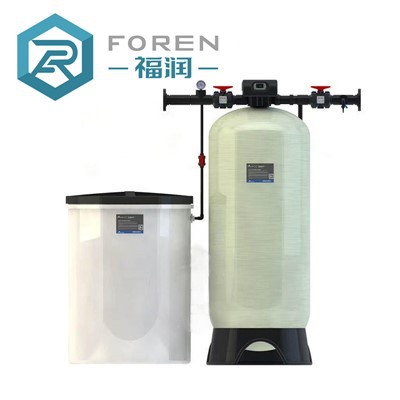
Don’t let the fear of radioactive waste stress you out. Our team has spent years figuring out the kinks, so you don’t have to. Let’s get your water clean, compliant, and reusable. Reach out today to connect with our sales team for a free consultation.
Seawater Desalination Plant References
- World Health Organization. (2021). Radiation and health: Management of radioactive waste in water supplies. Geneva, Switzerland: WHO Press.
- U.S. Environmental Protection Agency. (2022). Technical guide for radioactive wastewater treatment and disposal. Washington, D.C.: EPA Office of Water.
- American Water Works Association. (2020). Ion exchange technologies for removal of radionuclides from municipal and industrial wastewater. Denver, CO: AWWA.
- International Atomic Energy Agency. (2019). Operational practices for wastewater recycling in nuclear and non-nuclear industrial facilities. Vienna, Austria: IAEA.
Qingzhou Foren Water Treatment Equipment Co., Ltd.
As one of the most professional wastewater recycling system manufacturers and suppliers in China, we offer a wide range of products with superior quality. Please feel free to buy customized wastewater recycling system made in China here from our factory. Contact us for quotation.
Address: No.999 Haidai North Road, Economic development Zone, Qingzhou City, Shandong Province
E-mail: alice@forenwater.com
WebSite: https://www.forenwater.com/
