Hey everyone, it’s Jake from [Your Company Name] – the guy who’s fielded way too many 2 a.m. panic calls about industrial connectors crapping out mid-shift. Today we’re tackling a question that’s been bouncing around our engineering lab lately: how does the mating cycle actually mess with these things? Spoiler alert: it’s not just a “fit and forget” part. It’s the tiny, repeated interactions that make or break a connector’s performance, and if you’re a plant manager or design engineer ignoring this, you’re setting yourself up for headaches. Let’s break this down, no overly jargon-heavy garbage, just real talk from someone who’s seen connectors fail because they didn’t account for mating cycles. Industrial Connector
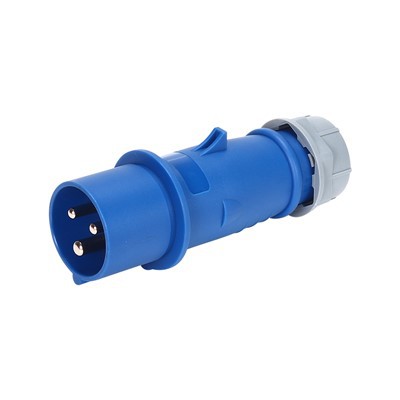
First, let’s get on the same page about what a mating cycle is, since half the time I hear people throw the term around wrong. A mating cycle is one full go from plugging the connector in, pulling it apart, and plugging it back in again. Simple, right? But here’s the thing: every time you do that, you’re not just snapping two plastic halves together. You’re sliding metal terminals over each other, scraping tiny bits off contact surfaces, compressing gaskets, stressing plastic housings, and maybe even getting dust or gunk in the gaps. Now, industrial connectors don’t just get mated once and left forever – think about manufacturing lines that switch out robot end effectors every hour, or wind turbines that need their connection boxes serviced quarterly, or even mining equipment that gets disassembled and reassembled between shifts. That’s hundreds, sometimes thousands of mating cycles over a connector’s lifespan, and each one leaves its mark.
Let’s start with the biggest pain point most folks run into: contact resistance. That’s the measure of how well current flows through the connector’s terminals, and it’s make-or-break for anything that uses power or data. When two metal terminals first mate, they make a solid connection – no big deal. But after a few dozen to a few hundred cycles, that gold or tin plating (the stuff that’s supposed to stop corrosion) starts wearing down. Tiny micro-abrasions from repeated sliding leave bare base metal exposed, or the plating gets thinner in certain spots, so less actual metal is touching. I once worked with a food processing plant that had a conveyor line shutting down every third day because their motor connectors’ contact resistance spiked from 12 milliohms to 80 milliohms after 400 mating cycles. Turned out they were using a generic connector rated for 500 cycles, but their weekly disassembly for cleaning pushed them right to the edge. By switching to a heavy-duty connector with thicker gold plating (3 microns instead of the standard 0.5), their resistance stayed stable through 2,000 cycles, no more shutdowns. That’s a $100 part saving them $15,000 a week in lost production – numbers don’t lie.
Wait, but it’s not just resistance. There’s also something called contact wipe – that’s the small horizontal slide terminals do when they mate, to scrape off any surface gunk like dust, oil, or oxidation that got on the contact points. The length of that wipe, and how consistent it is over cycles, matters a ton. Cheap connectors often have a short, inconsistent wipe that only works when new. After 100 cycles, the terminals don’t slide as smoothly, so the wipe is half as long. Now you’ve got a thin layer of gunk between the contacts that current can’t get through, leading to intermittent connections – perfect for a machine that suddenly stops mid-packaging, or a sensor that drops data mid-test. We had a client in the automotive test lab who was getting random “no signal” errors on their emission test rig until we swapped their generic USB-style power/data connectors for our industrial-grade ones with a 1.5mm consistent wipe. The errors vanished, and they’ve done 1,200 mating cycles so far without a single blip.
Next up, environmental sealing. A lot of industrial connectors are rated IP67 or IP69K, meaning they can handle water, dust, high pressure washdowns – critical for food and beverage, pharmaceuticals, heavy equipment. But the gaskets that make that seal? They get compressed and relaxed every mating cycle, right? Over time, that’s called “ gasket creep” – the rubber or silicone doesn’t bounce back like it’s supposed to. After a few hundred cycles, the gasket gets squished flat instead of springing back to its original shape when you disconnect the connector. So when you mate it again, there’s a tiny gap between the gasket and the housing, letting water or dust in. That’s how you get a short circuit in a control panel, or corrosion on internal terminals. We had a customer in the energy sector that had a solar farm inverter fail after 18 months – turns out their installation team was disconnecting and reconnecting the string connectors once a week for testing, and the EPDM gaskets in their old generic connectors had gone flat after 700 cycles. We switched them to our connectors with silicon gaskets rated for 10,000 mating cycles, and they haven’t had a sealing issue in 3 years. Pro tip: if you see a connector housing that’s a little misshapen after a few disconnects, that’s the gasket going – don’t wait for it to fail.
Plastic housings don’t get a free pass either. Every time you snap a connector together, you’re putting stress on the latch mechanism, the housing walls, and the mounting points. For low-quality connectors, that plastic is thin, and after repeated mating, the latches can break, or the housing can crack. Think about a construction site where a worker drops a connector while mating it, or a plant where a robot arm yanks a cable mid-mate – that’s extra stress on top of the cycle count. We’ve seen connectors with PC (polycarbonate) housings crack after just 50 cycles in harsh outdoor environments, while our glass-filled nylon housings take 10,000+ cycles without a scratch. The difference? The material’s tensile strength and fatigue resistance – not all plastics are created equal, especially when you’re talking about repeated stress.
Wait, let’s not forget about data connectors, because this isn’t just for power. Industrial Ethernet, Profibus, CAN bus – all that data relies on consistent impedance matching and signal integrity, and mating cycles mess with that too. When terminals wear down, the distance between the two contacts (called the contact pitch) can shift slightly. Even a 0.1mm shift is enough to throw off impedance, leading to signal reflection, dropped packets, and slow data. We had a robotics company that was having their assembly line robot misplace parts because their vision system was getting dropped frame data from their Ethernet connectors. The connector they were using only maintained impedance within 5% for the first 500 cycles; after that, it jumped to 15%, which was enough to corrupt the data. Swapping to our precision-machined terminals kept impedance within 3% even after 2,000 cycles, and their line uptime went from 92% to 99.8% – huge for their production targets.
Now, let’s talk about how manufacturers (that’s us) test for this, because this isn’t just guesswork. We don’t just slap a label on a connector and say “it works.” We run accelerated aging tests where we mate and disconnect connectors thousands of times in a controlled environment, measuring contact resistance, seal integrity, and signal quality every 100 cycles. For example, our standard industrial power connectors get 5,000 mating cycles before we consider them ready, and our heavy-duty ones go up to 10,000. That’s way more than most applications will ever need, but we’d rather overbuild than have a client come to us with a broken connector in the middle of a shift. The key here is matching your connector’s cycle rating to your actual use case. If you’re mating a connector a handful of times a year for routine maintenance, a 1,000-cycle connector is more than enough. If you’re mating it 10 times a week for line changes, you need at least 5,000. If you’re connecting/disconnecting every single day, go for 10,000 or higher – it’s worth the extra cost to avoid downtime.
A lot of people make the mistake of buying the cheapest connector they can find, and then end up paying way more in lost production when it fails. Let’s do the math: a generic connector costs $5, a heavy-duty one costs $15. If the generic fails every 6 months, and the heavy-duty lasts 5 years, that’s 10 generic connectors ($50) vs 1 heavy-duty ($15) – plus the cost of downtime, which can be hundreds or thousands of dollars per minute. That’s not a hard call.
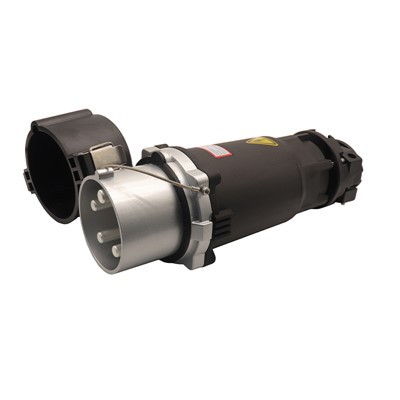
Now, here’s the big takeaway: mating cycles aren’t just a spec number on a datasheet. They’re a real, tangible factor that impacts every part of your connector’s performance, from how well it carries current to how well it seals to how reliable your data is. Ignoring them leads to shutdowns, missed production targets, and costly repairs. If you’re not sure what cycle rating your application needs, or if you’re dealing with a connector that’s acting up, hit us up. We don’t do one-size-fits-all – we’ll help you pick the right connector for your specific use case, no salesy garbage, just straight up advice. No generic links, no hoops to jump through, just reach out when you’re ready to stop dealing with flaky connectors and start getting consistent performance.
Combined Socket Box References
- International Electrotechnical Commission (IEC) 60512-11-100: Connectors for electronic equipment – Tests and measurements – Part 11-100: Mechanical endurance tests for mating and unmating cycles
- Society of Automotive Engineers (SAE) AS51170: Standard for electrical connectors used in industrial and commercial applications, covering contact wear and cycle performance
- Industrial Technology Research Institute (ITRI) 2022 Report: "Mating Cycle Effects on Sealing and Contact Resistance of Low-Voltage Industrial Connectors"
- National Institute of Standards and Technology (NIST) Technical Note 1967: Factors Affecting Long-Term Reliability of Mated Electrical Connections in Harsh Industrial Environments
Zhejiang Hefeng Electric Co., Ltd.
Zhejiang Hefeng Electric Co., Ltd. is one of the most professional industrial connector manufacturers and suppliers in China, featured by quality products and low price. Please rest assured to buy durable industrial connector made in China here from our factory. Also, OEM service is available.
Address: Wenzhou Daqiao Industrail Park, Beibaixiang Town, Yueqing City, Zhejiang Province, China
E-mail: hefengplug@chinahfe.com
WebSite: https://www.hfcee.com/
