Connecting multiple television speaker drivers together is a topic that not only fascinates audio enthusiasts but also holds significant importance for those in the business of television speaker drivers, like me. As a supplier of television speaker drivers, I’ve encountered numerous inquiries from customers about how to connect multiple drivers to achieve better sound quality and performance. In this blog, I’ll share some insights and methods on this matter. Television Speaker Drivers
Understanding the Basics of Television Speaker Drivers
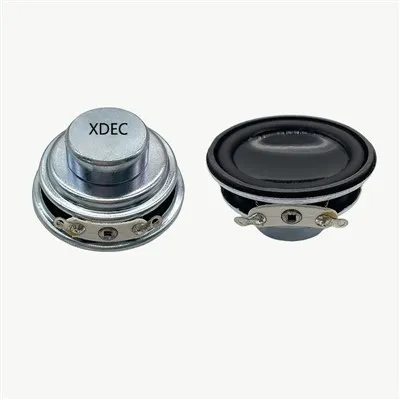
Before delving into the connection methods, it’s essential to understand what television speaker drivers are. A speaker driver is the component in a speaker system that converts electrical signals into sound waves. In a television, speaker drivers are responsible for producing the audio we hear. Different types of speaker drivers, such as woofers, tweeters, and mid – range drivers, have different frequency response ranges. Woofers are designed to handle low – frequency sounds, tweeters for high – frequency sounds, and mid – range drivers for frequencies in between.
Reasons for Connecting Multiple Speaker Drivers
There are several reasons why one might want to connect multiple television speaker drivers. Firstly, it can enhance the overall sound quality. By combining different types of drivers, we can cover a wider frequency range, resulting in a more balanced and immersive audio experience. For example, a combination of a woofer and a tweeter can reproduce both deep bass and clear high – pitched sounds. Secondly, multiple drivers can increase the power handling capacity of the speaker system. This means that the speakers can play louder without distorting the sound.
Methods of Connecting Multiple Speaker Drivers
Series Connection
One of the simplest ways to connect multiple speaker drivers is in series. In a series connection, the positive terminal of one driver is connected to the negative terminal of the next driver. The electrical current flows through each driver in sequence. The total impedance of the speakers in series is the sum of the individual impedances of each driver. For example, if you have two speakers with an impedance of 8 ohms each, when connected in series, the total impedance will be 16 ohms.
The advantage of a series connection is that it can increase the overall impedance of the speaker system. This can be useful when the amplifier has a high output impedance. However, one drawback is that if one speaker fails, the entire circuit will be broken, and no sound will be produced.
Parallel Connection
In a parallel connection, the positive terminals of all the speakers are connected together, and the negative terminals are also connected together. The total impedance of speakers connected in parallel is calculated using the formula: 1/Z_total = 1/Z1+1/Z2+…+1/Zn, where Z1, Z2, etc. are the impedances of the individual speakers. For example, if you have two 8 – ohm speakers connected in parallel, the total impedance will be 4 ohms.
The main advantage of a parallel connection is that if one speaker fails, the other speakers will still function. Also, parallel connection generally results in a lower overall impedance, which can be beneficial for amplifiers with low output impedance. However, it’s important to ensure that the amplifier can handle the lower impedance.
Bi – wiring and Bi -amping
Bi – wiring involves using two separate sets of wires to connect the amplifier to the speaker. One set of wires is used for the low – frequency drivers (woofers), and the other set is used for the high – frequency drivers (tweeters). This can reduce interference between the different frequency ranges and improve the overall sound quality.
Bi -amping takes bi – wiring a step further. Instead of using a single amplifier to power all the drivers, two separate amplifiers are used. One amplifier is dedicated to the low – frequency drivers, and the other is dedicated to the high – frequency drivers. This allows for more precise control of the power delivered to each type of driver, resulting in better sound performance.
Considerations When Connecting Multiple Speaker Drivers
When connecting multiple television speaker drivers, there are several important considerations.
Impedance Matching
As mentioned earlier, impedance matching is crucial. The total impedance of the speaker system should be compatible with the output impedance of the amplifier. If the impedance is too high, the amplifier may not be able to deliver enough power to the speakers. If the impedance is too low, it can overload the amplifier and cause damage.
Power Handling
Each speaker driver has a maximum power handling capacity. When connecting multiple drivers, it’s important to ensure that the total power delivered by the amplifier does not exceed the combined power handling capacity of the speakers. Otherwise, the speakers may be damaged.
Phase Alignment
Phase alignment is also important for achieving good sound quality. When multiple drivers are connected, they should be in phase with each other. If the drivers are out of phase, it can result in cancellation of certain frequencies and a loss of sound quality.
Practical Tips for Connecting Multiple Speaker Drivers
- Use High – Quality Wires: High – quality wires can reduce signal loss and interference. Make sure the wires are thick enough to handle the current.
- Label the Wires: When connecting multiple drivers, it can be easy to get confused. Labeling the wires can help ensure that the connections are correct.
- Test the System: After making the connections, test the speaker system to ensure that all the drivers are working properly and that the sound quality is satisfactory.
Conclusion
Connecting multiple television speaker drivers together can be a rewarding process that can significantly enhance the audio experience. Whether you’re an audio enthusiast looking to upgrade your home theater system or a professional in the audio industry, understanding the different connection methods and considerations is essential.
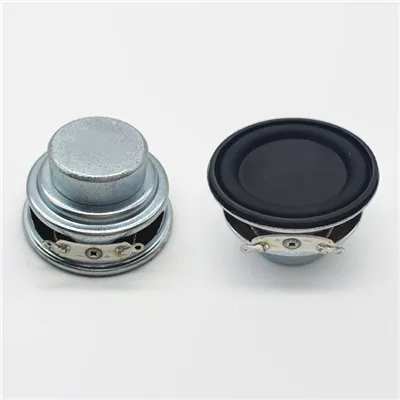
Vibration Speaker Drivers As a supplier of television speaker drivers, I’m committed to providing high – quality products and technical support. If you’re interested in purchasing our television speaker drivers or have any questions about connecting multiple drivers, please feel free to contact us for a detailed discussion. We look forward to working with you to create the best audio solutions for your needs.
References
- Floyd, T. L. (2018). Principles of Electric Circuits: Conventional Current Version. Pearson.
- Toole, F. E. (2007). Sound Reproduction: The Acoustics and Psychoacoustics of Loudspeakers and Rooms. Elsevier.
Shenzhen Xuanda Electronics Co., Ltd.
We’re well-known as one of the leading television speaker drivers manufacturers in China. If you’re going to wholesale high quality television speaker drivers made in China, welcome to get free sample from our factory. Also, customized service is available.
Address: Building 1, Honghengtai High-Tech Park, Shangcun Community, Gongming Street, Guangming District Shenzhen, China
E-mail: xd12@xdec.cn
WebSite: https://www.xdecspeakerdriver.com/
